

AI CERTS
3 hours ago
ContactMimic Ups Humanoid Object Manipulation Control
Moreover, the paper offers rare sim-to-real evidence on an affordable Unitree G1 platform. These elements have sparked early interest across embodied AI, gaming, and manufacturing labs. Below we unpack the method, results, strengths, and next steps for professional teams.
Why Contacts Truly Matter
Historically, imitation learning focused on keypoints such as wrists and hips. In contrast, keypoints rarely guarantee the hands actually press or release surfaces. Consequently, the robot might collide or miss a handle, breaking the task. Contact commands create a binary switch per limb, explicitly declaring desired touch. Therefore, contact control becomes as important as position control for object interaction. Humanoid robotics teams crave such clarity because compliance forces vary across furniture, tools, and people. Moreover, regulators increasingly demand interpretable safety knobs before approving collaborative robots. These realities set the stage for ContactMimic's two-channel policy.
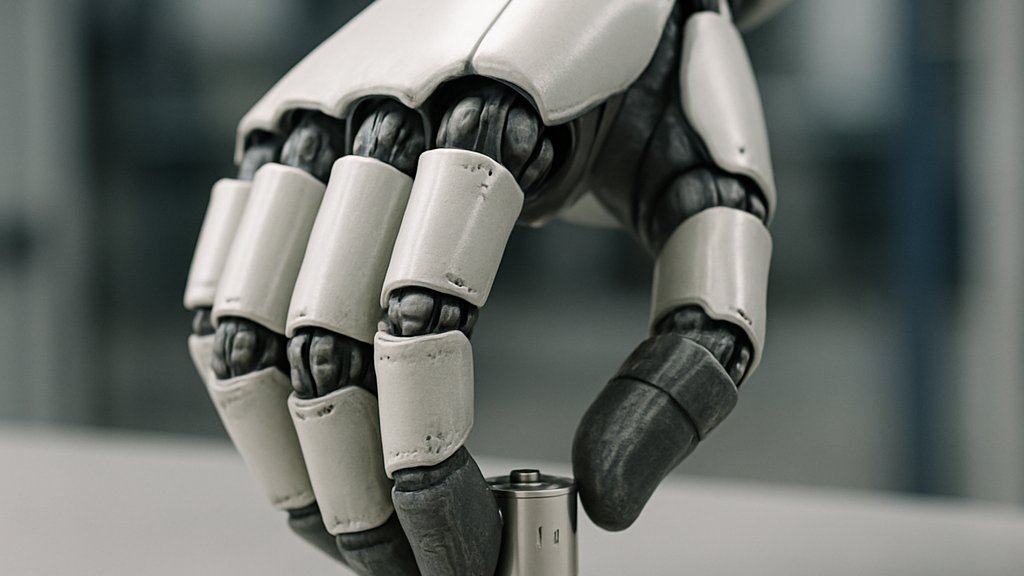
Explicit contacts fill a critical gap left by pure kinematics. However, building a responsive interface required several technical breakthroughs now explored below.
Inside ContactMimic Control Approach
ContactMimic feeds two synchronized streams to a reinforcement-trained policy. The first stream is the familiar keypoint trajectory from human demonstrations. The second stream supplies per-part contact control labels, flipped at runtime as needed. Consequently, identical poses can wipe, hover, or lift depending on the binary vector. During deployment, operators simply toggle bytes, avoiding tedious reward redesign. Furthermore, the architecture closes the loop at 120 Hertz, preserving balance on the Unitree G1.
A contact-following reward penalizes false positives and false negatives equally. Meanwhile, motion retargeting occurs through the OmniRetarget pipeline, covering diverse object interaction scenarios. These design choices preserve tracking fidelity, matching BeyondMimic’s mean error metrics. Nevertheless, ContactMimic delivers far higher contact counts and impulses. The framework integrates smoothly with standard humanoid robotics stacks and ROS interfaces.
The dual-stream policy thus isolates what to touch from how to pose. Consequently, the foundation for scalable Humanoid Object Manipulation now looks practical.
Comparing Leading Baseline Trackers
BeyondMimic follows keypoints alone, ignoring contact cues. In contrast, ContactMimic triples contact impulse metrics while matching pose error. Therefore, Humanoid Object Manipulation outcomes improve without extra sensors or heavier computation.
Training Pipeline Key Innovations
Collecting thousands of human-object clips yields biased data. Objects usually coincide with certain joint angles, leaking contact intent into keypoints. Therefore, the authors invented paired-motion augmentation to break this shortcut. They inflate geometry, delete props, or invert contact labels while preserving limb curves. Subsequently, the network must heed the explicit contact control signal, not incidental geometry. Moreover, balanced accuracy metrics drive reinforcement updates, discouraging overconfident sticking or hovering.
Ablations show that removing augmentation collapses performance on sit-versus-squat tasks. In contrast, the full pipeline secures 100% success when commands request contact suppression. Meanwhile, motion diversity extends to ten simulated tasks covering wiping, leaning, and box pickup. These results suggest a general recipe for manipulation learning across varied scenes.
Augmentation forces the policy to respect the binary knob. Consequently, real robots gain robust and interpretable contact behavior. Thus, scalable Humanoid Object Manipulation comes within reach for many labs.
Simulation And Real Trials
Quantitative evidence matters for cautious engineering teams. Consequently, the paper reports extensive simulation benchmarks and physical rollouts. Reported data show displacement rising from zero to 1.89 meters when contact is allowed. Meanwhile, mean pose error holds steady at baseline levels. Real world evaluations used the 1.6-meter Unitree G1 humanoid robotics platform. Tasks included wiping a whiteboard, leaning on a chair backrest, and lifting a box. Success rates exceeded 90% across both contact-on and contact-off conditions. Additionally, lean-back trials achieved nine correct suppressions out of ten despite unstable support surfaces. Key statistics impress busy managers:
- Wipe task: 5/5 successes for both contact states.
- Lean back II: 19/20 correct responses across two labels.
- Sit versus squat: 5/5 correct after augmentation enabled.
- Box lift: 1.89 m displacement with contact, zero without.
Furthermore, these numbers rival veteran teleoperation benchmarks yet run autonomously. Such evidence convinces procurement staff that embodied AI can exit the lab. However, broader hardware diversity remains an open challenge, discussed next.
ContactMimic proves end-to-end feasibility, from pixel videos to real torque currents. Nevertheless, scale and safety questions deserve honest scrutiny. For evaluators, such clarity directly maps to Humanoid Object Manipulation benchmarks that decide funding.
Strengths And Limitations Noted
ContactMimic’s chief strength is controllable contact without degrading pose accuracy. Consequently, one policy covers multiple tasks, slashing annotation budgets. Moreover, the method remains agnostic to downstream reward engineering. Teams focusing on manipulation learning gain faster iteration loops. Explicit contact control also simplifies failure analysis during regulatory audits. Nevertheless, important limitations persist. The study used a single humanoid robotics platform and five real motions. Fragile objects, human collaborators, and varying friction conditions were out of scope. Additionally, force safety envelopes were not rigorously characterized. Peer review and independent replications are still pending because the paper is a preprint.
Strengths suggest market readiness for pilot programs. However, risk assessments and cross-platform trials must follow before deployment.
Key Future Research Questions
How will policies scale to multi-fingered hands and soft grippers? Furthermore, can the system handle variable object interaction forces like fragile packaging? Researchers also plan formal proofs for safe embodied AI near humans.
Implications For Industry Adoption
Service, logistics, and entertainment companies all chase versatile humanoid solutions. Therefore, an interface blending keypoints with contact control resonates strongly. For object interaction heavy workflows like retail restocking, binary contact flags map cleanly to tasks. Manufacturing integrators can script grasp, press, and release phases using familiar PLC signals. Moreover, simulation alignment means engineers prototype policies offline before risking hardware.
Operators may also combine policies with vision-based planners for holistic embodied AI pipelines. Procurement leaders often demand skills certification for staff. Professionals can validate skills via the AI Robotics™ certification. Such credentials accelerate hiring and help teams align with safety standards. Consequently, ContactMimic could move from academia to pilot warehouses within months.
Adoption hinges on bridging research polish with industrial reliability. Nevertheless, the path looks shorter than many executives expect. Retail chains dream of reliable Humanoid Object Manipulation for shelf stocking and cleaning. ContactMimic shows a template for policy-based Humanoid Object Manipulation with minimal hardware mods. Insurance assessors welcome repeatable benchmarks that accelerate manipulation learning adoption.
ContactMimic makes touch a first-class input, not an accidental result. Consequently, scalable Humanoid Object Manipulation moves closer to warehouse aisles and hospital rooms. Simulation and real data confirm repeatable gains without sacrificing accuracy or speed. Moreover, the pipeline dovetails with existing humanoid robotics hardware and supports continued manipulation learning research.
Nevertheless, safety validation and cross-platform proofs remain necessary milestones. Teams eager to lead should study the open preprint and prototype early pilots. In addition, upgrading staff through the AI Robotics™ certification builds internal credibility. Act now to translate research into competitive Humanoid Object Manipulation services before rivals catch up.
Disclaimer: Some content may be AI-generated or assisted and is provided ‘as is’ for informational purposes only, without warranties of accuracy or completeness, and does not imply endorsement or affiliation.


