

AI CERTS
2 hours ago
Policy-Led Quantum Repeater Technology Drives Fidelity Gains
Meanwhile, we map practical steps developers can follow inside near-term networks. In contrast to hype pieces, every claim here traces back to peer-reviewed data. Finally, readers receive certification pathways that accelerate career readiness. Therefore, by the end, professionals will know which levers offer the largest strategic return.
Policy Era Finally Arrives
Legacy swap-as-soon-as-possible heuristics once dominated repeaters. However, Haldar and colleagues proved that learned decisions lower average pair age. Consequently, fidelities rose across high-loss, asymmetric channels in simulations. The reinforcement learner tracks link quality, memory times, and request urgency. It then selects the optimal moment to swap or wait. Moreover, the approach aligns naturally with Quantum Repeater Technology service level targets. RL trials delivered higher qualified success ratios than static baselines in every examined regime.
In contrast, static rules ignored real-time asymmetry data. Q-learning also adapts when hardware parameters drift, avoiding manual retuning. Therefore, policy evolution appears inevitable for near-term networks. DeltaPurify extends the idea by adding local fidelity thresholds before purification. Such conditional moves prevent wasteful distillation that erodes delivery timeliness.
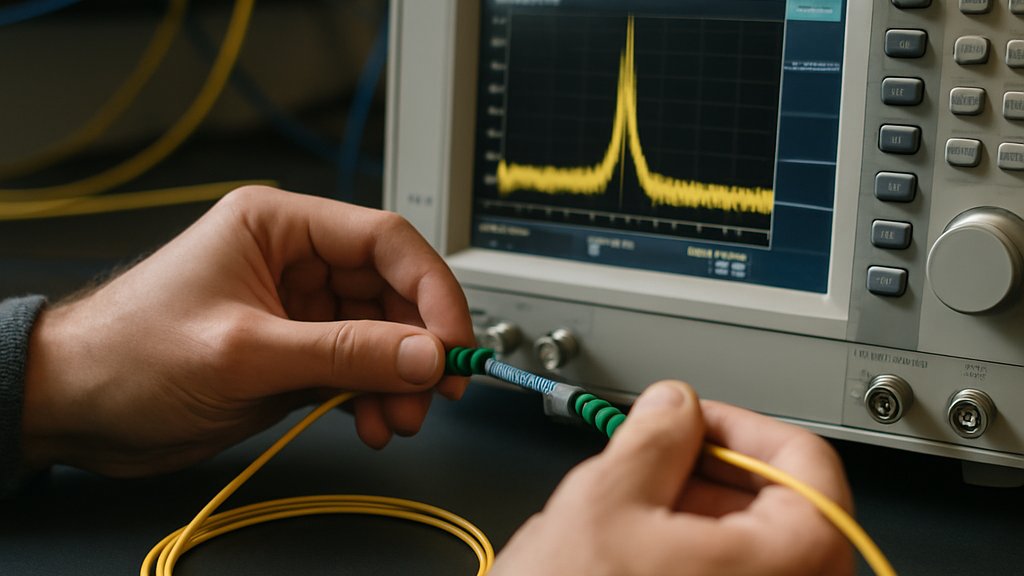
Adaptive policies deliver measurable fidelity gains without new hardware. Consequently, the industry narrative has shifted toward software centric control.
Core Quantum Technical Shifts
Three ideas underpin the recent progress. Firstly, dynamic multiplexing increases parallel link attempts, masking stochastic losses. Secondly, channel reshaping converts unfavorable noise into distillation friendly profiles. Moreover, selective purification activates only when local asymmetry stays below delta_max 0.076. These shifts interact synergistically with Quantum Repeater Technology control stacks. Furthermore, comparative architecture studies confirm that two-way, multiplexed designs can outperform one-way alternatives. Researchers showed resource overheads fall while maintaining application grade entanglement distribution.
Meanwhile, routing modules like Q-GUARD negotiate fidelity targets across four hop paths. They raised qualified success from below twenty percent to above eighty-five percent. Consequently, secret key rate improved because more usable pairs reached end users. Each building block still respects hardware limits such as memory decoherence and classical latency. Nevertheless, the collective package delivers unprecedented fidelity gains for near-term networks.
Together, these technical elements represent a coherent upgrade path. Subsequently, metrics matter more than slogans, so our next section quantifies impact.
Critical Performance Metrics Explored
Professionals demand hard numbers before rewriting network controllers. Therefore, we summarize headline statistics from recent peer-reviewed papers.
- RL policies lowered average age up to 2.3×, boosting end-to-end fidelity by 15-30%.
- Q-GUARD transformed four hop success from 20% to 85% under identical loss parameters.
- Adaptive channel reshaping exceeded previous distillation lower bounds for amplitude-damping noise.
- DeltaPurify found purification helped only 14% of attempts when local fidelity asymmetry was modest.
Moreover, smart multiplexing reduced waiting time variability, which correlates directly with secret key rate. In contrast, static single channel schemes starved some swaps, inflating memory decoherence. Quantum Repeater Technology stakeholders care about qualified success, not raw throughput. Consequently, fidelity gains translate into higher application layer revenue. Researchers also compared entanglement distribution under symmetric versus asymmetric loss models. Adaptive policies preserved fidelity even when one direction lost 10dB more than the other. Therefore, near-term networks can now tolerate realistic urban fibre asymmetry.
Numbers confirm that smart control beats raw capacity expansions. Next, we move from metrics to deployment playbooks that teams can execute.
Practical Deployment Roadmap Insights
Rolling these advances into field networks requires systematic planning. Firstly, audit hardware characteristics, including memory T2 and link loss. Secondly, map service level objectives to policy parameters. Furthermore, integrate dynamic multiplexing in transport layers to maximize link utilization. Teams should pilot Quantum Repeater Technology stacks in emulators before fibre trials. IBM’s C2QA testbeds already expose APIs for policy uploaded experiments. Subsequently, enable conditional purification using DeltaPurify thresholds inside controller logic. This step prevents privacy throughput regressions on high asymmetry days.
Routing decisions must cooperate with purification; Q-GUARD offers a reference implementation. Moreover, channel reshaping modules run as pre-processing filters on raw pairs. Engineers can also monitor live entanglement metrics to verify fidelity agreements. Consequently, early adopters report measurable fidelity gains within three months. Finally, document rollback options in case controller bugs degrade performance. Such operational hygiene keeps near-term networks compliant with uptime commitments.
Following this checklist reduces integration risk. Meanwhile, professionals must upgrade personal skills to navigate the evolving stack.
Essential Upskilling For Engineers
Talent shortages may slow commercial roll-outs. However, focused training can bridge gaps quickly. Professionals can enhance their expertise with the AI+ Quantum Specialist™ certification. The syllabus covers policy design, dynamic multiplexing, and security monitoring. Additionally, labs guide learners through Quantum Repeater Technology code samples. Graduates measure entanglement distribution efficiency and optimize secret key rate using open-source kits. Furthermore, scenario projects require documenting observed fidelity gains under stress tests. Industry partners value these applied deliverables when hiring. Consequently, certified engineers accelerate safe deployments across near-term networks. Nevertheless, learning never stops because standards evolve every quarter.
Structured courses future-proof individual careers. Subsequently, we examine strategic forces shaping the road ahead.
Strategic Future Outlook Summary
Investment in software centric control is rising across government and telecom sectors. Moreover, consortiums are drafting open interfaces for Quantum Repeater Technology interoperability. Analysts predict that dynamic multiplexing and conditional purification will become default features by 2028. Consequently, secret key rate baselines may triple, unlocking new quantum secure services. Entanglement distribution footprints could extend beyond 500 kilometres without quantum memories exceeding today’s specs.
However, challenges around scaling reinforcement learning remain. Researchers propose hierarchical agents that localise state spaces. Meanwhile, regulators will demand auditable fidelity gains evidence before approving national rollouts. Therefore, transparent benchmarking frameworks matter. Quantum Repeater Technology stakeholders should engage with standards bodies early.
The roadmap appears ambitious yet practical. Nevertheless, disciplined execution will decide who captures the emerging market.
Conclusion
Adaptive policies now offer concrete pathways to higher fidelity without exotic hardware. Moreover, Quantum Repeater Technology is evolving from research novelty to operational backbone. Dynamic multiplexing, channel reshaping, and conditional purification jointly raise performance ceilings. Consequently, secret key rate, entanglement distribution range, and customer confidence all improve. Stakeholders must merge these advances with rigorous deployment processes.
Engineers equipped through targeted certifications will lead successful integrations. Therefore, organizations exploring Quantum Repeater Technology should act before competitors secure scarce expertise. Explore the recommended courses and start architecting resilient quantum networks today.
Disclaimer: Some content may be AI-generated or assisted and is provided ‘as is’ for informational purposes only, without warranties of accuracy or completeness, and does not imply endorsement or affiliation.


