

AI CERTS
2 hours ago
Meta’s New Alberta AI Data Center Mega-Project
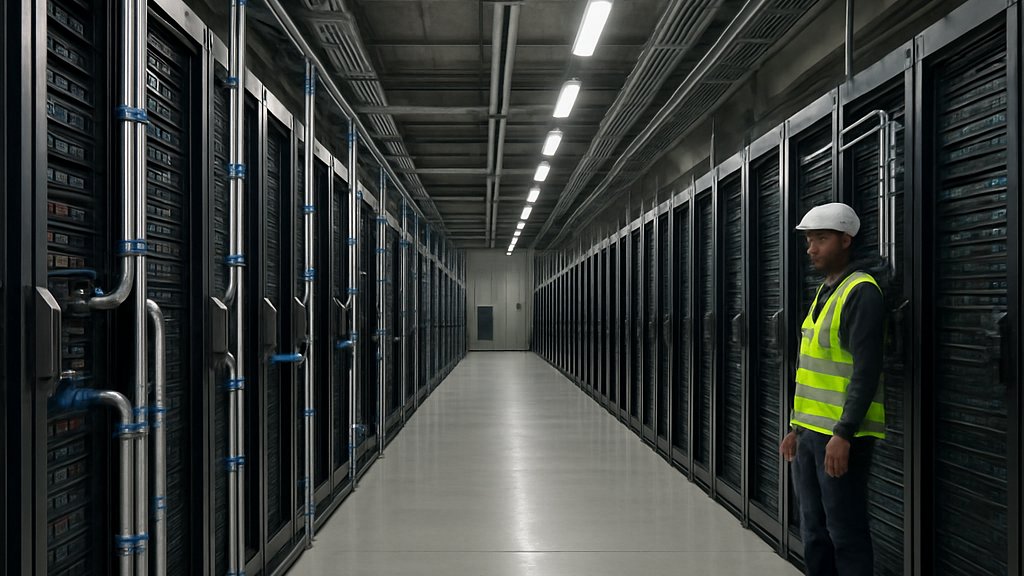
Nevertheless, environmental groups question the associated gas generation.
Meanwhile, provincial officials celebrate thousands of new jobs and the largest foreign direct investment in recent memory.
Ultimately, the Alberta project exemplifies a global hyperscale buildout race among cloud giants.
Therefore, understanding the numbers, technology, and policy stakes is vital for energy and AI professionals.
Meta Selects Alberta Site
Invest Alberta hosted Meta VP Gary Demasi as he unveiled plans for the company’s first Canadian AI Data Center.
The near-270,000 m² Alberta campus will house almost one gigawatt of computing capacity on farmland inside Sturgeon County.
Moreover, Demasi highlighted cold climate advantages and direct access to transmission corridors.
Additionally, the province’s Bring-Your-Own-Power rules simplified site selection.
Capital Power will supply 250 MW under an eight-year energy deal, while the Greenlight Electricity Centre adds 932 MW by 2030.
These supply contracts anchor Meta infrastructure growth and reassure grid planners.
The section shows why location, climate, and policy aligned. However, cost and power risks remain for later review.
Investment And Job Numbers
Meta’s C$13 billion outlay dwarfs every previous tech investment in Alberta.
Consequently, the province expects about 3,000 construction roles and 300 permanent positions.
Furthermore, officials forecast billions in local procurement for steel, network gear, and specialty trades.
In contrast, critics argue wage impacts could be short-lived once construction peaks.
- Project cost: C$13 billion
- Planned capacity: ~1 GW
- Interim supply: 250 MW by 2028
- Greenlight phase one: 932 MW by 2030
- Estimated energy use: power for 800,000 homes
Moreover, Alberta’s treasury gains from land taxes and corporate levies.
Consequently, the Alberta campus becomes a fiscal anchor during volatile oil cycles.
This section confirms economic upside. Yet, sustainability costs still need balanced discussion in the next segment.
Power And Cooling Strategy
High-density GPUs demand continuous power and advanced thermal design.
Therefore, Meta infrastructure engineers chose closed-loop liquid cooling that eliminates daily freshwater withdrawals.
Additionally, dry coolers dissipate heat into Alberta’s crisp air for most of the year.
Meanwhile, the Greenlight plant pairs efficient combined-cycle turbines with heat-rate guarantees.
Nevertheless, Pembina Institute warns the plant could emit three million tonnes of CO₂ each year.
Meta counters that it will match campus consumption with future renewable projects across Canada AI regions.
Consequently, long-term net emissions depend on speedy clean energy procurement.
The section reveals technical ambition alongside carbon controversy. Subsequent discussion assesses stakeholder reactions.
Environmental Debate Intensifies
Greenpeace Canada calls for a pause on megaprojects until binding environmental rules govern AI Data Center growth.
In contrast, Premier Danielle Smith argues Alberta’s grid flexibility accelerates national climate goals by attracting investment.
Furthermore, analysts note that hyperscale buildout timing often outpaces renewable permitting.
Consequently, gas plants remain a bridge option despite rising carbon prices.
Additionally, local residents worry about noise, road traffic, and emergency services.
However, Meta promises community funds and transparent construction schedules.
This section highlights competing narratives. The next section contextualizes market forces driving those tensions.
Strategic Market Context
Global demand for AI compute may triple by 2030, pushing the AI Data Center market above US$820 billion.
Moreover, Canada AI policy aims to capture a meaningful slice of that total.
Consequently, Alberta markets itself as a scalable, carbon-aware jurisdiction for hyperscale buildout.
Meanwhile, cold winters reduce cooling costs, and deregulated power rules attract private generators.
Additionally, institutions like Amii bolster talent pipelines for advanced model training.
Meta infrastructure teams value such clusters because localized talent reduces operational risk.
Therefore, the Alberta campus could seed further supplier ecosystems across Western Canada.
The section frames competitive dynamics. Final remarks examine future milestones and skill opportunities.
Next Steps And Timelines
Site clearing begins this autumn with foundation work slated for early 2027.
Subsequently, Meta targets partial racks online by late 2028 when Capital Power energy flows.
Greenlight completion in 2030 unlocks full gigawatt capacity for the AI Data Center.
Moreover, regulatory filings will detail phased megawatt releases and renewable matching contracts.
Professionals can enhance their expertise with the AI Cloud Architect™ certification.
The credential sharpens skills in liquid cooling design, grid integration, and hyperscale buildout economics.
This section outlines immediate milestones and upskilling options. The conclusion distills lessons and offers a final call to action.
Conclusion
Meta’s Alberta campus showcases how scale, policy, and innovation converge in the AI Data Center era.
Moreover, the project delivers jobs, advanced liquid cooling, and unprecedented Meta infrastructure funding.
Nevertheless, carbon intensity questions remain, and hyperscale buildout critics demand stricter oversight.
Therefore, energy experts must track power sourcing, while engineers refine closed-loop systems.
Consequently, staying informed and upskilled is essential. Explore the linked certification to lead future Canada AI developments.
Disclaimer: Some content may be AI-generated or assisted and is provided ‘as is’ for informational purposes only, without warranties of accuracy or completeness, and does not imply endorsement or affiliation.


