

AI CERTS
3 hours ago
Shanghai 2026 Global AI Summit: Scale and Governance
In contrast, McKinsey data reveals only a fraction of firms reach enterprise-wide scaling. Therefore, executives are flocking east to translate prototypes into profits. This article previews the Global AI Summit agenda, numbers, and geopolitical undercurrents that matter to decision-makers. Additionally, readers will learn how the Shanghai conference supports policy dialogue and corporate deal flow. Finally, we flag certification paths that sharpen public sector expertise before July.
Summit Overview Snapshot 2026
WAIC has grown from a local showcase into a truly Global AI Summit over eight editions. This year, more than 1,400 invited guests will speak across 140 themed sessions. Furthermore, the High-Level governance meeting runs parallel, shaping norms for safety, data, and equitable access. The Shanghai conference spans the Expo Centre, Zhangjiang Science Hall, and West Bund facilities. Consequently, attendees can sample frontier research in one hall and immediately test demos in another.
Organizers also released the Hi WAIC app, pledging year-round engagement through digital channels. Moreover, five ecosystem tracks—Future Tech, CONNECT, UP!, YOUNG, and AI GRAVITY—guide visitors along tailored content journeys. These elements elevate the summit from seasonal fair to continuous innovation engine. Such continuity echoes Donghao Lansheng’s vision of a living AI ecosystem that breathes through Shanghai’s districts. Ultimately, the structure promises steady momentum beyond closing day.
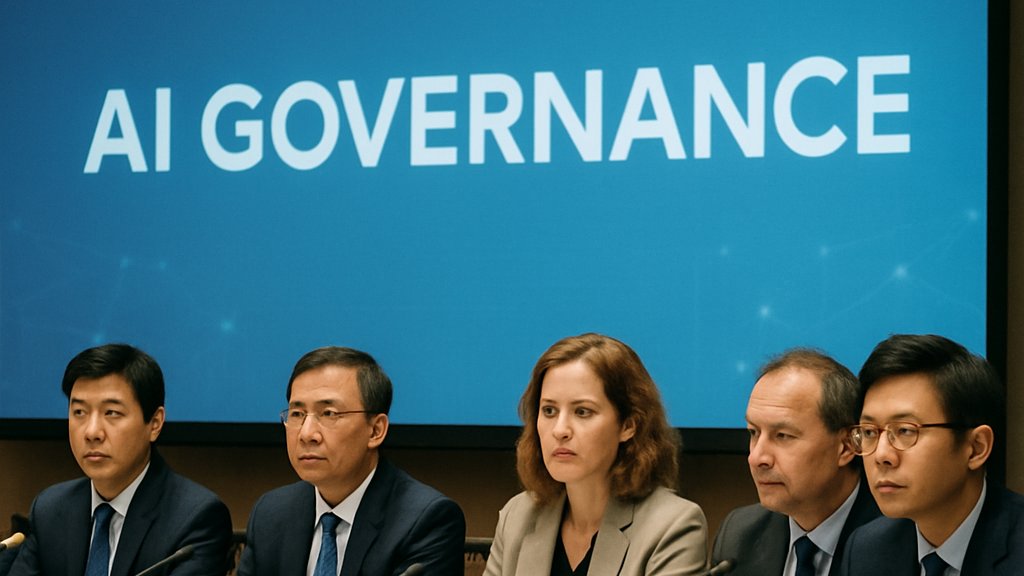
The format blends spectacle with sustained interaction. Next, we examine the scale behind those ambitions.
Massive Scale Metrics Shared
Numbers published in June underline the summit’s industrial heft. Organizers report an exhibition footprint exceeding 100,000 square meters. Additionally, roughly 1,100 companies will display more than 3,000 exhibits. More than 300 products will make world debuts, signaling fast commercialization. Meanwhile, WAIC Connect has attracted 172 buyer delegations exploring 63 priority application scenarios. The following statistics capture the headline figures:
- 100,000+ m² exhibition space across three venues.
- 1,100 exhibitors including major China AI vendors and multinational infrastructure giants.
- 3,000 exhibits with 300 global launches scheduled.
- 140 forums plus the Global AI Summit regulatory forum for regulators and technologists.
- Expected attendance of 1,400 speakers and tens of thousands of visitors.
Moreover, IDC forecasts hundreds of billions in global AI spending for 2026, giving exhibitors a ready market. Consequently, venture investors view the floor as an early indicator of demand curves. In contrast, McKinsey warns that only disciplined scaling unlocks sustainable margin gains.
The metrics confirm unmatched breadth and depth. However, governance priorities must match that commercial energy.
Governance Agendas Converge Here
Policy stakes run high as governments debate safety, standards, and cross-border data. Therefore, the paired High-Level governance meeting becomes a linchpin for coordinated rules. UN agencies, regional blocs, and national regulators are expected to attend. Moreover, the South Centre warns summit proliferation may fragment oversight unless outputs feed multilateral channels. Shanghai’s organizers aim to counter that risk with structured policy dialogue embedded in the program.
Additionally, WAICA academic chairs Andrew Yao and Richard Sutton will bridge technical insights with legal frameworks. Such integration positions the Global AI Summit as a venue where research meets regulation. Nevertheless, geopolitical tensions could complicate consensus wording on open models and export controls. A dedicated ministerial roundtable will attempt to finalize a voluntary safety protocol before closing day.
Robust dialogue may yield a shared baseline. Subsequently, commercial actors will test whether principles translate into deployable products.
Commercial Ties And Adoption
Enterprise buyers arrive hungry for actionable case studies. Baidu, Alibaba, Huawei, and Tencent plan to unveil generative suites tuned for regulated sectors. Meanwhile, Western infrastructure firms like Cisco and Vertiv will highlight data center efficiencies. Consequently, cross-border partnerships may crystallize on the floor despite macro headwinds. McKinsey finds 70-88% of companies use AI somewhere, yet only a minority reach scale. Furthermore, agentic AI features prominently, signaling movement beyond isolated chatbots.
Organizers expect the Global AI Summit deal room to handle matchmaking for 172 delegations. Such structured networking should accelerate proof-of-concept pilots within six months. Professionals can enhance their expertise with the AI Government™ Certification, building credibility ahead of procurement cycles. In contrast, firms lacking skilled managers often stall during compliance reviews.
Stronger capabilities convert show-floor buzz into revenue. The next section explores geopolitical currents shaping that trajectory.
Geopolitics Shape Summit Narrative
High-tech trade tensions shadow every Chinese innovation showcase. Nevertheless, attendees emphasize dialogue over decoupling during the Shanghai conference. Washington may send researchers rather than cabinet officials, mirroring last year’s Delhi stance. Meanwhile, Beijing frames WAIC as evidence that China AI leadership grows despite export controls. Media already portray the Global AI Summit as another arena for soft power competition. However, Shanghai municipal hosts stress open collaboration to reassure multinational investors. Such balancing acts will influence joint ventures and licensing deals announced on stage. South Centre analysts remind delegates that fragmented venues weaken collective governance outcomes.
Politics can either stall or speed adoption. Consequently, stakeholder alignment becomes essential for industry leaders seeking global scale.
Opportunities For Industry Leaders
Executives see four immediate opportunities inside WAIC halls. First, early access to 300 debut products positions industry leaders ahead of competitors. Second, curated matchmaking links buyers with startups targeting vertical pain points. Third, the governance meeting offers direct input into draft standards that will guide procurement. Fourth, the City Walk extends prototypes into real urban contexts, providing field data quickly. Moreover, participation boosts employer branding within the surging China AI talent pool. Additionally, attendance at the Global AI Summit also amplifies corporate visibility toward regional policymakers. Policy dialogue sessions give compliance officers a living view of regulatory evolutions. Therefore, seasoned delegates prepare briefings that map showcase insights onto corporate roadmaps.
Timely planning transforms opportunities into measurable value. Finally, we outline steps for anyone preparing for the trip.
Preparing For Shanghai Conference
Registration on the Hi WAIC app remains the fastest path to passes. Next, secure hotel rooms near the Expo Centre to reduce commute times during the Global AI Summit. Subsequently, download floor plans and pre-book governance meeting seats through the portal. Companies should vet spokespersons for policy dialogue slots before the final call closes. Furthermore, marketing teams may request city-wide advertising permits to join the AI City Walk. Prepare concise collateral because booth visitors rarely spend more than eight minutes per demo.
Meanwhile, engage local chambers to navigate customs rules for exhibition hardware. International visitors should monitor visa lead times, especially during other regional events. Finally, enrol managers in the AI Government™ Certification to grasp evolving China AI compliance.
Early logistics prevent last-minute costs. Consequently, stakeholders can focus on strategy once on the ground.
Shanghai’s 2026 gathering fuses scale, scholarship, and standards in one dynamic arena. The Global AI Summit will display thousands of innovations while incubating crucial regulatory accords. Consequently, policy dialogue and commercial matchmaking stand to accelerate global deployment curves. Nevertheless, geopolitical headwinds demand disciplined preparation from every delegate. Industry leaders who commit early secure prime visibility, talent engagement, and influence over emerging norms.
Meanwhile, certifications such as the AI Government™ program equip teams to navigate shifting compliance duties. Therefore, now is the moment to finalize itineraries, train staff, and book exhibition space. Act today and meet us in Shanghai this July to witness AI’s future firsthand.
Disclaimer: Some content may be AI-generated or assisted and is provided ‘as is’ for informational purposes only, without warranties of accuracy or completeness, and does not imply endorsement or affiliation.


