

AI CERTS
3 hours ago
NVIDIA Ising Streamlines Quantum Calibration
In contrast, proprietary stacks once hid calibration knowledge behind vendor walls. Now, community engineers can inspect model checkpoints, training data, and CUDA kernels in public repos. Therefore, the stage is set for accelerated collaboration across the quantum computing ecosystem.
Quantum Market Stakes Rising
Industry analysts project the quantum computing market will exceed $11 billion by 2030. Moreover, every commercial roadmap hinges on lowering logical error rates quickly. NVIDIA cites partner feedback showing calibration consumed up to 30 percent of lab time last year. Meanwhile, venture capital expects demonstrable milestones, not routine maintenance.
The 35-billion-parameter Ising-Calibration-1 model attacks this pain point with a multimodal calibration VLM. Additionally, its zero-shot QCalEval score of 74.7 outperforms smaller baselines by a wide margin. Consequently, quantum startups view automated tuning as a strategic differentiator.
- 35 B parameters fuel vision-language reasoning
- Zero-shot score: 74.7 on QCalEval
- Market forecast: > $11 billion by 2030
These numbers underscore strong commercial pressure. However, understanding the technical mechanics behind the gains requires a closer look at calibration workflows.
Inside NVIDIA Ising Calibration
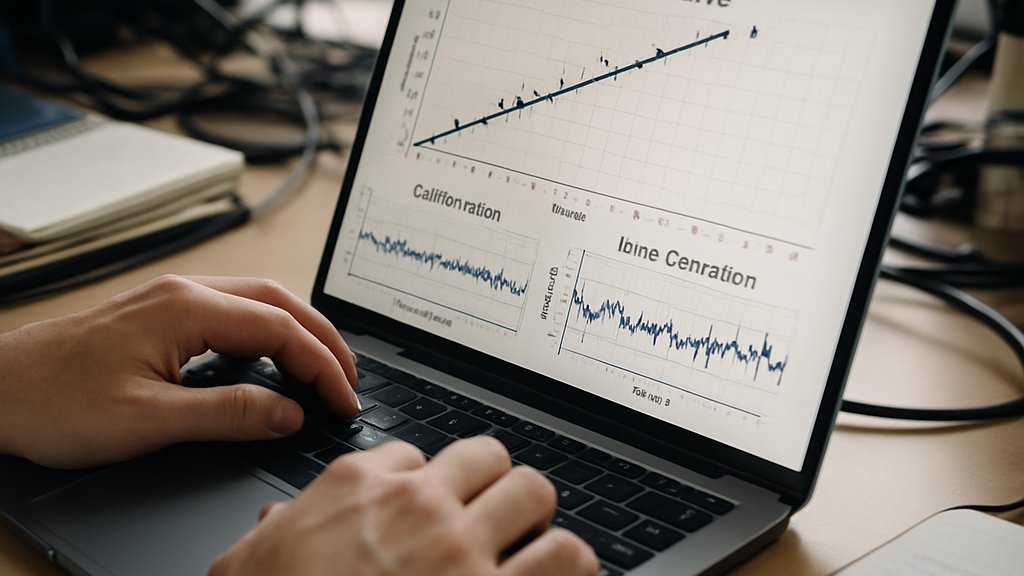
Inside NVIDIA Ising Calibration, a transformer backbone pairs text tokens with image patches from spectrum, Ramsey, and cross-resonance plots. Subsequently, the model outputs parameter deltas with confidence scores. Laboratories then pipe suggestions into autonomous agents built with CUDA-Q and NeMo toolkits.
Furthermore, partners such as IQM report that agentic loops trimmed qubit frequency alignment from two days to three hours. Juha Vartiainen remarked that enterprises can now “focus on what they actually bought the machine for.” In contrast, legacy scripts demanded constant graduate-student supervision.
Consequently, the calibration VLM frees scarce talent for higher-level algorithm research. The section shows how multimodal AI closes a critical operations gap. Next, decoding performance determines whether corrected qubits stay error-free long enough to run complex circuits.
Faster Quantum Error Decoding
The second pillar of the suite tackles error correction decoding. NVIDIA offers two 3D-CNN models—fast 912 k and accurate 1.79 M parameters. Moreover, internal benchmarks demonstrate up to 2.5× speed and 3× accuracy over PyMatching at surface code distance 13 and physical error 0.003.
Therefore, gate counts can scale further before logical errors proliferate. Additionally, lightweight kernels run efficiently on A100 and H100 GPUs using FP8 inference within CUDA-Q. Nevertheless, production engineers must still integrate a global decoder for final syndrome processing.
The improved latency widens the feasible design space for near-term quantum AI accelerators. These decoding gains complement calibration speedups. However, adoption success also depends on community trust and ecosystem participation.
Global Ecosystem Adoption Surge
Early adopters include Fermilab, Harvard SEAS, IonQ, and Lawrence Berkeley Lab. Consequently, performance data will soon emerge across superconducting, trapped-ion, and neutral-atom modalities. Meanwhile, Cornell researchers already fine-tuned Ising-Calibration-1 on custom flux-onium noise profiles using open weights.
Moreover, international standards bodies such as NPL are piloting assurance frameworks around automated calibration decisions. This transparency addresses safety concerns raised by regulators. Additionally, vendors integrate the models through CUDA-Q runtime APIs, easing deployment across heterogeneous clusters.
The ecosystem momentum illustrates strong confidence in quantum computing enabled by AI workflows. Yet, platform dependencies raise strategic questions explored in the next section.
NVIDIA Platform Trade Offs
Although weights are open, real-time inference currently assumes NVIDIA GPUs, NVLink, and NIM microservices. Consequently, critics warn of practical vendor lock-in. Moreover, migrating to alternative accelerators would require re-implementing kernel optimizations absent in other toolchains.
Nevertheless, many labs already rely on CUDA for classical simulations, making incremental adoption attractive. Furthermore, automatic mixed-precision and quantization recipes reduce operational costs at scale. In contrast, bespoke tuning scripts often ran on expensive cryogenic controllers with limited reuse.
These trade offs highlight the balance between openness and hardware coupling. The next section turns to workforce development that can mitigate integration risk.
Talent And Certification Paths
Skilled engineers able to blend AI and quantum computing remain scarce. Consequently, organizations seek structured learning programs. Professionals can enhance their expertise with the AI+ Quantum Specialist™ certification.
Moreover, the curriculum covers error correction theory, calibration VLM pipelines, and CUDA-Q deployment patterns. Additionally, hands-on labs use openly available NVIDIA Ising checkpoints, ensuring transferable skills. Therefore, graduates can contribute immediately to agentic calibration projects.
Workforce readiness accelerates technology diffusion. Subsequently, companies can realize return on investment sooner, justifying further R&D spend. The closing section outlines future milestones guiding that investment.
Roadmap And Next Steps
Independent benchmarking across larger code distances tops the community wish list. Furthermore, labs plan to publish latency budgets comparing GPU and FPGA decoders. Meanwhile, NVIDIA promised additional NVIDIA Ising releases optimized for photonic qubits.
Moreover, open synthetic data generators inside CUDA-Q will extend training coverage to exotic noise models. Consequently, researchers can stress-test error correction under realistic environmental drift. Nevertheless, assurance tooling must mature alongside model complexity.
These upcoming milestones will shape the next wave of quantum AI deployment. The following conclusion distills actionable insights for technical leaders.
Conclusion
NVIDIA Ising integrates multimodal calibration and accelerated decoding into an open, GPU-optimized package. Furthermore, early data shows days of manual tuning shrink to hours, while logical error rates fall sharply. Additionally, open weights, QCalEval scores, and CUDA-Q APIs invite broad community validation.
Nevertheless, real-time reliance on NVIDIA hardware introduces strategic considerations. Therefore, cultivating cross-disciplinary talent and adopting assurance frameworks remain vital. Professionals seeking structured skill building should pursue the linked certification.
Explore the model repositories and start benchmarking today. Future-proof your lab and seize the promise of fault-tolerant quantum computing by embracing NVIDIA Ising driven workflows.
Disclaimer: Some content may be AI-generated or assisted and is provided ‘as is’ for informational purposes only, without warranties of accuracy or completeness, and does not imply endorsement or affiliation.


