

AI CERTS
3 hours ago
Fashion Faces Off With AI Model Replicas
This article unpacks escalating protests, shifting regulations, and economic stakes. Furthermore, it highlights skills and certifications that can future-proof creative careers amid synthetic disruption.
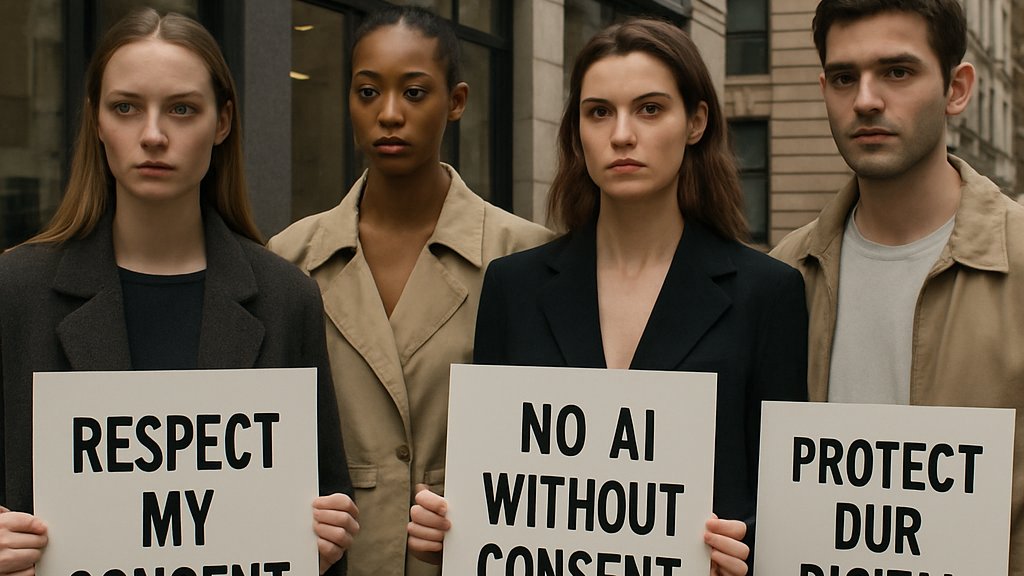
Models Challenge AI Usage
March 2025 marked a flashpoint. Model Alliance publicly opposed H&M’s plan to deploy thirty AI model replicas across e-commerce shoots. Subsequently, photographers and stylists joined the chorus, arguing that widespread clones threaten diverse creative labor ecosystems. In contrast, H&M assured media that every digital likeness would carry explicit labeling and paired compensation.
Sara Ziff, Alliance founder, insisted that real models deserve informed consent and revenue sharing before any pixels debut. Moreover, she warned that vague contracts hand over perpetual usage rights without fair pay. These challenges spotlight unresolved power gaps. However, fresh statutes are emerging to rebalance negotiations.
These early protests forced executives to examine ethical pitfalls. Consequently, many brands paused large-scale rollouts while awaiting legal clarity.
Legal Protections Evolve
Lawmakers responded quickly. California’s AB 2602 and AB 1836, effective January 2025, restrict clauses that let agencies replace performers with digital likeness copies. Meanwhile, New York’s Fashion Workers Act, live since June 2025, demands written consent before forging or distributing any clone. Furthermore, the act limits agency control over resulting AI model replicas.
Across the Atlantic, the EU AI Act introduces phased labeling duties for synthetic images used in advertising. Consequently, international brands now juggle a patchwork of disclosure rules. Nevertheless, compliance experts expect federal proposals in the United States within two years.
Regulatory momentum reassures talent advocates. However, unclear enforcement mechanisms still leave gray zones about royalty rates and ownership rights. These uncertainties will test contracts signed post-2026.
Economic Stakes Surface
The Bureau of Labor Statistics counts 6,700 U.S. modeling jobs in 2024, with a projected 1 percent decline by 2034. Additionally, brands claim AI model replicas cut production costs up to 30 percent. Therefore, accountants view clones as irresistible efficiency levers.
Yet displaced wages ripple outward. Photographers, hair artists, and set crews supply indispensable creative labor. If campaigns skip physical shoots, their income shrinks. Moreover, smaller agencies fear losing leverage when negotiating image rights for newcomers.
- Median model wage, 2024: $43.26/hr
- Estimated yearly openings: 1,200
- Average shoot budget savings from AI: 20-30 percent
These figures reveal real livelihood threats. Consequently, many professionals now seek technical upskilling. They can boost market value through the AI Design Certification™, which teaches prompt engineering and ethical deployment.
Reduced expenses attract shareholders. However, reputational costs may eclipse savings if consumers perceive synthetic deception.
Tech Vendors Offer Answers
Startups like Kartel.ai promote opt-in cloning platforms that split revenue between brand and model. Additionally, studio Seraphinne Vallora argues its AI model replicas simply “supplement” campaigns by enabling infinite wardrobe swaps. Moreover, vendors emphasise transparency dashboards tracking each licensed digital likeness across channels.
Nevertheless, critics question dataset sourcing and bias mitigation. Unchecked prompts may distort body proportions or skin tones, undermining inclusion goals. Therefore, responsible providers embed fairness audits and obtain model consent for every derivative work.
Clear governance tools could reassure regulators. Consequently, vendor selection criteria now prioritise ethical guardrails alongside rendering quality.
Controversial Brand Case Studies
Guess sparked outrage after Vogue ran a two-page ad starring a fully synthetic face in August 2025. Disclosure text was barely visible. Subsequently, stylists lambasted the decision on social media, arguing that hidden clones erode trust in high-fashion advertising.
Earlier, H&M’s pilot captured headlines when leaked behind-the-scenes footage showed models being scanned for AI model replicas. Furthermore, Mango and Levi’s have experimented with virtual try-ons featuring generative avatars. In contrast, Zalando paused its initiative pending European guidance on usage rights.
These incidents highlight how inadequate transparency can damage brand equity. However, meaningful labels and shared revenue models may convert resistance into collaboration.
Future Industry Scenarios Ahead
Analysts outline three plausible paths. First, strict global regulation could cap clone deployment, preserving traditional shoots. Second, moderate guardrails may allow widespread AI model replicas alongside enforceable royalties. Third, unregulated expansion might displace thousands, igniting litigation over violated rights.
Furthermore, hybrid workflows could unlock fresh creative frontiers. For example, real-time avatar try-ons could shorten supply cycles while valuing human storytellers. Additionally, models who master prompt artistry can monetize their unique digital likeness repeatedly. They might secure perpetual passive income, provided consent terms remain fair.
Professionals preparing for any scenario should pursue continuous learning. Consequently, courses like the linked certification offer timely AI fluency that safeguards creative labor relevance.
These projections underscore the need for balanced governance. Meanwhile, collective bargaining and technical literacy will shape which path dominates.
Conclusion
Fashion’s rapid embrace of AI model replicas has triggered legal reforms, ethical debates, and fresh skill demands. Moreover, the conflict spotlights fundamental issues around consent, job security, and image rights. Nevertheless, thoughtful policies and transparent tools could let human and synthetic talent co-exist productively. Industry players should monitor evolving statutes, draft fair contracts, and invest in AI education. Ultimately, continued collaboration and upskilling will determine whether clones amplify or erode the sector’s creative heartbeat. Therefore, explore specialized programs like the AI Design Certification™ to stay ahead of the next runway revolution.
Disclaimer: Some content may be AI-generated or assisted and is provided ‘as is’ for informational purposes only, without warranties of accuracy or completeness, and does not imply endorsement or affiliation.


