

AI CERTS
3 hours ago
Madras Court Ruling Sets AI In Education Limits
Consequently, stakeholders across India are reassessing technology strategies for classrooms and campuses. This article unpacks the latest court ruling, market data, and policy responses. Additionally, it outlines balanced implications for educators, vendors, and regulators. Readers gain actionable insights and links to professional upskilling opportunities.
Madras Court Signals Limits
First, consider the statement at the heart of the controversy. Sources on Reddit quote the bench: “Neither ChatGPT nor any other AI tool can replace a teacher.” However, journalists have not yet retrieved the certified judgment PDF. Therefore, media outlets treat the line as provisional until verification. Previous Madras orders already emphasize the teacher role as moral guide. Moreover, benches said teachers are “not simple tools of knowledge transfer,” according to Indian Express. Consequently, the new remark aligns with that judicial philosophy.
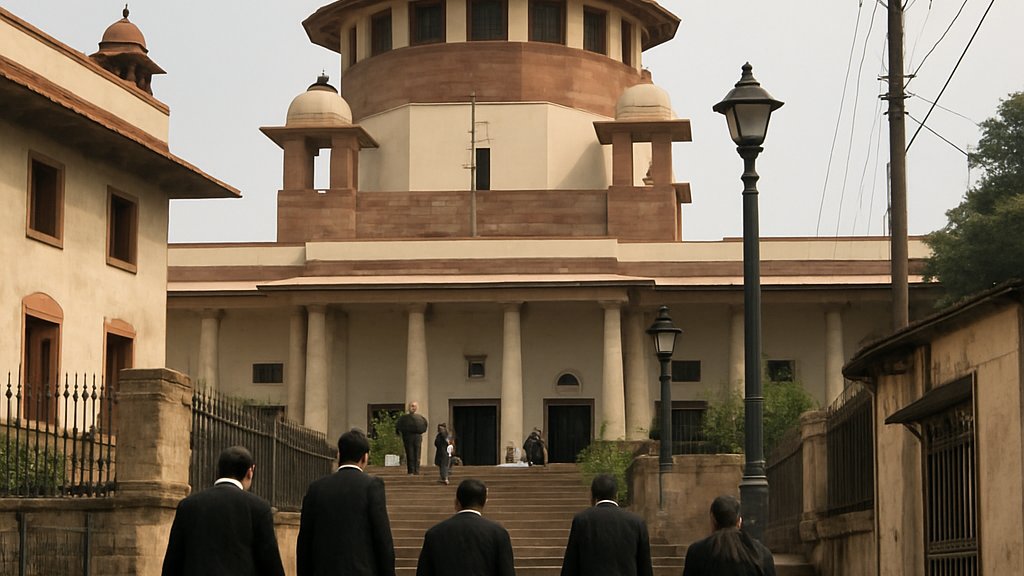
These observations reinforce judicial faith in human instruction. Yet, official confirmation of the court ruling is pending.
Meanwhile, understanding the commercial backdrop offers critical context.
Market Growth Contextual Snapshot
Grand View Research values the global AI In Education market at USD 11 billion for 2026. MarketsandMarkets projects compound annual growth exceeding 25% through 2030. Furthermore, HolonIQ analysis suggests continued venture funding despite tighter worldwide capital.
- HEPI 2025 survey: 78% of UK students used generative AI for assignments.
- EdWeek 2025 poll: 61% of US teachers tried AI tools; only 18% received training.
- RAND survey: 42% of principals planned AI budgets for personalised learning.
Consequently, investment momentum contrasts with judicial caution. In contrast, many classrooms still lack reliable connectivity and analytics infrastructure. These numbers underline why balanced strategies matter.
Market data reveals strong financial tailwinds for AI In Education. However, growth will test regulatory patience and capacity.
Consequently, the teacher role remains a strategic anchor.
Teacher Role Remains Central
Educators argue algorithms cannot replicate empathy, improvisation, and discipline building. Moreover, classroom culture thrives on spontaneous human dialogue. Madras benches echo this view, framing teachers as architects of student character. Additionally, cognitive science research links stable adult mentorship to improved learning outcomes. In contrast, generative AI can hallucinate citations and reinforce biases. Effective AI In Education therefore requires human orchestration. Therefore, the teacher role becomes even more critical as AI scales. Government initiatives like BodhanAI focus on capacity building rather than substitution. Professionals can enhance expertise with the AI Learning & Development™ certification.
Courts and researchers converge on the irreplaceable mentor function of teachers. Nevertheless, policymakers also pursue supportive AI frameworks.
Next, we examine India’s evolving policy architecture.
Government's Balanced AI Strategy
Union Education Minister Dharmendra Pradhan launched BodhanAI on 12 February 2026. The Centre of Excellence aims to create interoperable modules for public and private classrooms. Furthermore, the Bharat EduAI Stack will offer open APIs for adaptive assessments. Consequently, Delhi positions AI as a teacher assistant rather than a replacement. Officials underscore that AI In Education must augment, not supplant, faculty. Regulators also study audit trails, explainability dashboards, and consent protocols. Meanwhile, court ruling references give policymakers additional guardrails. Pradhan emphasised that human teachers remain at the centre of the reform vision.
India’s strategy blends scalable AI services with human oversight. Therefore, alignment with judicial principles looks plausible.
However, risks still demand scrutiny.
Technology Risks And Safeguards
Generative AI can deliver fluent nonsense, a phenomenon scholars label hallucination. Additionally, improper data handling threatens student privacy and sovereignty. Without safeguards, AI In Education may amplify bias. Indian courts have flagged such issues in recent procurement cases. Subsequently, several benches mandated human verification of algorithmic outputs. Madras High Court earlier prohibited unverified AI citations in pleadings. Moreover, economic pressures may tempt institutions to trim staff costs. That possibility fuels the wider edtech debate about job security.
- Mandatory audit logs for every AI recommendation.
- Annual bias testing with independent reviewers.
- Transparent communication of AI limitations to learners and parents.
Robust safeguards can prevent misuse and protect trust. Nevertheless, stakeholder coordination remains challenging.
These tensions surface sharply in the ongoing edtech debate.
Implications For Edtech Debate
Investors view AI startups as essential to personalised learning ecosystems. Conversely, unions fear budget diversion away from human staffing. The latest court ruling strengthens calls for hybrid deployment models. Moreover, survey data shows teachers want control knobs for algorithmic tutoring. Consequently, vendors increasingly co-design dashboards with teachers. Stakeholders within the AI In Education ecosystem watch these developments closely. Such collaboration may cool the edtech debate and satisfy regulators. However, consistent funding for professional development remains critical.
The debate now hinges on evidence of student benefit and teacher autonomy. Therefore, research partnerships can move discourse beyond ideology.
Finally, stakeholders must map the road ahead.
Path Forward For Stakeholders
Courts, ministries, teachers, and technologists share responsibility for balanced innovation. Firstly, judiciary transparency can clarify precedents for future disputes. Clear benchmarks will let AI In Education prove measurable value. Secondly, ministries should publish implementation guidelines referencing the teacher role. Thirdly, vendors must invest in accessible training modules for classrooms nationwide. Furthermore, professional certifications can help educators evaluate and adopt tools responsibly. Consequently, earning the AI Learning & Development™ credential signals informed leadership. Meanwhile, researchers should measure long-term impacts on equity and outcomes.
Coordinated action can convert hype into sustainable progress. Nevertheless, vigilance must persist as algorithms evolve.
The discussion now turns to final reflections.
Conclusion
AI In Education promises personalised learning, streamlined assessment, and data-driven insights. However, the Madras bench reminds us that technology must serve, not supplant, human mentors. Courts worldwide are likely to echo this caution. Consequently, organisations should pursue hybrid models that respect the teacher role while exploiting algorithmic speed. Robust safeguards, transparent reporting, and regular audits will anchor public trust. Moreover, ongoing professional development will empower educators to steer these tools wisely. Interested readers can future-proof their skills with the AI Learning & Development™ certification. Commit today to shaping responsible, human-centred AI In Education.
Disclaimer: Some content may be AI-generated or assisted and is provided ‘as is’ for informational purposes only, without warranties of accuracy or completeness, and does not imply endorsement or affiliation.


