

AI CERTS
3 hours ago
Pew Charts the AI Gender Gap Landscape
Meanwhile, companion research from Harvard Business School quantifies persistent adoption gaps in everyday chatbot usage. These independent datasets converge, offering a comprehensive view of demographic trends in the emerging AI economy. Therefore, understanding the gender divide today could prevent deeper inequality tomorrow.
Mapping Public AI Perceptions
Pew Research surveyed 5,410 adults during August 2024. Only 22% of men foresee national gains from AI, compared with 12% of women. In contrast, 64% predict job losses during the next two decades. Moreover, 66% voice strong concern about inaccurate AI information contaminating discourse.
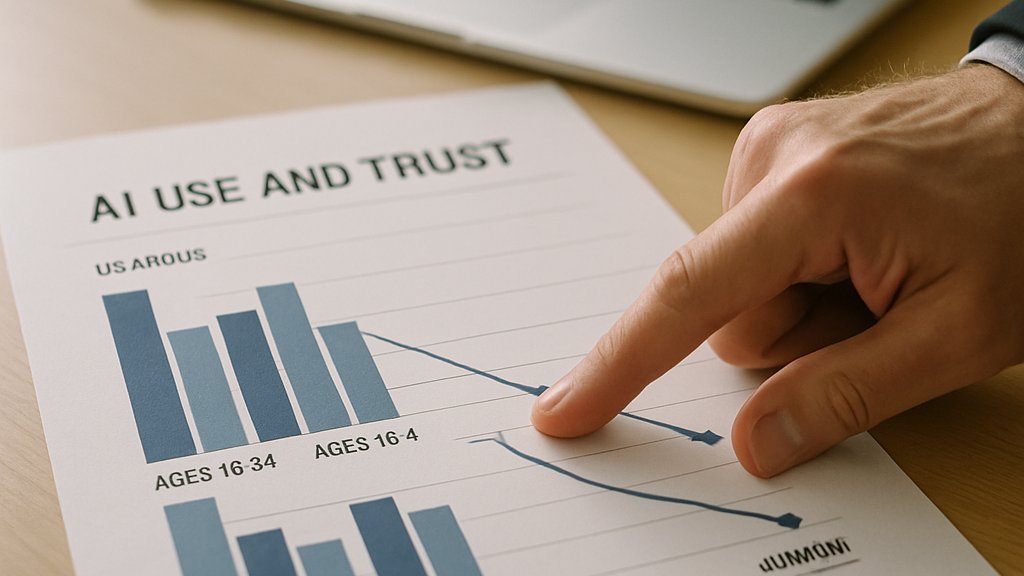
Experts display higher optimism yet an even wider AI Gender Gap. Among specialists, 63% of men anticipate positive national effects, while only 36% of women agree. Therefore, elite opinion offers no protection against underrepresentation. Pew Research notes limited minority counts among experts, suggesting caution when generalising.
These opinion splits underline entrenched skepticism among women. However, adoption behavior reveals an even starker divide, as the next section shows.
Usage Data Reveals Gap
Harvard Business School synthesised 18 studies tracking generative AI uptake across 140,000 participants. Researchers estimate men adopt such tools about 25% more often than women. Furthermore, platform analytics show women represent only 42% of ChatGPT web traffic. They account for just 27% of app downloads, corroborating chatbot usage disparities. Field experiments that equalised training failed to erase the gap, confirming deeper social dynamics.
- AI Gender Gap shows men using generative AI 25% more across 18 studies.
- In Denmark, women were 16 percentage points less likely to deploy ChatGPT at work.
- 76% of experts expect personal benefits versus 24% of adults overall.
Consequently, the AI Gender Gap in practical chatbot usage now mirrors perception trends. Trust differences appear central, yet other factors also matter. We examine those factors next.
Data confirm substantial adoption inequities across regions and platforms. Nevertheless, statistics alone cannot explain causation, prompting a deeper causal inquiry.
Unpacking Root Cause Factors
Researchers isolate several interacting drivers behind the persistent divide. Access and technical literacy explain some variance but fall short overall. Moreover, workplace norms sometimes brand AI assistance as cheating, discouraging experimentation. In contrast, product design choices may prioritise male communication styles, lowering female engagement.
Additionally, higher reported risk aversion among women aligns with stronger safety concerns highlighted by Pew Research. Social identity cues within chatbot usage interfaces can also shape perceived belonging. Therefore, holistic remedies must address culture, policy, and design simultaneously. Failure to address the AI Gender Gap may entrench bias in emergent systems.
These intertwined factors sustain the adoption divide across multiple contexts. Consequently, companies face strategic risks and missed opportunities, discussed in the following section.
Business Risks And Opportunities
Missed adoption can widen wage gaps if productivity tools reach men first. Furthermore, skewed data inputs may bias model outputs, reinforcing masculine perspectives. Firms risk reputational damage if products ignore diverse user needs.
Conversely, closing the AI Gender Gap can unlock new revenue and talent pools. McKinsey models link inclusive technology diffusion to hundreds of billions in potential GDP. Additionally, investors increasingly screen for equitable technology strategies, raising capital implications.
Inclusive adoption safeguards ethical, financial, and competitive interests alike. However, translating intent into impact requires structured action, outlined next.
Closing The Adoption Divide
Experts advocate multi-layer interventions spanning education, tooling, and culture. Mandatory onboarding programs can normalise generative AI while avoiding stigma. Moreover, opt-in learning pathways let hesitant employees progress at safe speeds. Professionals can upskill through the AI for Everyone™ certification. In contrast, product teams should audit interfaces for gendered cues and accessibility.
Consequently, leadership must set measurable targets and publish progress dashboards. Government actors can reinforce momentum through grants and inclusive procurement standards. Meanwhile, researchers need broader demographic trends data to test intervention efficacy. Regular reporting on the AI Gender Gap will sustain momentum and accountability.
Practical levers exist across policy, design, and learning domains. Subsequently, measuring impact will determine whether the AI Gender Gap finally narrows.
Future Reporting Focus Areas
Journalists can track workplace adoption by occupation, seniority, and geography. Additionally, requesting audited platform numbers will clarify demographic trends and chatbot usage patterns. Researchers should trial causal interventions across multiple industries and countries.
Moreover, cross-disciplinary panels can evaluate ethical, legal, and economic implications in parallel. Therefore, consistent coverage will keep equity concerns visible during rapid technology scaling. Ignoring the AI Gender Gap in coverage limits public understanding of systemic barriers.
Sustained scrutiny ensures that inclusion remains a shared metric of AI success. Nevertheless, stakeholders must act now, not after disparities grow irreversible.
The evidence leaves little doubt about the persistent AI Gender Gap across perception, trust, and usage. Pew Research and Harvard findings align, revealing consistent trust differences and adoption gaps worldwide. Businesses that tackle demographic trends head-on will improve innovation and social license. Consequently, leaders should deploy targeted training, inclusive design, and transparent metrics. Take the first step by earning the linked AI certification and championing equitable AI strategies today. Moreover, share progress openly to inspire peers and regulators alike. Together, we can ensure advanced technologies uplift everyone, not just early adopters.
Disclaimer: Some content may be AI-generated or assisted and is provided ‘as is’ for informational purposes only, without warranties of accuracy or completeness, and does not imply endorsement or affiliation.


