

AI CERTS
3 hours ago
Kaggle Reinvents AI Model Benchmarks Culture
Moreover, Google’s data science hub now funds compute grants for ambitious test designers. This article explores how Community Benchmarks reshape model testing culture and developer workflows. Readers will learn opportunities, risks, and next steps for advancing AI Model Benchmarks themselves. Additionally, we highlight a certification path that strengthens evaluation careers.
Community Benchmarks Get Redefined
Community Benchmarks debuted on 14 January 2026 with a bold promise. Kaggle engineers Michael Aaron and Meg Risdal announced executable, task-first scoreboards. Furthermore, each task is expressed in Python, then packaged through the open-source SDK. The SDK verifies outputs with assert helpers and records every I/O artifact. Therefore, reviewers can replay a submission months later and confirm identical metrics. Such reproducibility elevates AI Model Benchmarks beyond static spreadsheets.
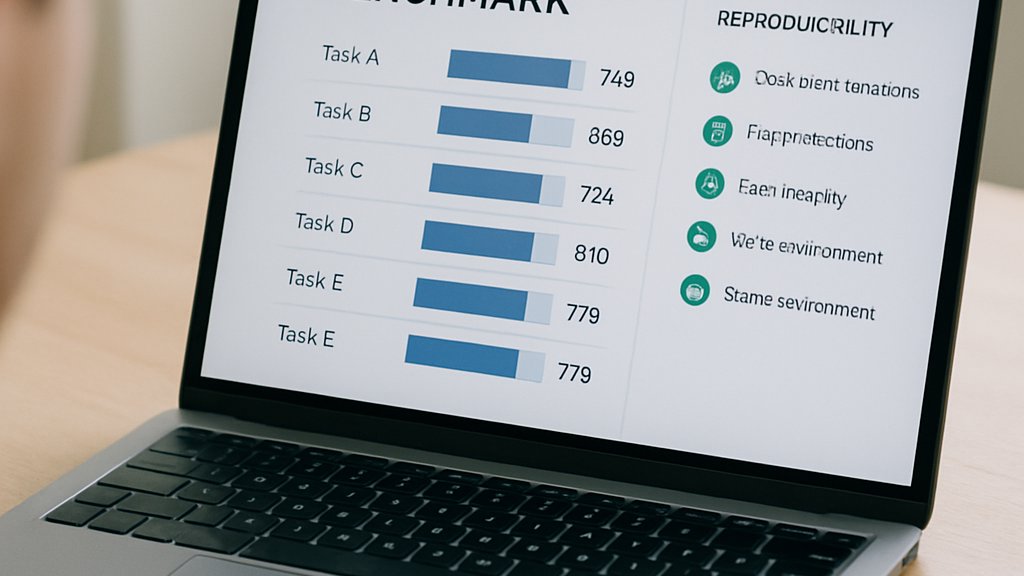
The open repository, kaggle-benchmarks, has reached version 0.6.0. Moreover, it already logs 98 commits and 158 stars on GitHub. These signals reveal healthy maintenance, which encourages enterprise adoption. In contrast, many private evaluation tooling scripts never receive community scrutiny.
Community contributions accelerate reliability and visibility. However, deeper mechanics merit closer inspection next.
Task-First Evaluation Framework
Under the new framework, tasks come before metrics. Consequently, designers describe realistic, multi-step interactions rather than single queries. A task may load images, run external APIs, or request chain-of-thought reasoning. Executions occur inside managed containers, which isolate secrets and match production latency.
Additionally, the framework streamlines model testing for newcomers. Subsequently, model testing becomes repeatable across releases. A single CLI command triggers the container, passes credentials, and returns scored artifacts. Meanwhile, recorded assertions form an immutable audit trail. That trail satisfies governance teams demanding reliable AI Model Benchmarks evidence.
- Reproducible runs capture exact dependencies and random seeds.
- Evaluation tooling lives in the repository, not hidden notebooks.
- Leaderboards update automatically as new submissions arrive.
Consequently, stakeholders gain continuous insight, not yearly snapshots. Task-first design makes failures explicit. Subsequently, adoption numbers are climbing fast.
Early Adoption Evidence Surges
Academic groups quickly embraced the framework. DARE-bench aggregated 6,300 tasks drawn from early Community suites. Moreover, LongDS built 2,225 conversational turns from Kaggle notebooks. SciCode focuses on scientific code with 80 problems and 338 subproblems.
Live leaderboards already display competitive scores from Gemma and DeepSeek models. In contrast, static papers rarely show such rapid iteration.
Research citations now reference AI Model Benchmarks hosted directly on the platform. Therefore, publication cycles shorten as results remain verifiable online.
Adoption data confirms strong momentum. However, growth introduces fresh challenges ahead.
Operational Risks Being Addressed
No evaluation system is perfect. Gameability quickly appears when tasks expose assertion logic. Nevertheless, maintainers can randomize seeds or hide partial checks. Additionally, Kaggle offers compute quotas that deter brute-force overfitting.
Gameability Concerns Still Persist
Attackers may craft prompt patterns tailored to specific tasks. Consequently, scores inflate without genuine reasoning gains. Researchers recommend rotating tasks and measuring secret test slices.
Vendor Coverage Gaps Remain
Model availability varies across environments and regional rules. Furthermore, some commercial APIs remain absent from free tiers. Therefore, cross-model comparisons may suffer unintended bias.
Collective governance can track gaps through public issues and metadata. Subsequently, transparency reports will improve fairness.
Operational risks need vigilant stewardship. Next, tooling must fit daily developer workflows.
Developer Workflow Integration Gains
Enterprise teams demand seamless pipelines. Consequently, the Python SDK integrates with GitHub Actions or Jenkins jobs. Evaluation tooling hooks export scores as JSON for dashboards. Moreover, automatic pulls fetch latest AI Model Benchmarks for nightly regression runs.
Developers appreciate identical environments between local laptops and cloud sandboxes. In contrast, previous model testing scripts often broke on dependency changes. Clear examples show how developer workflows evolve from manual notebooks to automated checks. In contrast, rigid pipelines block flexible developer workflows from exploiting fresh metrics.
Organizations can upskill staff through certifications. Professionals can validate skills with the AI Researcher™ certification. Additionally, documentation shows how to bind results to Slack alerts. These integrations clarify responsibility lines between data scientists and platform engineers.
Workflow compatibility accelerates institutional trust. Consequently, strategic outcomes become possible.
Strategic Implications For Stakeholders
Executives view Community Benchmarks as market signaling devices. High leaderboard positions boost brand credibility during procurement cycles. Moreover, regulators may reference AI Model Benchmarks when crafting compliance guidelines.
Investors watch adoption metrics, stars, and release cadence before funding tooling startups. In contrast, slow-moving suites risk marginalization.
Vendors must balance openness with proprietary advantages. Nevertheless, transparent scores often outweigh secretive claims.
- Top GitHub stars signal active maintainer support.
- Grants lower hosting costs for complex tasks.
- Community audits strengthen overall trust.
Therefore, proactive engagement with AI Model Benchmarks could unlock competitive edges.
Strategic actors cannot ignore measurable performance. Finally, let’s recap core insights.
Concluding Thoughts And Actions
Community Benchmarks changed the evaluation landscape within months. Moreover, they elevated AI Model Benchmarks to a living, reproducible practice. Consequently, teams now perform trustworthy model testing and refine developer workflows continuously. Nevertheless, task leakage and vendor gaps still need governance vigilance. Professionals should engage early, publish tasks, and track AI Model Benchmarks for strategic insight. Finally, pursue the AI Researcher™ certification to lead fair, effective evaluations.
Disclaimer: Some content may be AI-generated or assisted and is provided ‘as is’ for informational purposes only, without warranties of accuracy or completeness, and does not imply endorsement or affiliation.


