

AI CERTS
3 hours ago
AI Water Consumption Spurs Policy and Community Backlash
This article unpacks the conflict, numbers, and emerging solutions. Additionally, it clarifies why transparency will decide the sector’s social license. Finally, readers will learn how certifications can foster accountable sustainability leadership.
Backlash Hits Boiling Point
Local anger flared in Box Elder County when officials approved the 40,000-acre Stratos campus. In contrast, residents feared aquifer depletion and demanded exact numbers on AI Water Consumption. Similar community backlash erupted around Michigan’s $16 billion Stargate proposal after voters felt ignored. Moreover, a Georgia construction site used 29 million unbilled gallons, further eroding trust. These flashpoints show how secrecy magnifies opposition and delays projects. Protests thrive when people lack reliable numbers. However, federal engagement now attempts to calm tempers.
Federal Reuse Strategy Emerges
The Environmental Protection Agency answered protesters on April 16 with WRAP 2.0. WRAP 2.0 positions large-scale reuse as a national solution for data center water use. Furthermore, Administrator Lee Zeldin framed reclaimed supplies as essential for the AI future. Therefore, municipalities gain political cover to demand reclaimed pipelines before approving new campuses. EPA guidance also urges transparent accounting of AI Water Consumption within annual sustainability plans. WRAP 2.0 sets reuse expectations yet leaves enforcement unclear. Consequently, tech giants crafted voluntary pledges.
Tech Giants Pledge Transparency
Microsoft launched its Community-First AI Infrastructure plan in January. The pledge promises 40 percent lower water-use intensity and full regional reporting. Google followed in June with an industry framework on responsible AI Water Consumption. Moreover, Google reported using 7.2 billion gallons in 2024, replenishing 64 percent. Both firms highlight sustainability benefits and agree to fund grid upgrades, easing infrastructure impact. Nevertheless, critics note the pledges remain self-policed without binding metrics. Corporate promises matter but require verification. Next, we examine how numbers reveal true scale.
Water Metrics Reveal Scale
Lawrence Berkeley National Laboratory estimated U.S. direct site demand at 17 billion gallons in 2023. Under growth scenarios, demand may reach 73 billion gallons by 2028, doubling every few years. Meanwhile, Morgan Stanley’s aggressive global outlook tops 282 billion gallons by 2028. Such variation illustrates modelling uncertainty around data center water use. However, single facilities already approach one billion gallons annually, stressing local systems. These numbers confirm AI Water Consumption can no longer hide behind abstract averages. Forecasts warn planners about exponential trajectories. The next section explores technical levers to moderate growth.
Cooling Tradeoffs Challenge Planners
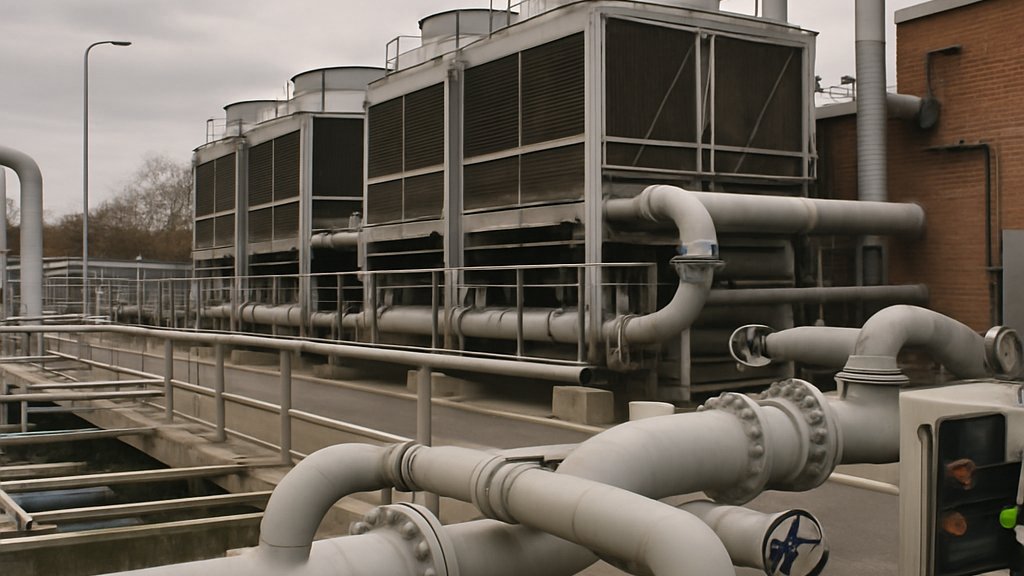
Evaporative towers minimize electricity but escalate onsite water withdrawal. In contrast, air cooling slashes onsite demand yet raises indirect water through power plants. Closed-loop liquid and immersion cooling promise efficiency but require expensive retrofit investments. Furthermore, geographic hydrology dictates which approach optimizes sustainability and infrastructure impact simultaneously.
- Evaporative: Lowest energy, highest onsite AI Water Consumption
- Air: Higher energy, near-zero onsite water
- Liquid loop: Moderate energy, recycled water potential
These options show no perfect solution, only context driven compromises. Technology alone cannot erase local constraints. Attention now shifts to community consequences.
Local Infrastructure Impact Concerns
Large draws can overwhelm municipal wells, treatment plants, and distribution mains. Moreover, construction phases often lack metering, creating billing gaps and escalating community backlash. Utility upgrades may cost hundreds of millions, yet residents fear rate hikes. Microsoft pledges to pay for grid work, easing politics around sustainability obligations. Nevertheless, secrecy around exact AI Water Consumption volumes breeds suspicion.
- Fayette County site: 29 million unbilled gallons
- Council Bluffs campus: 1 billion gallons in 2024
- Projected national demand: 73 billion gallons by 2028
Transparency lets planners forecast load and right-size pipes before shortages appear. Communities accept projects when risks feel controlled. Therefore, skills in disclosure become career assets.
Solutions And Skill Building
Reclaimed wastewater networks top the list of scalable mitigations. Additionally, strict WUE targets push developers toward efficient cooling designs that slash AI Water Consumption. Cities can require public dashboards showing real-time data center water use. Investors increasingly link financing rates to third-party verified sustainability audits. Professionals can enhance expertise through the AI Cloud™ certification. Such training covers water accounting, infrastructure impact assessment, and stakeholder engagement. Consequently, certified leaders help organizations reduce AI Water Consumption while sustaining growth. Skills and policy together shape outcomes. Finally, we recap major lessons.
AI Water Consumption now defines the social license for hyperscale expansion. Protests revealed hidden withdrawals and ignited broader community backlash across diverse regions. Federal reuse guidance, corporate pledges, and advanced thermal solutions offer real progress. However, success demands transparent metrics, rigorous audits, and shared infrastructure impact planning. Therefore, professionals who master water governance will guide ethical innovation. Start reducing AI Water Consumption today by applying new insights and pursuing further learning.
Disclaimer: Some content may be AI-generated or assisted and is provided ‘as is’ for informational purposes only, without warranties of accuracy or completeness, and does not imply endorsement or affiliation.


