

AI CERTS
2 months ago
Pfizer–Chai-3 Deal Redefines AI Biotech Licensing Landscape
Previously, the startup revealed Chai-2, reporting near 20 percent antibody hit rates across fifty targets. Meanwhile, investors poured $130 million into the company, pushing valuation toward $1.3 billion. Therefore, today's license extends that trajectory into one of pharma's largest R&D budgets. The following analysis dissects terms, technology, market context, and lingering questions.
License Deal Details Overview
Chai Discovery announced the license on June 5, 2026 through Business Wire and BioSpace channels. However, the company has yet to publish its own statement, leaving financial terms undisclosed. The arrangement grants the licensee early access to Chai-3 plus a custom internal model. Additionally, Chai engineers will integrate the platform within the drugmaker’s discovery engine. Licensing scope appears non-exclusive, mirroring Chai’s earlier pharma collaboration with Eli Lilly.
Nevertheless, the drugmaker receives priority support and model iterations over the multiyear term. Therefore, the contract positions Pfizer to influence roadmap features and validation studies. AI Biotech Licensing momentum intensifies as global drug leaders secure differentiated algorithms. In contrast, smaller developers may rely on open platforms lacking deep data integration. Such fragmentation underscores the strategic value embedded within this single licensing transaction.
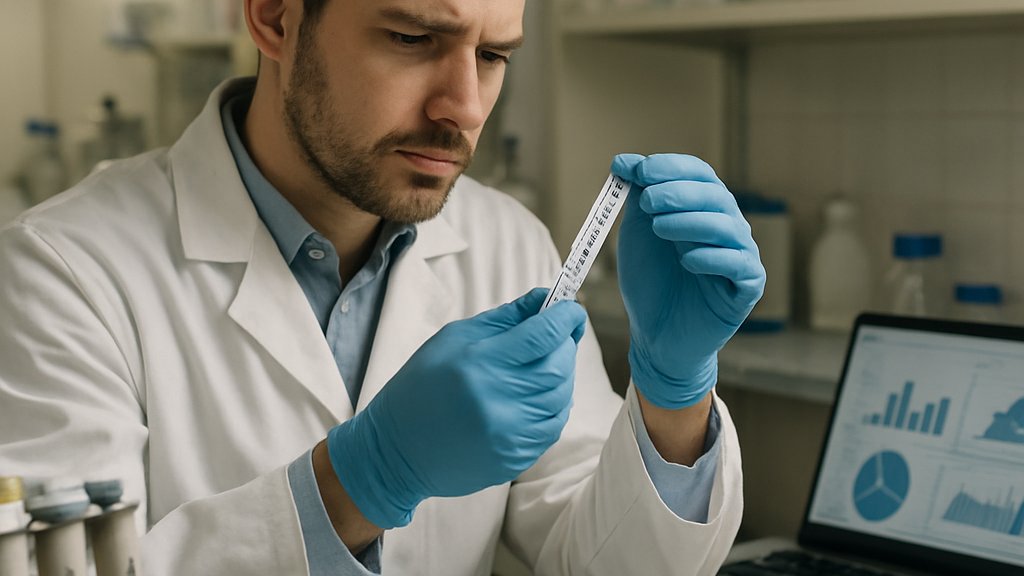
Chai-3 Model Performance Advances
Chai-3 doubles the reported hit rate of Chai-2, according to company materials. Moreover, the new architecture supports multispecific antibodies and broader target classes. Consequently, stakeholders expect faster iteration cycles when screening challenging epitopes. Such AI Biotech Licensing grants pharma fine-grained control over algorithmic tooling. Generative molecular design outcomes depend on both binding affinity and developability. Additionally, Chai reports improved developability metrics, including solubility and thermostability. The team claims wet-lab validation across fifty targets, yet external reproduction remains limited.
- Hit rate increase: estimated two-fold versus Chai-2.
- Nanomolar affinities reported across diverse antigens.
- Under 20 designs needed per target for many hits.
- Platform supports multispecific antibody scaffolds.
Nevertheless, no absolute Chai-3 percentage has been disclosed publicly. Therefore, independent benchmarking will be crucial for broad confidence. These technical gains suggest meaningful productivity boosts. However, validation data must mature. Collectively, Chai-3 promises sharper design precision and accelerated lab throughput. However, industry adoption hinges on transparent benchmarks. The deal’s strategic implications extend beyond pure technology metrics.
Strategic Pharma Collaboration Impact
Large pharmaceutical companies increasingly embrace external AI partners to shorten discovery cycles. In contrast, homegrown platforms often struggle with data silos and talent shortages. Therefore, Pfizer selected Chai Discovery to inject specialized capability without rebuilding infrastructure. The pharma collaboration integrates Chai’s APIs into Pfizer’s antibody engineering workflows. Additionally, the partnership grants Pfizer influence over future model direction and training datasets. Such strategic alignment mirrors the earlier Eli Lilly collaboration announced in January 2026.
Consequently, analysts predict a “land-and-expand” pattern where foundation models permeate multiple therapeutic areas. Licensing revenue helps startups fund compute while pharma reduces upfront build costs. Nevertheless, governance frameworks must manage data privacy and intellectual property boundaries. The alliance strengthens Pfizer’s discovery engine while de-risking Chai’s commercialization. However, sustainable advantage will depend on continued funding momentum. Funding themes surface clearly in the next discussion. Therefore, active AI Biotech Licensing strategies become core to competitive pharmaceutical portfolios.
Funding Fueling Rapid Growth
Venture investors have backed Chai Discovery with a $130 million Series B closed December 2025. Moreover, reports peg valuation near $1.3 billion, reflecting strong confidence in generative molecular design. OpenAI, General Catalyst, and Menlo Ventures led the round alongside sector specialists. Consequently, Chai possesses resources to scale compute clusters and wet-lab automation. Additionally, non-dilutive licensing payments from the licensee offset model training costs. Investors view pharma collaboration as validation of go-to-market strategy. Nevertheless, high burn rates across AI biotech remain a concern. Therefore, sustained milestones and downstream royalties could mitigate funding pressure.
- Series B size: $130 million.
- Valuation: approximately $1.3 billion.
- Lead investors: OpenAI, General Catalyst, Oak HC/FT.
- Funds earmarked for model compute expansion.
These financing figures illustrate rising capital intensity. However, market competition sharpens capital allocation choices. Competitive dynamics dominate the broader landscape discussion ahead. Investors recognize that AI Biotech Licensing can convert compute spending into recurring enterprise revenue.
Market Context And Competition
AI-driven antibody design now hosts dozens of venture-backed contenders. William Blair analysts list Chai Discovery among the frontrunners. In contrast, incumbents like Schrödinger focus more on small-molecule physics models. Consequently, biologics specialists differentiate with protein language models and structural training datasets. Software-first molecular design startups increasingly bundle wet-lab services. Furthermore, partnerships have proliferated; Recursion collaborates with Roche, while Isomorphic Labs works with Novartis.
That competitive heat drives aggressive AI Biotech Licensing activity across the sector. Additionally, pharma demand for end-to-end platforms elevates the appeal of integrated wet-lab loops. Nevertheless, many startups provide only digital screening without in-house biology, limiting differentiation. These trends suggest consolidation ahead. However, unique datasets may shield early leaders. Evaluating risks alongside opportunities becomes essential next.
Opportunities And Lingering Risks
Chai-3 offers shorter design loops, potentially cutting months from antibody discovery timelines. Moreover, multispecific capabilities open doors to complex modalities like bispecific T-cell engagers. Consequently, difficult targets labeled “undruggable” may now become tractable. However, reproducibility uncertainty looms until independent labs confirm Chai-3 metrics. Additionally, regulatory agencies will scrutinize data provenance and model interpretability. Licensing contracts must address liability if in-silico errors propagate downstream. Nevertheless, structured validation pipelines can mitigate many concerns.
Therefore, professionals may benefit from formal AI governance training. Professionals can enhance their expertise with the AI+ Healthcare™ certification. Chai’s upside remains large, but execution and verification will decide ultimate impact. However, forward-looking strategies can hedge emerging risks. Companies now ask how best to act. Robust AI Biotech Licensing frameworks also clarify accountability across partners.
Future Outlook And Actions
Industry experts foresee wider AI Biotech Licensing alliances forming within eighteen months. Furthermore, cost pressures will push mid-tier pharmas to adopt external platforms rather than build internally. In contrast, early movers like Pfizer may capture data network effects sooner. Additionally, Chai Discovery plans to expand into RNA therapeutics, diversifying revenue sources. Consequently, stakeholders should monitor upcoming clinical candidate announcements in 2027.
Executives can prepare by upgrading internal data infrastructure and securing analytical talent. Moreover, cross-disciplinary teams must align dashboards, governance policies, and wet-lab automation plans. These concrete steps translate strategic intent into measurable outcomes. The landscape will reward agile organizations ready to partner, validate, and iterate. However, patience remains vital as biology rarely obeys compressed software timelines.
Chai Discovery’s license with Pfizer marks a pivotal moment for AI-enabled biologics. Moreover, the agreement highlights how AI Biotech Licensing can reshape research economics and timelines. Consequently, improved hit rates, quicker loops, and broader target coverage promise patient benefits. Nevertheless, success relies on transparent validation and prudent data governance. Therefore, companies should pursue partnerships while investing in internal AI literacy. Professionals eager to lead this wave can explore the AI+ Healthcare™ credential for structured upskilling. AI Biotech Licensing momentum will likely intensify; readiness today secures advantage tomorrow.
Disclaimer: Some content may be AI-generated or assisted and is provided ‘as is’ for informational purposes only, without warranties of accuracy or completeness, and does not imply endorsement or affiliation.


