

AI CERTS
2 months ago
Autonomous Security Testing Reveals Critical Redis RCE
However, the same autonomy also accelerates attacker research, widening cloud exposure risks. The following report dissects CVE-2026-23479, the AI methods behind the find, and the defensive playbook enterprises now need.
AI Uncovers Redis Flaw
Team Xint Code reported the bug to Redis on 5 May 2026. Subsequently, Redis issued patches for versions 7.2.14 through 8.6.3. The flaw lives in the “unblock-client” path and triggers a use-after-free that an authenticated user can weaponize into RCE.
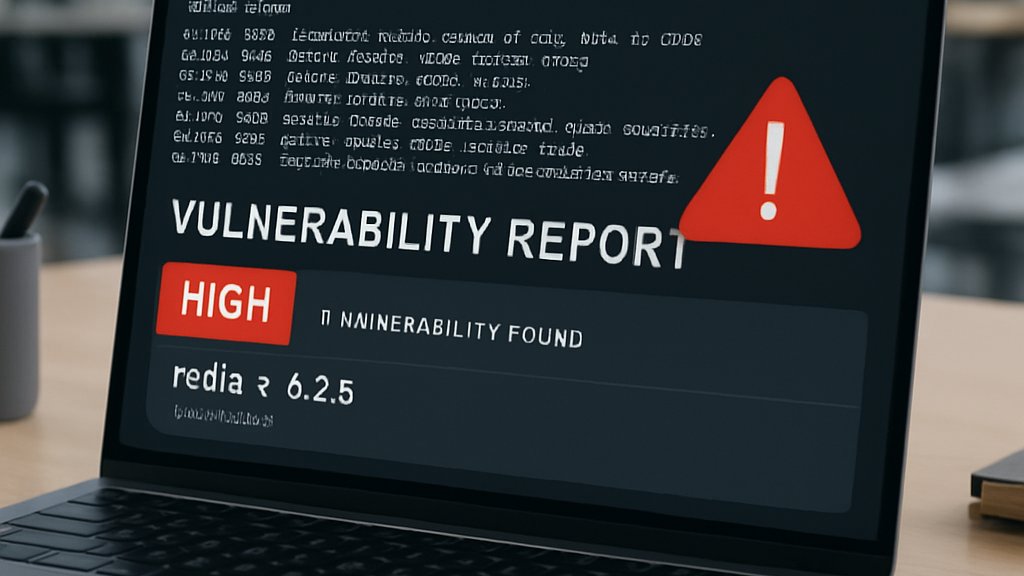
Redis rated the issue CVSS 7.7, while NVD scored 8.8. Nevertheless, Redis states no live exploitation has surfaced yet. Moreover, SentinelOne and Ubuntu echoed that assessment in synchronized advisories.
Key Vulnerability Statistics Snapshot
- CVE: 2026-23479 | CWE-416 | RCE potential
- Vendor CVSS: 7.7 (High)
- NVD CVSS: 8.8 (High)
- Patched builds: 7.2.14, 7.4.9, 8.2.6, 8.4.3, 8.6.3
- Reporter: Team Xint Code autonomous tool
The numbers confirm significant risk. However, patch availability simplifies remediation.
These facts highlight the incident’s scale. In contrast, deeper technical context explains why the bug emerged.
Use After-Free Basics
A use-after-free occurs when software references memory after release. Therefore, stale pointers can let attackers overwrite code or data. In Redis, the race happens while resuming a blocked client. The window is narrow yet repeatable.
Xint Code’s static and dynamic reasoning flagged pointer lifetimes automatically. Furthermore, its agent simulated authenticated traffic patterns until the crash appeared. That autonomous workflow demonstrates the power of Autonomous Security Testing for complex memory issues.
Understanding the memory lifecycle aids developers. Consequently, teams can craft safer allocation patterns and fortify automated tests.
This technical primer clarifies exploitation paths. However, the strategic story expands far beyond one bug.
Autonomous Security Testing Landscape
Defenders and attackers now harness similar AI pipelines. Google’s GTIG observed adversarial models weaponizing zero-day code within days. Meanwhile, the Cloud Security Alliance warns that autonomous exploit kits may soon commoditize RCE chains.
In the defensive camp, Autonomous Security Testing democratizes deep semantic analysis. It scales vulnerability discovery across sprawling codebases without human fatigue. Additionally, models learn protocol grammar, fuzz intelligently, and generate PoCs.
However, parallel offensive research erodes dwell time. Faster finds mean enterprises must shrink patch windows or harden runtime shields. Moreover, increased report volume strains triage teams, increasing burnout.
Professionals can enhance their expertise with the AI Researcher™ certification. The course dives into autonomous assessment pipelines, synthetic exploit generation, and secure coding countermeasures.
AI is now a double-edged sword. Nevertheless, disciplined processes can convert that blade into a shield.
The competitive landscape explains urgency. Next, concrete mitigation tactics translate theory into action.
Practical Risk Mitigation Steps
Redis advises immediate upgrades to a fixed build. Additionally, administrators should restrict network exposure, enforce ACLs, and disable unused modules. Because the bug requires authentication, strong credentials further reduce cloud exposure.
Teams that cannot patch quickly can isolate instances with firewalls. Subsequently, runtime monitoring for abnormal client unblocks can detect exploit attempts. Moreover, container images should be rebuilt to pull verified binaries.
- Identify instances using versions below 7.2.14.
- Schedule emergency maintenance windows for upgrade.
- Audit ACL policies and rotate secrets.
- Enable TLS to deter sniffing and session hijacking.
- Deploy intrusion rules matching unblock-client anomalies.
These actions shrink attack surfaces rapidly. Consequently, leadership gains breathing room for backlog hardening.
With controls established, executives must weigh broader business implications.
Business Implications And Strategy
Enterprise reliance on open-source infrastructure continues to rise. Therefore, a single Redis RCE can threaten service uptime, customer trust, and compliance standing. Financial penalties follow breaches that abuse cloud exposure.
Moreover, shareholder expectations demand transparent risk governance. Boards now request metrics on patch lead time and Autonomous Security Testing coverage. In contrast, lagging programs face insurance premium hikes and potential rating downgrades.
Investment in automated auditing offers measurable ROI. A recent CSA model shows a 40 percent reduction in post-release defects when teams integrate autonomous tool driven analysis during CI pipelines. Furthermore, earlier vulnerability discovery slashes incident response costs by half.
Strategic alignment between engineering, security, and finance accelerates adoption. Nevertheless, success requires skilled practitioners who can tune AI outputs and judge false positives.
These financial drivers strengthen the business case. However, talent development cements long-term resilience.
AI Certification Next Steps
Security engineers seeking an edge should pursue advanced learning paths. Autonomous Security Testing skills now feature in many job posts. Consequently, earning the AI Researcher™ credential signals mastery of emerging tooling.
Course modules cover language-model reasoning, guided fuzzing, and scalable exploit triage. Additionally, learners practice automating Redis style labs that simulate real RCE bugs. Graduates leave prepared to deploy an autonomous tool safely within production pipelines.
Certification aligns personal growth with organizational goals. Therefore, both sides gain from structured upskilling.
Skilled staff and clear metrics close the capability gap. In conclusion, leaders must act swiftly.
Conclusion
AI already found and reported CVE-2026-23479. The event showcased both the promise and peril of Autonomous Security Testing. Organizations that patch quickly, restrict cloud exposure, and invest in automated audits gain clear defensive advantages. Meanwhile, threat actors explore the same capabilities to accelerate vulnerability discovery and craft novel RCE exploits.
Forward-looking teams should upgrade Redis, integrate an autonomous tool into CI, and pursue continual education. Moreover, professionals can future-proof their careers through the AI Researcher™ certification. Act today to stay ahead of tomorrow’s automated adversaries.
Disclaimer: Some content may be AI-generated or assisted and is provided ‘as is’ for informational purposes only, without warranties of accuracy or completeness, and does not imply endorsement or affiliation.


