

AI CERTS
2 hours ago
House Democrats Advance Federal AI Regulations Framework
Primary debates now center on transparency, workforce security, and the limits of federal preemption. Meanwhile, state lawmakers have raced ahead with dozens of new statutes. This article examines the bills, politics, and implications shaping the next generation of national standards. Readers will gain actionable context on proposed rules, agency guidance timelines, and strategic considerations.
Democrats Drive AI Agenda
Speaker Hakeem Jeffries unveiled the House Democratic Commission on AI and the Innovation Economy. Moreover, the panel's co-chairs—Reps. Ted Lieu, Josh Gottheimer, and Valerie Foushee—promise inclusive outreach. Their mission is to translate caucus concerns into concrete Federal AI Regulations by 2026. In contrast, Republican leaders focus on voluntary standards and rapid deployment incentives. Commission sessions already highlight tension between progressive guardrails and centrist competitiveness goals.
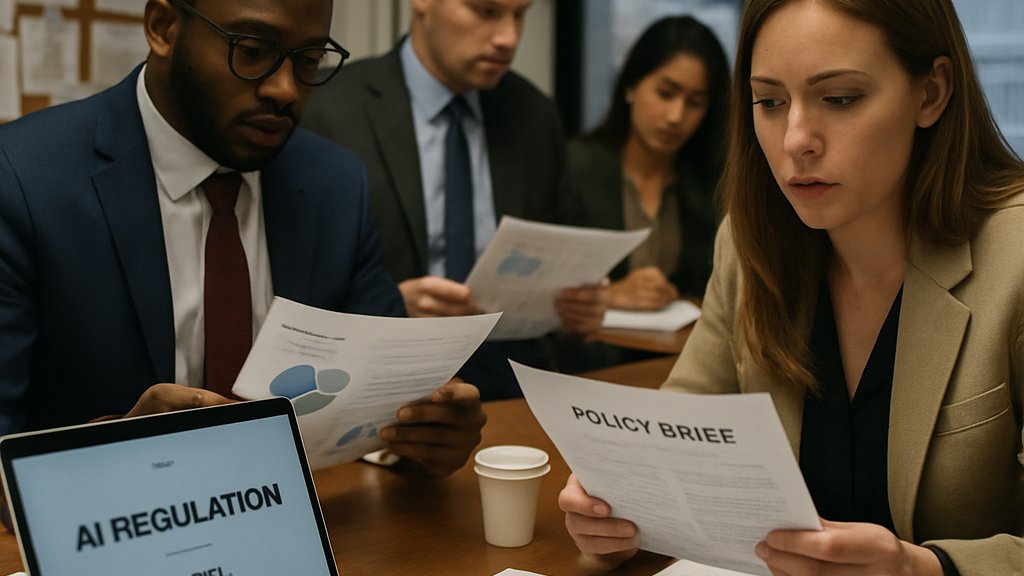
Those discussions reveal momentum for stricter consumer protections. They also expose internal divides over economic impact. Consequently, attention now shifts toward how states influence the debate.
State Activity Intensifies Rapidly
States have introduced more than 2,000 AI proposals during the current biennium. Moreover, trackers show roughly 80 enacted laws covering hiring, education, and health privacy. Progressive advocates argue this patchwork safeguards residents until Federal AI Regulations emerge. However, industry groups warn differing disclosure mandates raise compliance costs and deter investment. Policy analysts at Brookings describe the states as indispensable laboratories for innovation policy. Nevertheless, Republican preemption efforts aim to override tougher state statutes.
State momentum sets a high regulatory baseline for Congress. It forces lawmakers to justify any federal override. Therefore, legislative focus turns to specific House bills.
Key Bills Under Scrutiny
Two flagship measures dominate the House calendar this spring. Additionally, both originate from Rep. Don Beyer's office. The GUARDRAILS Act would nullify a 2025 executive order restricting state powers. Meanwhile, the AI Foundation Model Transparency Act mandates disclosures for high-impact foundation models.
- H.R. 8031: Introduced 20 Mar 2026; 34 House Democrats cosponsors; advances civil rights and workforce safeguards.
- H.R. 8094: Introduced 26 Mar 2026; bipartisan backing; orders FTC rulemaking on model disclosures within one year.
Furthermore, the transparency bill aligns with recent NIST agency guidance on foundation model risk. In contrast, GUARDRAILS explicitly rejects federal preemption, preserving state authority. Consequently, stakeholders view the pair as a litmus test for the extent of Federal AI Regulations.
Together, these bills sketch the outlines of national oversight. Their fate will signal Congress's appetite for compromise. Subsequently, debates about balancing growth and risk intensify.
Industry Pushes Uniform Standards
Tech giants favor unified rules to streamline compliance across jurisdictions. However, they lobby for flexible reporting thresholds and safe harbor provisions. NVIDIA and cloud providers caution that diverging state disclosure demands slow chip deployment. Moreover, venture investors frame predictable Federal AI Regulations as essential for capital allocation. Yet watchdogs counter that voluntary pledges lack enforcement teeth. Therefore, Democrats propose statutory AI oversight backed by FTC penalties.
Industry input shapes final bill language but cannot guarantee preemption. Lawmakers still face competing ideological pressures. Consequently, the conversation pivots to ethical risk management.
Balancing Innovation And Risk
Commission hearings reveal concern about job displacement, bias, and agentic misuse. Additionally, progressive members demand stronger worker protections and data-center limits. Centrist Democrats warn excessive restrictions may drive talent overseas. Meanwhile, NIST agency guidance offers technical pathways to mitigate harm without halting research. Brookings scholars recommend cooperative rulemaking between federal agencies and states. Moreover, experts urge transparent AI oversight metrics to track compliance over time.
Federal AI Regulations could codify such metrics, ensuring continuous risk audits. Professionals can deepen expertise through the AI in Government™ certification. Consequently, organizations gain talent capable of navigating complex federal policy landscapes.
The policy calculus balances innovation incentives against social safeguards. Effective frameworks will integrate technical standards with enforceable penalties. Therefore, attention now shifts toward legislative timelines and agency rulemaking.
Practical Impacts For Leaders
CIOs already map internal models against probable disclosure obligations. Moreover, contracting teams review procurement clauses for forthcoming Federal AI Regulations references. Legal counsel track FTC notices to anticipate AI oversight assessments. In contrast, compliance officers monitor state dashboards to maintain alignment with evolving federal policy discussions. Subsequently, strategic roadmaps incorporate watermarking, audit logs, and incident reporting workflows. These preparations reduce remediation costs once agency guidance becomes mandatory.
Early action positions firms ahead of upcoming mandates. It also signals responsible innovation to regulators and clients. Consequently, leaders await clearer congressional milestones.
Next Steps For Congress
Energy and Commerce members plan hearings on both House proposals this summer. Additionally, committee staff draft bipartisan amendments targeting definition clarity and phased compliance. Jeffries expects caucus recommendations from listening sessions by September. Meanwhile, floor votes may slip to early 2027 given election calendar pressures. Nevertheless, Speaker leadership insists Federal AI Regulations cannot wait for another crisis. Rulemaking timelines will tighten once any bill becomes law, triggering rapid FTC activity. Therefore, companies should finalize governance structures before statutory clocks begin.
The legislative window is narrow yet consequential. Stakeholders must continue substantive engagement. Subsequently, final negotiations will define national guardrails for decades.
Federal AI Regulations now occupy center stage of congressional technology debates. House Democrats have positioned themselves as the drivers of that legislative train. However, bipartisan cooperation will determine whether comprehensive guardrails actually reach the president's desk. State momentum, industry lobbying, and detailed agency guidance will continue shaping every draft. Meanwhile, robust AI oversight remains non-negotiable for consumer advocates. Therefore, businesses must watch rulemaking calendars and update risk programs accordingly.
Effective implementation also hinges on consistent federal policy that respects state innovations. Nevertheless, the search for equilibrium between innovation and safety continues. Professionals should prepare now, pursuing certifications and monitoring House Democrats hearings. Explore the linked AI in Government™ program to lead during the era of updated Federal AI Regulations. Consequently, proactive alignment with emerging federal policy enhances resilience.
Disclaimer: Some content may be AI-generated or assisted and is provided ‘as is’ for informational purposes only, without warranties of accuracy or completeness, and does not imply endorsement or affiliation.


