

AI CERTS
2 hours ago
UK Validates AI Labor Impact Evidence
The new stance forces suppliers, researchers, and employers to present hard numbers, not hopeful press releases. Meanwhile, parliamentary committees track progress and demand quarterly updates. The result is a data-driven conversation that other nations are watching closely.
Evidence Demands Intensify Nationwide
Cross-government “AI and future of work” teams formed over the last year. Furthermore, multiple ministerial statements reiterated the need for verified labour metrics. The UK government asked vendors bidding for the new Jobs & Careers Service to show live demonstrations tied to employment outcomes. Officials framed this requirement as essential for gauging the AI Labor Impact. They also emphasised transparency when public money funds pilot projects.
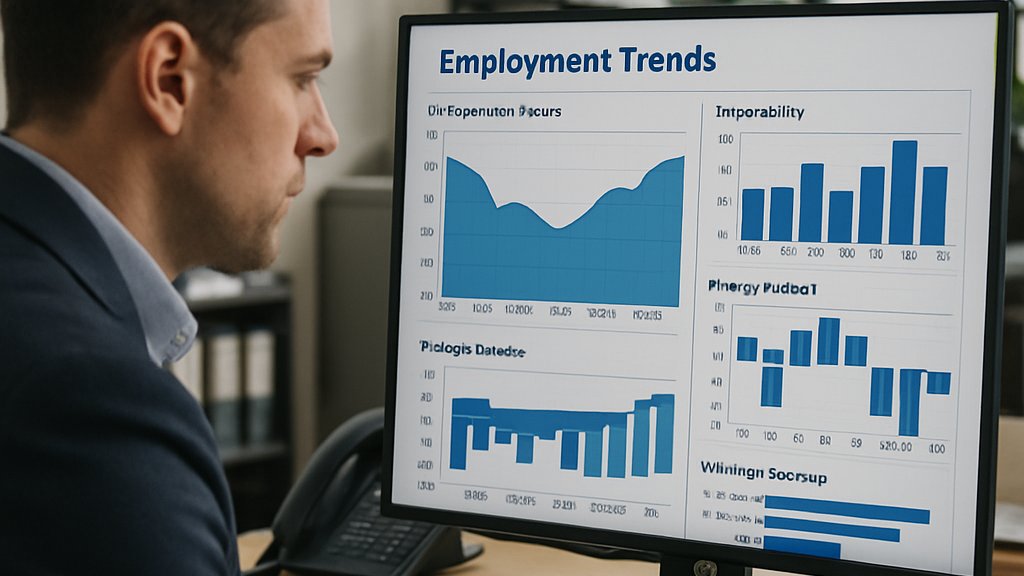
Key recent developments include:
- Hansard records from March 2026 underline persistent uncertainty around net job displacement.
- The ONS launched enhanced workforce analytics linking PAYE data to skills surveys.
- Interim safety reports call for clearer metrics on productivity and hiring.
- Central-bank syntheses highlight early but mixed employment trends.
These steps signal institutional focus. However, officials admit big evidence gaps remain. The section ahead explores data sources under scrutiny.
Data Sources Under Scrutiny
Robust measurement depends on reliable baselines. Therefore, statisticians combine administrative records, firm surveys, and online vacancy scraping. The ONS “AI Skills for Life and Work” scenarios project replacement demand through 2035. In contrast, think-tank studies often emphasise task exposure rather than headcount. The AI Economics Institute contributes granular datasets that help interrogate the AI Labor Impact further.
Recent projections show Experts and Specialists growing, yet entry-level postings dip within high-exposure occupations. Additionally, public polls reveal half of adults fear imminent job displacement. Researchers cautioned that sentiment can outpace reality. Nevertheless, ministers still watch these numbers because perceptions influence policy acceptance. Evidence divergence underscores the next topic: why measurement methods diverge sharply.
These data debates highlight unresolved questions. Consequently, clearer standards for evidence submission are emerging next.
Measurement Methods Diverge Sharply
Two dominant lenses frame impact analysis. Task-based studies dissect roles into micro activities. Occupation counts treat each job as a monolith. Moreover, methodology choice alters conclusions on the AI Labor Impact. Task methods often flag creative or administrative tasks as highly automatable. Meanwhile, occupation reviews sometimes mask internal variation, blurring risk assessments.
Central-bank staff papers suggest task exposure predicts wage pressure quicker than occupation exposure. The AI Economics Institute replicated these findings across eight sectors. Furthermore, workforce analytics platforms now integrate task tagging for real-time dashboards. Policymakers prefer that granularity because it informs targeted grants instead of blanket subsidies.
Differing approaches can confuse stakeholders. Therefore, the UK government plans a methodological code of practice later this year. Uniform rules should streamline procurement evaluations, discussed in the following section.
Procurement Rules Grow Teeth
Public spending increasingly hinges on solid evidence. Consequently, new tender documents list metrics that bidders must track, such as productivity shifts, redeployment counts, and verified employment trends. Vendors must quantify expected job displacement and offer mitigation strategies.
For example, the Department for Work & Pensions requires quarterly dashboards showing how deployed systems alter headcount. Additionally, suppliers must arrange third-party audits within six months. Non-compliance risks contract termination. These strictures elevate the AI Labor Impact from abstract theory to contractual obligation.
Professionals seeking to advise on such compliance may pursue the AI Policy Maker™ certification. The programme teaches alignment of technical deployments with measurable labour outcomes.
Harsher procurement terms reflect wider workforce risks and upsides, explored next.
Workforce Risks And Upsides
The conversation is not solely about losses. Moreover, policy reviews list several potential benefits from generative tools. Productivity may rise in healthcare, education, and finance. New specialist roles emerge, including prompt engineers and model auditors. The AI Economics Institute estimates that UK high-skill AI roles could expand by 15% annually through 2030.
However, analysts caution that gains cluster in already prosperous regions. Meanwhile, entry-level clerical workers face automation pressure. In contrast, skilled trades show limited exposure today. Therefore, balanced strategies are vital. Suggested interventions include:
- Targeted reskilling funds tied to verified employment trends.
- Regional innovation hubs to spread opportunity.
- Mandatory impact assessments for major AI projects.
- Public dashboards tracking workforce analytics indicators quarterly.
These mixed effects reinforce why ministers demand proof. Subsequently, stakeholders must plan next steps, detailed in the final section.
Next Steps For Stakeholders
Companies deploying AI should prepare evidence frameworks before pitching projects. Furthermore, aligning with forthcoming methodological codes will ease approval. Unions and think-tanks can support by sharing anonymised wage data, enriching analysis of the AI Labor Impact.
Researchers should expand longitudinal studies capturing career trajectories after automation. Additionally, engaging the AI Economics Institute may unlock comparative insights across jurisdictions. The UK government will soon consult on standard templates for impact reporting. Participation now could influence final guidance.
These proactive moves can convert uncertainty into informed action. Nevertheless, continuous review remains essential as technologies evolve.
Overall, evidence-based policymaking promises more resilient labour outcomes. However, robust collaboration will determine success.
Consequently, every stakeholder should embed rigorous measurement into AI rollouts. Doing so turns speculation into strategy.
Key Takeaway Summary
• Ministers prioritise verifiable evidence.
• Divergent methods create policy friction.
• Procurement now demands quantified impacts.
• Balanced strategies can secure equitable gains.
These insights map the road ahead. Moreover, they invite professionals to refine metrics and safeguard shared prosperity.
Conclusion And Action
UK leaders seek hard proof on how algorithms alter work. Consequently, vendors, researchers, and labour groups must adopt transparent, standardised metrics. Task-based exposure, enhanced workforce analytics, and audited dashboards will shape future funding. Nevertheless, balanced policies can translate innovation into inclusive growth. Professionals eager to guide this transition should secure advanced credentials. Therefore, consider the AI Policy Maker™ programme to deepen expertise and influence upcoming guidelines.
Disclaimer: Some content may be AI-generated or assisted and is provided ‘as is’ for informational purposes only, without warranties of accuracy or completeness, and does not imply endorsement or affiliation.


