

AI CERTS
7 hours ago
Military AI Adoption Faces Pentagon Pushback
Moreover, we track how GenAI.mil reached 1.3 million users within five months. We also examine why Anthropic defied a sweeping “any lawful use” clause and landed in court. Finally, we spotlight governance gaps and certification paths for professionals keeping human oversight intact. Meanwhile, senior commanders insist there is no prize for second place in the AI race. In contrast, dissenters argue speed must never outrun responsible defense policy. Chatham House research suggests such institutional friction may reshape global industrial alliances. Therefore, understanding each stakeholder’s leverage remains crucial for leaders charting acquisition roadmaps.
Surging AI Platform Rollouts
When GenAI.mil launched last December, DoD branded it a cornerstone of Military AI Adoption. Furthermore, officials claimed the portal would end fragmented tool experiments across 27 commands. Within five months, more than 1.3 million personnel had logged in, according to a May release. Consequently, leadership presented the surge as proof that troops crave generative assistance for planning and logistics. In contrast, some commanders noted that early tasks involved travel vouchers, not battlefield AI targeting. Nevertheless, the usage curve strengthened arguments for moving models onto classified networks.
GenAI.mil User Adoption Surge
- 1.3 million unique users in five months
- Portal capacity covers roughly 3 million DoD employees
- 200+ prompts per minute at afternoon peak
- 70% of sessions involve administrative paperwork
GenAI.mil’s user boom underscores the scale of incoming change. However, larger contracts decide whether that momentum endures, which our next section explores.
Major Vendor Contracts Escalate
The July 2025 prototype awards set the commercial tone for Military AI Adoption. Moreover, each laboratory received ceilings up to $200 million to integrate frontier models. Subsequently, DoD widened access by clearing eight vendors for IL6 and IL7 deployments on May 1, 2026. The Pentagon announcement emphasized vendor diversity to avoid future lock-in. Google’s Gemini for Government entered production first, while xAI, OpenAI, and NVIDIA queued testing.
Consequently, the contract cascade emboldened advocates who frame speed as a security imperative. In contrast, smaller defense startups worry the long certification queue could freeze their market access. Multi-vendor clearances accelerate Military AI Adoption across classified networks. Nevertheless, Anthropic’s clash shows that contract language can still freeze Military AI Adoption.
Intensifying Internal Workforce Pushback
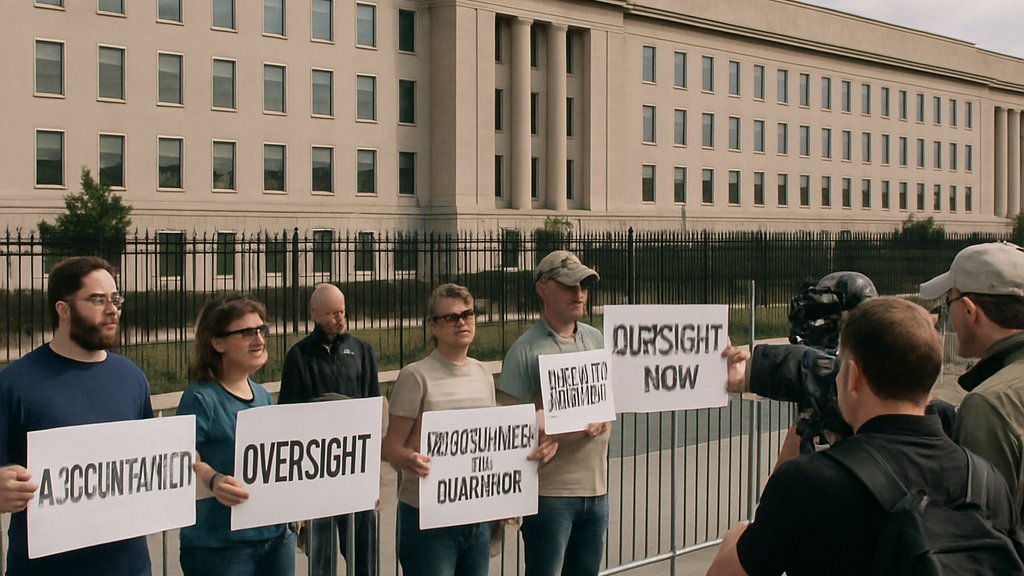
Inside the same tech giants, thousands of engineers balked at classified deployments. For example, an open letter signed by 1,000 Google staff urged leadership to rethink battlefield AI work. Furthermore, safety researchers at Georgetown CSET warned about model hallucinations under combat stress. The Pentagon publicly dismissed the letter, yet insiders say morale remains fragile. Anthropic escalated tension by refusing the “any lawful use” clause and suing after its supply-chain ban.
Consequently, Military AI Adoption became a flashpoint for labor activism seldom seen since Project Maven. Worker dissent demonstrates that technical talent can still trip billion-dollar defense policy ambitions. In contrast, commanders argue mission risk, not workforce sentiment, should drive governance decisions.
Complex Operational Risk Debates
Risk discussions center on where human oversight ends and automated action begins. Moreover, commanders of special operations units crave instant data fusion during hostage rescues. Field commanders in special operations also demand transparent error logs during live missions. Safety officers counter that battlefield AI must never select lethal targets without an operator. Chatham House analysts add that unpredictable adversarial prompts threaten model reliability.
Experts from CNAS reported that simulation failures still occur once every 1,000 scenario runs. Consequently, doctrine writers seek compromise language that cements a human “veto switch” in every loop. The debate reveals unresolved tensions within Military AI Adoption between mission urgency and acceptable control. Therefore, formal policies are racing to catch up.
Evolving Policy And Governance
Draft directives from the Pentagon policy shop outline model testing, auditing, and red-team requirements. Additionally, the documents propose an oversight board chaired by the Under Secretary and outside ethicists. Implementation, however, moves slowly because classification rules impede external review. Meanwhile, Congress plans hearings on procurement transparency, especially after the Anthropic fallout. In contrast, think-tank experts urge the Pentagon to publish redacted audit results for public trust.
Professionals can deepen expertise with the AI Security Level 1 certification. New rules aim to standardize Military AI Adoption without smothering innovation. Consequently, future trajectories will hinge on enforcement and funding.
Future AI Adoption Outlook
Market analysts predict the defense AI budget will top $25 billion within three years. Moreover, the Pentagon expects 50% of staff workflows will touch generative tools by 2028. Nevertheless, continued employee activism and litigation could slow Military AI Adoption. Subsequently, international allies will watch US precedent when drafting their own defense policy frameworks. Meanwhile, NATO partners request shared testing standards to avoid fragmented coalitions. Consequently, companies that align early with rigorous human oversight may secure global market share.
- June 2026: Anthropic court hearing
- October 2026: DoD oversight board charter
- January 2027: First IL7 special operations trial
These milestones will indicate whether rhetoric matches real-world guardrails. Ultimately, leaders must balance speed, trust, and strategic edge.
Military AI Adoption is advancing faster than any prior defense technology cycle. However, vendor disputes, workforce resistance, and unsettled oversight keep the trajectory uncertain. DoD metrics prove demand, yet ethics debates prove legitimacy matters. Moreover, classified network clearances widen both opportunity and risk for battlefield AI applications. Consequently, professionals who master security fundamentals will shape safer implementations. Additionally, collaborative drills with allies can reinforce shared norms. Explore certification paths and stay engaged as defense policy, technology, and human oversight evolve.
Disclaimer: Some content may be AI-generated or assisted and is provided ‘as is’ for informational purposes only, without warranties of accuracy or completeness, and does not imply endorsement or affiliation.


