

AI CERTS
6 hours ago
Cosmos 3 Spurs AI World Models Race
Cosmos 3 Launch Details
The Cosmos 3 announcement arrived on 31 May 2026. Nvidia open-sourced two checkpoints, Cosmos3-Nano and Cosmos3-Super, at 16 billion and 64 billion parameters. Moreover, the company published full training recipes and six synthetic datasets. These resources support physical AI experiments across perception, planning and control. Early adopters include Agile Robots, Runway and Li Auto.
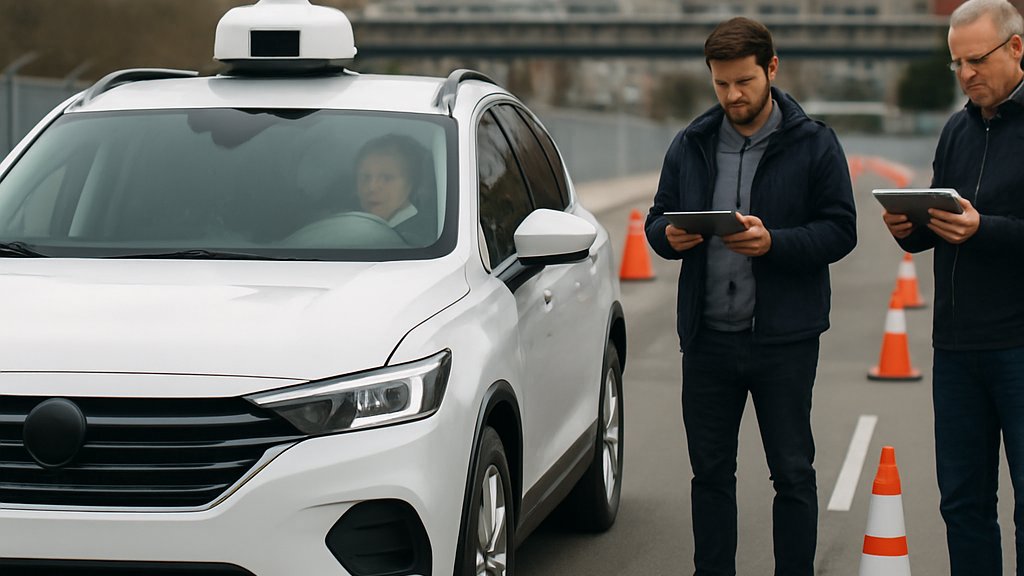
Key launch figures impress:
- 20 trillion multimodal tokens used for training
- Nearly one billion images plus 400 million real and synthetic videos
- Ambient audio, text and action trajectories integrated
These numbers illustrate unmatched data scale. Nevertheless, independent audits must verify dataset quality. In summary, Nvidia placed a huge bet on openness. Subsequently, the broader ecosystem must test that ambition.
Architecture And Technical Innovations
Cosmos 3 uses a two-tower Mixture-of-Transformers design. One autoregressive tower handles multimodal reasoning. A diffusion tower generates videos, audio and actions. Therefore, the system performs both prediction and synthesis in a single pass. This approach underpins [PK]AI World Models[/PK] that can plan and execute in virtual space.
Additionally, the model emphasizes multimodal simulation fidelity. Each tower shares a latent workspace, which reduces mode collapse across vision and motion. In contrast, earlier research often separated perception and control networks. Nvidia claims the join boosts sample efficiency for robotics training.
Cosmos 3 also ships with vLLM-Omni serving stacks. Consequently, enterprises can deploy on-prem or in the cloud with minimal tuning. These architectural choices promise faster iteration. However, safety validation pipelines still lag behind.
Joint reasoning and generation create strategic flexibility. Nevertheless, scaling complexity demands relentless benchmarking before field use.
Training Data And Benchmarks
Huge corpora fuel the new model. Nvidia blended synthetic physics scenes, warehouse trajectories and driving data. This mix supports autonomous vehicles research alongside household robotics. Furthermore, Cosmos 3 leads internal leaderboards such as Physics-IQ and PAI-Bench.
Yet, vendor benchmarks can overstate real-world gains. Independent labs have not replicated the scores. Moreover, some parameter counts still confuse observers. GitHub lists full-checkpoint sizes, while per-tower sizes differ. Clear reporting will help external reviewers trust [PK]AI World Models[/PK] progress.
Three critical metrics deserve quick verification:
- Temporal consistency of generated video frames
- Force-motion accuracy for robotic joints
- Collision prediction error within simulated drives
Verified results would validate multimodal simulation claims. Until then, prudent teams should run localized tests. These gaps underline why rigorous science must match marketing. Consequently, more peer reviews are essential.
Industrial Adoption And Coalition
Nvidia formed the Cosmos Coalition to accelerate uptake. Founding members span robotics startups and consumer-electronics giants. Meanwhile, manufacturers explore robotics training pipelines built on Cosmos 3. Doosan Robotics and LG Electronics already previewed pick-and-place demos.
Autonomous vehicles developers also joined. Li Auto reported promising lane-change simulations that cut testing time by 28%. Moreover, run-time inference leverages existing GPU fleets, easing deployment. These early signals hint at disruptive efficiency for [PK]AI World Models[/PK].
Professionals can deepen expertise with the AI Researcher™ certification. Such credentials help teams evaluate open checkpoints responsibly.
Industry excitement continues to build. However, coalition partners must share failure reports openly to build trust across sectors.
Opportunities And Possible Risks
The upside appears sizable. Unified models could slash data-collection costs and cut carbon footprints. Furthermore, synthetic edge-case generation supports safer autonomous vehicles. Similar benefits apply to warehouse automation and home assistants.
Nevertheless, significant risks persist. Generated actions may diverge from physics when scenarios grow complex. Misuse through deepfakes or rogue control sequences is another concern. Consequently, governance frameworks must evolve alongside [PK]AI World Models[/PK].
Nvidia provides guardrails that restrict unsafe prompts. In contrast, open weights let determined actors disable filters. Therefore, regulators and researchers should coordinate audits. Public transparency will strengthen physical AI adoption.
Opportunities inspire rapid experimentation. Yet, robust oversight will determine sustainable progress toward real deployments.
Next Steps For Industry
Enterprises should begin with small-scale pilots. First, benchmark Cosmos 3 against internal baselines. Secondly, evaluate transfer performance from simulation to reality. Moreover, integrating synthetic data with live sensor feeds can reduce the sim-to-real gap in robotics training.
Academic labs can contribute by reproducing leaderboard claims. Meanwhile, standards bodies might define shared safety metrics for multimodal simulation. Such collaboration will accelerate responsible scaling of [PK]AI World Models[/PK].
Companies also need talent able to audit model behavior. Therefore, continuous learning pathways, including the linked certification, gain strategic value.
Cohesive action across research, regulation and commerce will unlock the model’s full value. Subsequently, the technology can transition from novelty to infrastructure.
Conclusion And Next Moves
Cosmos 3 signals a pivotal shift. Nvidia combined open checkpoints, vast data and novel architecture to push [PK]AI World Models[/PK] forward. Moreover, early coalition projects show encouraging speedups for physical AI tasks across factories and roads.
However, rigorous benchmarks, safety audits and governance remain urgent. Independent verification will determine whether promises translate to trustworthy deployment. Consequently, leaders should engage now, pilot carefully and invest in expert training.
Ready to lead this frontier? Strengthen your skills through the AI Researcher™ certification, experiment with Cosmos 3 checkpoints, and shape the next era of intelligent machines.
Disclaimer: Some content may be AI-generated or assisted and is provided ‘as is’ for informational purposes only, without warranties of accuracy or completeness, and does not imply endorsement or affiliation.


