

AI CERTS
2 months ago
Roku’s Bold Bet on AI TV Personalization Redefines Home Screens
Industry watchers see the change as a pivotal moment for connected-TV operating systems. Meanwhile, advertisers welcome a persistent Marquee placement that leverages shared data signals. In contrast, some early users worry about larger ads encroaching on content space. Nevertheless, Roku’s scale—now more than 100 million streaming households—means the shift will shape market norms. This article unpacks the strategy, technology, and implications behind the ambitious rollout.
Why Roku Finally Shifted
Roku’s leadership argues that viewer frustration starts on the first screen, not inside apps. Therefore, the company focused on turning the Roku Home Screen into an adaptive concierge. Anthony Wood called AI a “significant opportunity” during the recent earnings call. He linked higher satisfaction directly to longer sessions and stronger platform economics.
Furthermore, internal data shows that quicker discovery lifts streaming hours and subscription conversions. Consequently, AI TV personalization became a board-level priority over the past year. Management also saw rising ad demand for contextual placements that reward relevance. That dual incentive accelerated the redesign timeline announced on May 27, 2026.
Roku shifted because personalization boosts both engagement and revenue. Next, we examine how those goals materialize inside the Roku Home Screen features.
Inside Roku's New Features
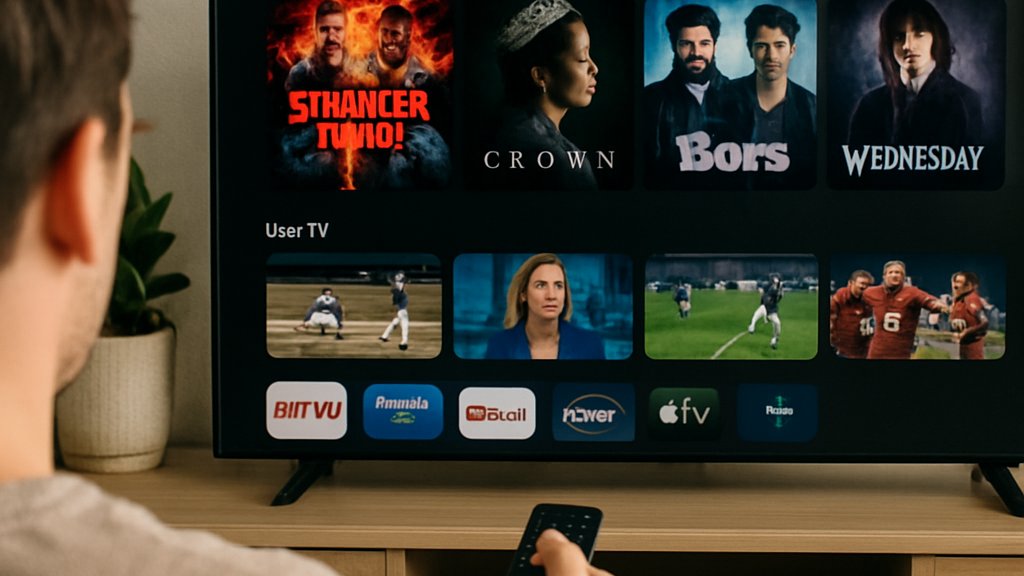
The Roku Home Screen rollout introduces several interface elements powered by machine learning signals. Quick Access surfaces frequently used apps and adapts hourly. Moreover, Top Picks for You ranks cross-channel shows using a hybrid recommendation engine. A dedicated For You hub aggregates these rows into one swipe.
- Quick Access: AI-adaptive shortcut row updated every hour.
- Your Daily Scoop: fresh topical row generated hourly.
- Destinations: genre or mood hubs driven by consumer AI tags.
- Roku City tile: interactive entry to themed screensavers and mini games.
- Top Picks: AI TV personalization row across channels.
Additionally, the Shortcuts row lets users pin live TV or settings for faster reach. Meanwhile, an always-visible Marquee ad sits on the right, now supporting autoplay video. Roku claims eye-tracking research informed the placement for minimal content distraction. User controls still allow removing individual tiles, maintaining perceived ownership.
These features illustrate how consumer AI reshapes the browsing flow. However, understanding the underlying models reveals even deeper shifts.
AI Power Behind Scenes
Behind the interface, recommender systems crunch billions of daily signals. Rohit Mahto said users expect deeper personalization from day one. Therefore, Roku blends collaborative filtering with content tags generated by large language models. Generative techniques summarize show metadata, enabling the recommendation engine to score relevance faster. Hence, AI TV personalization demands scalable compute and robust privacy frameworks.
Moreover, the platform runs continuous A/B tests to refine ranking weightings. Edge inference keeps latency low, critical for fluid streaming UX. Consequently, personalized rows assemble in milliseconds as viewers wake devices. AI TV personalization also aligns ad targeting signals with content predictions.
Roku’s data science moves the heavy lifting away from human editors. Subsequently, advertising possibilities expand, which we analyze next.
Advertising Monetization Angle Explained
Advertising remains Roku’s fastest-growing revenue stream on the Roku Home Screen. Therefore, integrating the same signals fuels higher CPMs for Marquee placements. Frances Callaghan emphasized that relevant ads should feel like helpful recommendations, not interruptions. In contrast, critics argue the persistent panel reduces visible content real estate.
Furthermore, the company offers programmatic access through Google DV360 and The Trade Desk. Machine learning optimizes creative rotation to battle ad fatigue. Consequently, publishers and brands gain new front-door inventory reaching tens of millions each day. AI TV personalization thus underpins both user experience and monetization strategy.
Marquee and signal sharing promise stronger yields when managed responsibly. The competitive landscape shows how urgent that balance has become.
Competitive Landscape Reality Check
Amazon, Google, Samsung, and LG all chase similar front-door economics. However, Roku holds a larger share of U.S. device sales among dedicated sticks. Apple TV positions privacy as a differentiator, limiting deep personalization for ads. Consequently, analysts view Roku’s bolder data play as a calculated risk.
Meanwhile, Fire TV recently integrated AI summaries of live events, raising the bar. Samsung’s Tizen OS experiments with shoppable banners linked to the recommendation engine. Therefore, maintaining a slick streaming UX remains critical for retention. AI TV personalization could become a baseline expectation across ecosystems within two years.
Competitive moves validate Roku’s direction yet tighten the innovation window. Risks and safeguards deserve equal attention, which the next section explores.
Key Risks And Safeguards
Personal data collection invites scrutiny from regulators and consumer advocates. Nevertheless, Roku offers opt-out toggles inside settings and honour do-not-track flags. User backlash could intensify if ads overpower discovery benefits. Furthermore, algorithmic errors may trap viewers inside narrow bubbles, hurting personalization.
Advertisers also risk fatigue when frequency caps fail. Therefore, Roku is testing dynamic creative rotation and pacing algorithms. Professionals can enhance their expertise with the AI+ UX Designer™ certification. Moreover, cross-functional training ensures teams respect privacy while leveraging consumer AI insights.
Effective safeguards must support AI TV personalization while complying with stricter policy shifts. Finally, we summarize what industry leaders should monitor next.
Conclusion And Future Outlook
Roku’s Home Screen overhaul signals a decisive shift toward algorithmic living-room experiences. AI TV personalization now sits at the center of content discovery, advertising, and differentiation. However, execution success depends on measurable lifts in streaming UX and advertiser ROI. Competitors will copy successful mechanics, compressing innovation cycles. Consequently, data governance, creative quality, and transparent controls will decide brand trust. Leaders who master consumer AI practices and certified design skills will shape the next wave.
Moreover, AI TV personalization will reward teams that iterate design based on rapid feedback loops. Take action by exploring advanced programs like the linked certification and monitor rollout metrics closely. The couch has become a data-driven battleground; informed professionals should engage now.
Disclaimer: Some content may be AI-generated or assisted and is provided ‘as is’ for informational purposes only, without warranties of accuracy or completeness, and does not imply endorsement or affiliation.


