

AI CERTS
4 weeks ago
DG Matrix eases AI power bottlenecks with Interport SST
Their Interport device promises to collapse conversion chains and unlock stranded megawatts for AI data centers. However, skeptics question cost, reliability, and necessary standards. This article unpacks the technology, funding, and market implications, then maps next steps for procurement teams. Industry professionals will gain a concise roadmap for navigating accelerating AI power bottlenecks.
Rising Global Power Demand
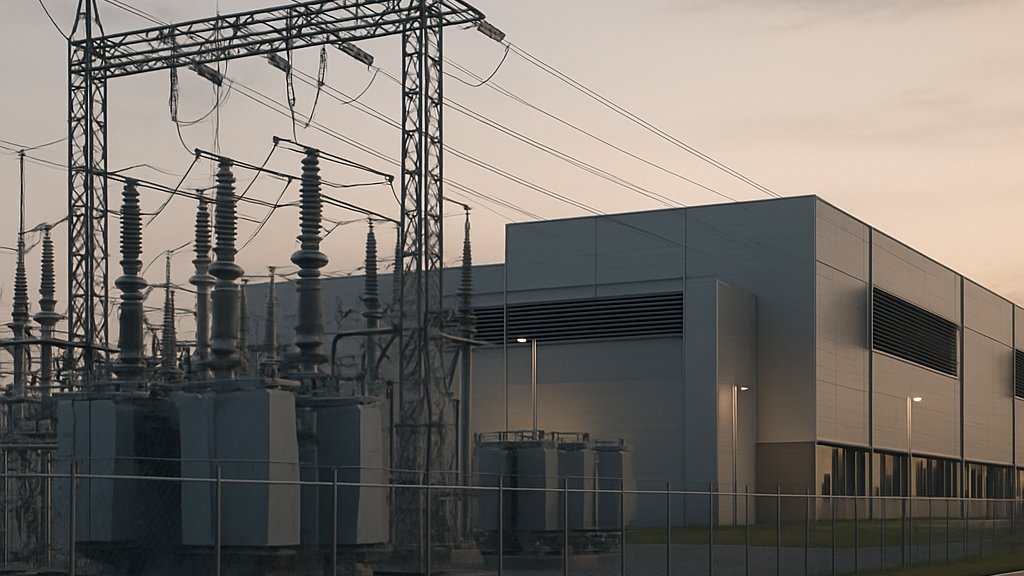
Worldwide digital loads continue to climb. Furthermore, the International Energy Agency estimates 415 TWh annual consumption from data facilities in 2024. In contrast, legacy grids expand slowly because permitting and steel take time. Consequently, AI power bottlenecks intensify at metro hubs. Analysts expect demand to multiply as inference clusters proliferate. Meanwhile, grid constraints already delay several hyperscale campuses.
- IEA projects tens of gigawatts new critical capacity by 2030.
- McKinsey models show 44 GW tied directly to AI workloads.
- Typical racks now pull 100 kW, versus 10 kW five years ago.
These statistics underline an urgent need for modern power infrastructure. Nevertheless, utilities cannot lay transmission lines overnight. Therefore, enterprises are exploring behind-the-meter solutions. These dynamics set the stage for new hardware. The next section reviews how DG Matrix captured investor confidence.
DG Matrix Funding Surge
February 2026 delivered pivotal news. Moreover, DG Matrix announced a $60 million Series A led by Engine Ventures, lifting total equity above $100 million. ABB also holds a strategic minority position, signaling industrial validation. Additionally, construction firm Satterfield & Pontikes will integrate Interport modules into U.S. builds. InfraPartners, a boutique advisory group, structured several partnership terms. Consequently, market observers called the round a vote of confidence for solid-state innovation. “
DG Matrix represents exactly the kind of infrastructure innovation the energy transition demands,” declared Michael Kearney of Engine Ventures. Such endorsements matter because AI power bottlenecks punish schedule slippage. Capital enables hiring, compliance, and factory tooling. Funding strength therefore accelerates field deployments. Yet technology substance must back the hype. The following section dissects Interport’s architecture.
Inside Interport Design Details
Interport is a multi-port solid-state transformer. Consequently, the unit replaces legacy low-frequency transformers, UPS blocks, and rectifiers with one silicon-carbide platform. Subhashish Bhattacharya calls the device a “router for power.” One Interport supports 2.4 MW aggregated input, blending grid, solar, battery, and generator feeds. Furthermore, efficiency reaches 98 %, compared with 90 % for typical chains. Footprint savings are dramatic; two 4×30-foot skids shrink to a 4×4-foot cube. InfraPartners conducted a preliminary cost study that suggests shipping and installation times drop by half.
Key technical merits appear below.
- Bidirectional energy flow enables fast battery dispatch during grid constraints.
- Programmable DC outputs match high-density AI data centers.
- High-frequency isolation shortens fault clearing times, enhancing uptime.
These attributes directly target persistent AI power bottlenecks. However, no device is flawless. Benefits and risks require balanced analysis, which follows next.
Benefits And Caveats Explored
Proponents highlight rapid “time-to-power.” Moreover, projects can bypass years of substation work by installing Interport behind the meter. Efficiency gains lower operating expenses, and smaller footprints free white-space revenue areas. Additionally, integrated orchestration simplifies renewable pairing, crucial for sustainable power infrastructure.
Nevertheless, critics raise cost concerns. Solid-state transformers rely on wide-bandgap chips, still expensive compared with copper and steel. Reliability over fifteen-year lifecycles remains unproven. In contrast, iron-core transformers boast decades of field data. Furthermore, standards bodies have not finalized medium-voltage test regimes, delaying some purchase orders. InfraPartners warns that excessive optimism could mask integration challenges with existing switchgear.
To summarize, Interport promises relief for AI power bottlenecks yet carries typical first-generation risks. These trade-offs inform competitive dynamics discussed below.
Market Competition Heats Up
SST activity accelerated during 2025-2026. Heron Power raised $140 million, while Enphase unveiled the IQ SST. Moreover, incumbents like Eaton and ABB broadened portfolios. Consequently, buyers now compare feature matrices rather than evaluate a single option. AI data centers increasingly issue RFPs that demand interoperable controls. Additionally, grid constraints differ by region, nudging vendors toward modularity. InfraPartners observes that manufacturing scale will decide cost curves. Therefore, DG Matrix must execute flawlessly to maintain its edge. The arm-race intensifies because everyone chases the same AI power bottlenecks.
Competitive pressures highlight certification urgency. The next section details current pathways.
Certification Pathways Move Ahead
Interport prototypes are undergoing UL 1741 and IEEE C37.20 evaluations. Meanwhile, ABB engineers share test rigs to expedite thermal cycling. Furthermore, DG Matrix expects baseline approvals before June 2026 customer shipments. Professionals can enhance their expertise with the AI Architect™ certification. Such credentials equip teams to validate new power infrastructure. Additionally, InfraPartners plans independent field monitoring at three pilot AI campuses. Consequently, empirical uptime data should reach the public by early 2027. These steps aim to reassure risk-averse CIOs facing relentless AI power bottlenecks and persistent grid constraints.
Certification progress closes critical gaps. However, procurement leaders still need actionable guidance, addressed in the final thoughts.
Solid-State Transformer Primer
A solid-state transformer converts medium-voltage AC to regulated DC through high-frequency switching. Moreover, embedded controllers manage power quality in microseconds. Consequently, the device supports renewable, storage, and load balancing in one enclosure. This primer underlines why SSTs attract attention from AI data centers coping with AI power bottlenecks.
These primer points prepare readers for the concluding roadmap.
Conclusion And Roadmap
Rising digital demand collides with sluggish grid expansion, making AI power bottlenecks pervasive. Consequently, innovators like DG Matrix propose compact SSTs that condense critical power infrastructure. Their Interport device blends multiple feeds, boosts efficiency, and sidesteps certain grid constraints. Moreover, fresh capital, strategic alliances, and ongoing certifications indicate accelerating commercialization. Nevertheless, cost and longevity questions remain. Procurement teams should track pilot telemetry, compare vendor roadmaps, and cultivate in-house expertise. Professionals seeking an edge should explore the linked AI Architect™ credential. Ultimately, informed decisions today will determine which AI data centers scale smoothly tomorrow.
Disclaimer: Some content may be AI-generated or assisted and is provided ‘as is’ for informational purposes only, without warranties of accuracy or completeness, and does not imply endorsement or affiliation.


