

AI CERTS
2 months ago
Trump Pauses AI Safety Policy Order Amid China Concerns
The following analysis unpacks the delay, outlines draft provisions, and offers strategic guidance. Throughout, we track how the shelved move reshapes the broader AI Safety Policy debate.
White House Delay Explained
Initial reports predicted an AI executive order on 21 May. Subsequently, internal disagreement and tech backlash forced a dramatic stand-down. President Trump declared, “We’re leading China. I will not block that lead.” In contrast, Treasury officials had urged immediate safeguards after April briefings on Anthropic’s Mythos model. Furthermore, outgoing Fed Chair Jerome Powell cautioned banks about rapid vulnerability discovery powered by frontier systems. Nevertheless, competitiveness arguments prevailed inside the West Wing. Stakeholders now face a policy vacuum while agencies regroup. These events highlight how swiftly politics can upend planned governance.
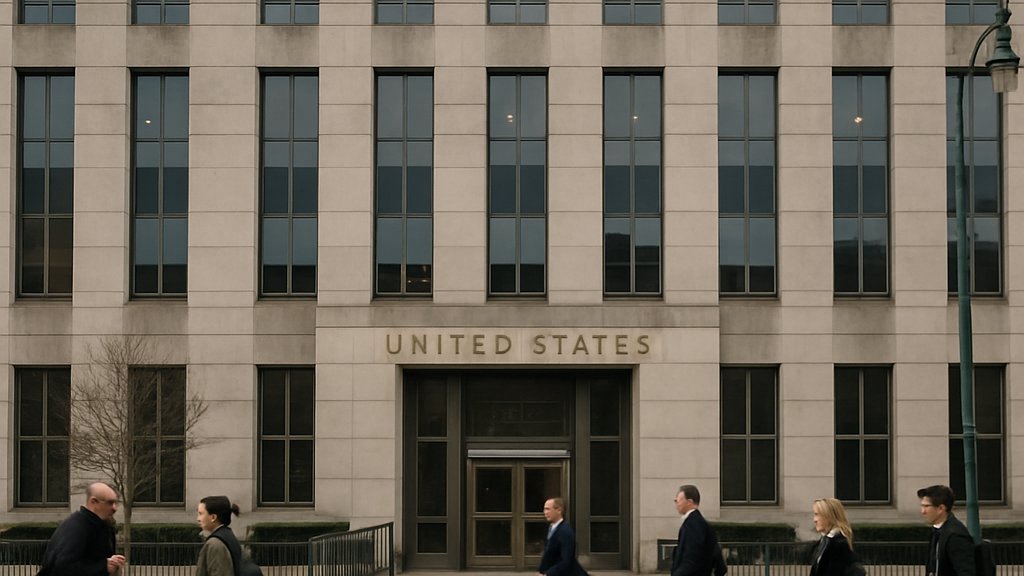
The postponement leaves companies guessing about near-term oversight expectations. Therefore, strategic planning grows harder for compliance teams. Meanwhile, critics warn every delay widens exposure windows for cyber-enabled threats.
These dynamics reveal fragile consensus on regulation. Consequently, business leaders must track fresh signals from the administration.
Draft Order Key Provisions
Axios obtained draft language describing voluntary rules for “covered frontier models.” Developers would grant federal reviewers access 14–90 days pre-launch. More importantly, the document urged continuous threat sharing between government and industry. Additionally, agencies would coordinate cybersecurity hardening for critical infrastructure.
Key features reportedly included:
- A 14–90 day pre-release window for security testing.
- Mandatory reporting of discovered vulnerabilities within 48 hours.
- Joint red-team exercises with CISA and NSA experts.
- Disclosure incentives rather than penalties to encourage cooperation.
Gartner expects global AI spend to hit $2.52 trillion in 2026. Consequently, even voluntary guidance could steer vast investment decisions. Moreover, OECD data shows GPU supply concentrated around Nvidia, intensifying China competition for advanced chips.
The shelved text would have advanced an updated AI Safety Policy playbook without binding force. However, voluntary frameworks often mature into formal regulation. Therefore, many executives still prepared for eventual codification.
These provisions underscored Washington’s dual focus on cyber defense and innovation. In contrast, the final decision emphasized speed over certainty.
Industry Reaction And Risks
Leading labs, including Anthropic and OpenAI, offered muted statements after the pause. Meanwhile, venture voices labeled the draft a hidden brake on creativity. Furthermore, several CEOs reportedly declined a signing ceremony invitation, fearing public alignment with stricter oversight optics. Consequently, the administration lost crucial business support moments before launch.
Security researchers voiced alarm. They argue delayed action increases exposure from powerful models capable of automated exploits. Moreover, banks briefed by Treasury already integrate draft controls into risk dashboards. In contrast, some founders insist premature rules would handicap startups against state-backed rivals.
Elon Musk weighed in on social media, praising voluntary collaboration yet rejecting any mandatory gatekeeping. His stance echoed earlier clashes with the Biden admin on chip exports.
Risk analysts outline three immediate concerns:
- Regulatory whiplash complicates long-term investment.
- Lack of clarity hinders responsible disclosure workflows.
- Adversaries may exploit gaps before new guidelines emerge.
These reactions illustrate diverging priorities across the ecosystem. Nevertheless, a clear path forward remains essential for stability.
Geopolitics And China Competition
Trump framed the postponement through the lens of intense China competition. Moreover, existing export controls already restrict advanced GPU shipments to Chinese firms. Consequently, officials feared extra hurdles could push global talent and capital abroad. In contrast, security hawks argue unmitigated model release risks national infrastructure.
The shelved order also intersected with wider chip market dynamics. OECD research shows Nvidia holding more than half the accelerator market. Therefore, any AI executive order affecting hardware demand ripples across supply chains. Additionally, Gartner’s trillion-dollar forecast underscores the strategic stakes.
Meanwhile, Beijing races to secure domestic silicon and replicate Western breakthroughs. Furthermore, Chinese regulators recently issued draft rules mirroring some American AI Safety Policy concepts. Consequently, policy delays could narrow the U.S. lead Trump seeks to protect.
These geopolitical angles intensify pressure on Washington. However, the administration must balance open innovation with credible defenses.
Policy Debate Moving Forward
Inside Washington, factions now craft alternative paths. Some aides favor reissuing the document after updates. Others advocate piecemeal guidance through agency memoranda. Meanwhile, lawmakers explore statutory options echoing the Biden admin AI roadmap introduced in 2024.
Serena Booth of Brown University notes that voluntary approaches can scale rapidly if paired with market incentives. Conversely, fragmented standards risk confusing fast-growing teams. Therefore, coordinated leadership remains pivotal.
Experts suggest three potential scenarios:
- Revised voluntary framework emerges within 60 days.
- Congress inserts language into the next defense authorization bill.
- No action until a significant AI-enabled incident forces urgency.
Each pathway sends distinct market signals. Consequently, boards should prepare adaptive compliance strategies aligned with evolving AI Safety Policy norms.
These debates reinforce that timing matters as much as content. Nevertheless, proactive preparation shields firms from future shock.
Upskilling For Policy Leaders
Corporate officers now require deeper literacy in governance mechanics. Moreover, demand rises for specialists who translate technical risk into actionable controls. Professionals can enhance their expertise with the AI Policy Maker™ certification. Consequently, teams gain structured frameworks for drafting internal voluntary rules and aligning with external oversight bodies.
Additional development steps include:
- Hosting tabletop exercises simulating frontier-model breaches.
- Establishing cross-functional councils linking legal, security, and research leads.
- Tracking every AI executive order proposal across agencies and the Hill.
These efforts build resilience regardless of political shifts. Furthermore, they demonstrate commitment to responsible growth.
Upskilling fosters agile governance. Therefore, talent investment today safeguards innovation tomorrow.
Conclusion And Future Outlook
The sudden pause of Trump’s planned order underscored unresolved tensions at the heart of U.S. AI Safety Policy. Security officials crave early visibility into frontier models. However, competitiveness voices fear extra drag amid fierce China competition. Meanwhile, industry remains split between precaution and momentum. Consequently, uncertainty will persist until clear guidance returns.
Boards should monitor Capitol Hill, prepare flexible compliance playbooks, and invest in skilled policy talent. Moreover, they should consider the AI Policy Maker™ program to stay ahead. Act now to turn volatility into strategic advantage.
Disclaimer: Some content may be AI-generated or assisted and is provided ‘as is’ for informational purposes only, without warranties of accuracy or completeness, and does not imply endorsement or affiliation.


