

AI CERTS
4 days ago
CSAM Detection Fingerprints Roll Out Across Major Platforms
This article examines the rollout, adoption metrics, and unresolved privacy debates. Additionally, we unpack AI-generated material trends and their impact on online safety. Readers will gain technical context, balanced perspectives, and direct quotes from leading stakeholders. Moreover, professionals can upskill through the linked certification to improve defensive readiness.
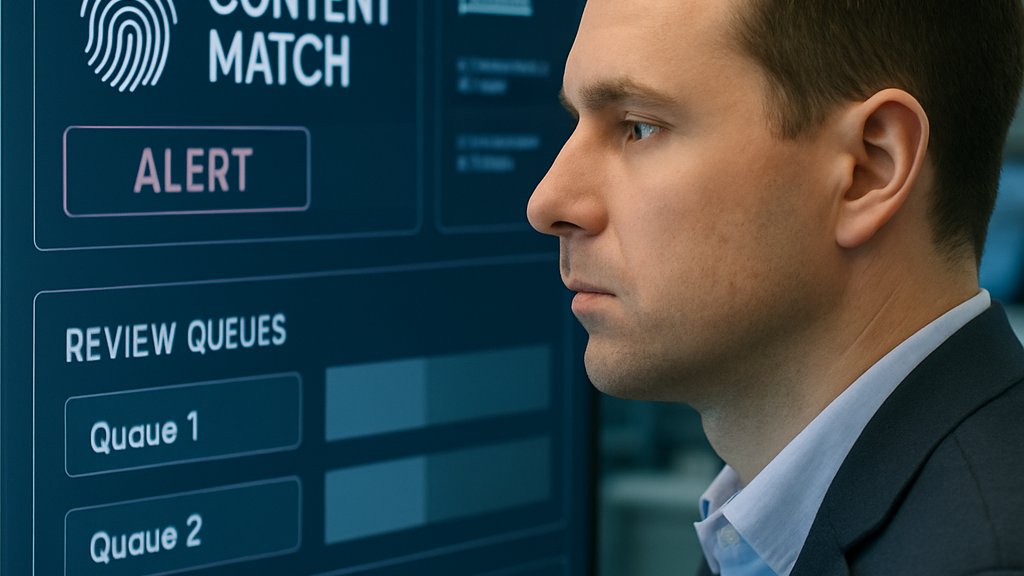
Meanwhile, the IWF dataset now holds about 2.7 million unique hashes, updated twice daily. Therefore, integration speed and policy alignment define whether the fingerprints deliver measurable harm reduction. In contrast, lagging adopters risk becoming safe havens for deepfake re-uploads and other emerging threats. Consequently, regulatory pressure is mounting across Europe and Asia.
IWF Expands Fingerprint Reach
IWF has supplied hash and URL lists to major platforms for years. However, the charity recently shifted focus toward infrastructure providers that control traffic gateways. ExpressVPN’s OpenBoundary illustrates the new model. The open-sourced toolkit loads CSAM Detection Fingerprints at the DNS layer, blocking illegal domains instantly.
Consequently, every user request for a blacklisted site dies before encryption begins. CyberGhost and Private Internet Access joined the campaign within weeks. Meanwhile, registrar Immaterialism now consumes Registrar Alerts to suspend abusive domains faster. IWF leaders applaud the trend and urge more registries to integrate the feeds.
Pete Membrey, ExpressVPN technologist, emphasised simplicity. He noted, “No broken encryption, no traffic inspection, no monitoring.” Therefore, the company claims it balanced user privacy with decisive child-protection action. These expansions show rapid momentum. Nevertheless, critics question effectiveness against novel AI content.
Current integrations cover gateways, registrars, and VPN endpoints powered by digital fingerprints. However, many platforms still hesitate, setting the stage for deeper analysis.
How Fingerprints Technology Works
Digital fingerprints compress known abuse images into short hashes. Consequently, platforms can match uploaded files without viewing traumatic originals. IWF uses perceptual hashing, PhotoDNA variants, and other resilient algorithms. Furthermore, the organisation distributes the CSAM Detection Fingerprints alongside human-verified URL lists twice daily.
When a match occurs, the system flags or blocks the content instantly. Therefore, victims avoid repeated violation while investigators retain evidence trails. In contrast, deepfake re-uploads often evade detection because their pixels differ. IWF acknowledges that gap and is researching synthetic media fingerprints.
URL and domain lists operate at network boundaries. Subsequently, ISPs, VPNs, and firewalls can drop traffic before encryption masks payloads. This approach supports online safety without client-side scanning, yet it depends on accurate resolution data. Moreover, hash lists and DNS blocks complement each other, reducing attacker workarounds.
Digital fingerprints extend beyond images to domains and even videos. Consequently, layered defences emerge, yet synthetic shifts challenge static hashes. The following section explores how companies weigh those benefits against legal and reputational risks.
Industry Adoption And Pushback
More than 200 organisations license IWF data today. Moreover, new sectors join monthly, including registrar and CDN operators. Bluesky, Black Forest Labs, and emerging metaverse platforms are recent examples. These firms cite reputational risk and compliance duties as primary motivators.
Nevertheless, resistance persists within privacy-focused subcultures. EFF researchers warn that mandatory scanning can expand beyond CSAM into copyright enforcement. In contrast, ExpressVPN stresses its voluntary, opt-in model avoids such mission creep. The debate intensified after Ofcom floated UK rules demanding device-level scanning.
- Pros: Fast blocking, reduced victimisation, no traffic inspection required.
- Cons: Limited to known hashes, potential over-blocking, governance transparency gaps.
VPN Network Case Study
OpenBoundary’s public code invites external audits. Subsequently, security researchers can verify that only IWF lists drive decisions. Early logs show thousands of blocked requests daily, yet zero encryption downgrades. However, the company has not disclosed false-positive metrics.
Adoption momentum appears real, but transparency still lags behind advocacy demands. Next, we examine the technical hurdles posed by AI-generated abuse.
AI-Generated Abuse Challenges
IWF assessed 8,029 AI images and 3,443 videos in 2025 alone. That figure represents a staggering 26,385% jump year over year. Moreover, 65% of videos fell into the most severe Category A classification. Consequently, static hash lists face an obsolescence curve.
AI generators create novel pixels that evade traditional CSAM Detection Fingerprints at upload. Therefore, IWF is piloting perceptual video fingerprints and classifier ensembles. Additionally, the organisation calls for rapid evidence sharing across industry. Meanwhile, law enforcement agencies push platforms to report suspected synthetic abuse attempts.
Deepfake re-uploads appear within hours on forums once older links vanish. Synthetic media expands the attack surface faster than defences mature. However, refined fingerprints still offer foundational value, as the next section explains.
Operational Benefits And Limits
Organisations cite measurable bandwidth savings after deploying filtering at edge cache layers. ExpressVPN’s internal study shows 30% reduction in malicious DNS traffic. Furthermore, support teams receive fewer abuse complaints, improving service reputations. Nevertheless, costs arise from rule updates, legal reviews, and incident response drills.
Operators must also mitigate over-blocking that could harm unrelated domains. Therefore, many partners run canary servers to test list changes before production pushes. In contrast, client-side scanning distributes that risk to device manufacturers. Consequently, governance discussion often centers on locus of control.
Digital fingerprints require minimal storage, easing deployment on low-cost appliances. Those results rely on CSAM Detection Fingerprints aligned with high-performance DNS caches. Benefits remain compelling, yet their maintenance demands sustained investment and auditing. The policy layer now determines scale, which we address in the final section.
Governance, Privacy And Oversight
Civil-liberties advocates request transparent criteria for adding hashes and domains. Moreover, they demand independent audits of blocking accuracy and appeal routes. IWF publishes high-level protocols but not complete lists, citing risk of replication. Subsequently, some researchers call for cryptographic transparency logs similar to certificate pinning.
Regulators in the EU debate mandatory CSAM Detection Fingerprints for hosting providers. Meanwhile, the UK Online Safety Act empowers Ofcom to require scanning under certain conditions. Consequently, policy momentum may accelerate adoption despite ideological disputes. Professionals can prepare by earning the AI Security Level 1™ certification.
Oversight structures remain in flux, balancing rapid takedown capability with civil rights. Nevertheless, stakeholders agree that voluntary, privacy-respecting mechanisms outperform coercive client scanning. The concluding thoughts distill lessons for security leaders.
CSAM Detection Fingerprints now shield core infrastructure without decrypting user sessions. Consequently, victim revictimisation declines while operators cut abuse bandwidth. However, AI-generated threats and governance gaps demand persistent innovation. Digital fingerprints, DNS blocks, and policy oversight must evolve together for lasting online safety.
Security leaders should monitor regulatory drafts and refresh CSAM Detection Fingerprints hourly. Additionally, teams can validate defences through the AI Security Level 1™ program. Take action now to harden networks, protect victims, and reinforce organisational trust.
Disclaimer: Some content may be AI-generated or assisted and is provided ‘as is’ for informational purposes only, without warranties of accuracy or completeness, and does not imply endorsement or affiliation.


