

AI CERTS
2 hours ago
Trump-Xi Chip Talks Spotlight Nvidia Monopoly Tensions
Consequently, every outcome now matters for cloud spending throughout the vast US-China digital corridor. Trump entered Beijing with commercial concessions in mind and Jensen Huang beside him. Meanwhile, Xi signaled caution, insisting domestic innovation must remain protected before any large H200 shipment clears customs. Industry watchers therefore ask whether updated export controls can loosen gridlock without handing strategic advantage to Beijing. The following analysis unpacks the licensing shift, market stakes, and political friction shaping this pivotal chip debate. It also explains how the Nvidia Monopoly narrative influences negotiators, investors, and engineers on both sides.
Summit Sets Chip Agenda
Reporters saw Trump exit the Great Hall flanked by Semiconductor Industry Association advisers. Meanwhile, Xi’s economic team held parallel briefings stressing technological self-reliance. Both leaders nevertheless agreed that chip access could anchor a broader stabilization effort. Consequently, the agenda devoted two hours to export licensing details and enforcement verification. Huang presented cost curves illustrating how delayed deliveries erode training efficiency for large language models.
In contrast, Chinese buyers highlighted rising cloud backlog and growing domestic skepticism regarding American suppliers. Officials closed the segment by tasking trade deputies with mapping a phased approval sequence for H200 lots. The summit therefore turned chip policy into the meeting’s economic centerpiece. These priorities set the stage for licensing reforms detailed next.
Licensing Shifts Market Access
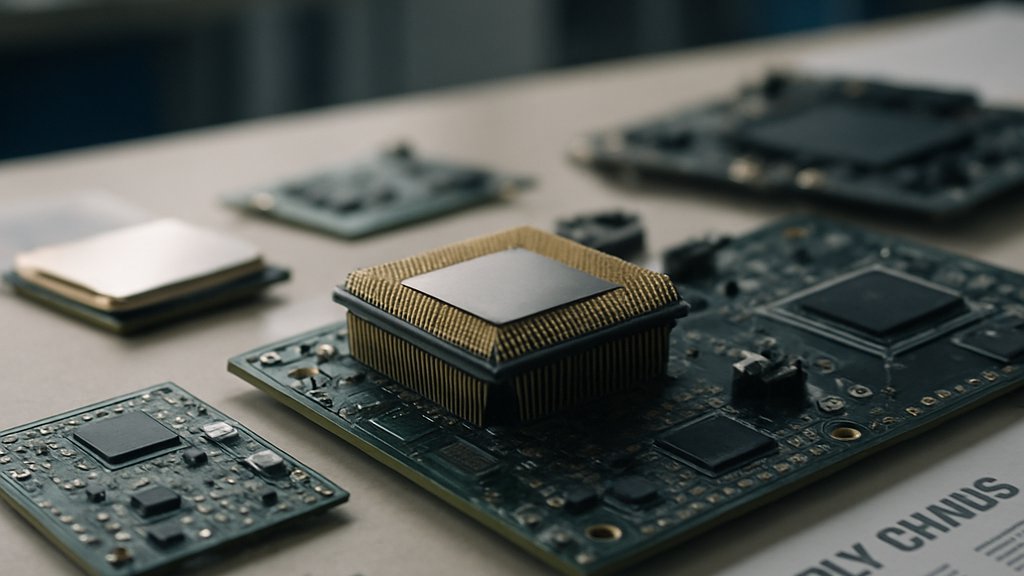
January’s BIS final rule replaced blanket bans with case-by-case reviews for advanced accelerators like H200. However, approved buyers must implement inventory audits, third-party penetration testing, and end-use reporting every quarter. Commerce Secretary Howard Lutnick told Congress that no Chinese firm had yet cleared domestic red tape. Subsequently, Nvidia filed supplemental dossiers outlining secure boot processes and firmware locks. Industry lawyers, therefore, spend hours drafting compliance annexes that outline tamper-proof sealing and chain-of-custody checkpoints.
Nevertheless, Beijing’s cybersecurity regulators continue parallel inspections, slowing payment schedules for several cloud giants. The evolving protocol therefore creates a moving target for procurement officers inside Alibaba, Tencent, and JD.com. For Washington, the approach balances commercial revenue against national-security assurance, avoiding a politically contentious licence amnesty. Case-by-case reviews thus open doors while preserving oversight. The market implications of that calculus appear in global chip statistics below.
Stakes For Global Chips
Worldwide semiconductor revenue reached $791.7 billion in 2025, with Q1 2026 already touching $298.5 billion. Moreover, WSTS projects a trillion-dollar year if supply constraints ease. Yet, analysts warn that prolonged licensing limbo may redirect investment toward domestic Chinese accelerators. Meanwhile, supply chain financiers flag rising interest costs linked to inventory idling in bonded warehouses. In contrast, Wall Street views resumed H200 flows as a catalyst for expanding hyperscale capacity.
- China once accounted for roughly 95% of Nvidia’s AI accelerator shipments before restrictions.
- Approved buyers may order up to 75,000 H200 units under current U.S. caps.
- Global demand for high-memory GPUs keeps doubling every nine months, according to OEM surveys.
Therefore, any shipment delay ripples far beyond the US-China political theater. Investors also monitor AMD’s MI325X roadmap, hoping competition tempers the perceived Nvidia Monopoly. Market forecasts underscore that policy decisions can either amplify shortages or stabilize pricing. Those dynamics feed directly into the security debate addressed next.
Security Critics Raise Alarms
National-security analysts argue advanced accelerators could empower military command, control, and targeting algorithms. Chris McGuire from CFR consequently criticized the emerging deal as a strategic giveaway. He claimed each exported GPU subtracts margin for U.S. defense primes building sovereign clouds. Nevertheless, Under Secretary Jeffrey Kessler counters that conditional sales fortify American R&D budgets. Furthermore, Commerce says firmware locks limit repurposing for missile guidance or electronic warfare.
Experts at RAND, for instance, estimate model training efficiency doubles when memory bandwidth increases at H200 levels. Meanwhile, Chinese ministries insist security reviews shield domestic data from clandestine backdoors. Therefore, compliance negotiations now include escrowed code audits supervised by neutral labs. The dispute shows how geopolitics and cybersecurity intertwine around silicon. Corporate actors must navigate that maze, as outlined below.
Corporate Strategies And Delays
Nvidia hedged risk by deepening supply deals with Vietnamese and Mexican assembly partners. Additionally, the firm rerouted some H200 inventory toward European cloud startups to maintain quarterly revenue targets. Alibaba responded by accelerating its self-designed T-Head XPU tapeouts. Subsequently, Tencent negotiated reserved AMD capacity as a fallback option. JD.com, meanwhile, pooled purchasing power with ByteDance to secure better import insurance. For U.S. hyperscalers, the episode offers lessons about single-vendor dependence and the perceived Nvidia Monopoly.
- Establish dual-sourcing for critical GPUs.
- Negotiate inventory claw-back clauses with distributors.
- Invest in open accelerator software ecosystems.
These tactics mitigate risk yet cannot fully replace H200 performance leadership. The forward outlook therefore hinges on political timing, examined in the final section.
Outlook For Nvidia Monopoly
Analysts disagree on whether the Nvidia Monopoly will survive tightening compliance loops. Some forecast accelerated domestic innovation eroding the Nvidia Monopoly within three years. However, others argue software ecosystems and CUDA lock-in reinforce the Nvidia Monopoly despite incremental rivals. Meanwhile, Washington’s licensing flexibility could entrench the Nvidia Monopoly by starving competitors of scale economics. Therefore, investors track three leading indicators.
First, actual H200 export volumes will reveal buyer commitment. Second, Chinese foundry progress on sub-5 nm GPUs may weaken reliance. Third, regulatory sentiment inside the US-China corridor will steer capital allocation. Professionals can enhance their expertise with the AI Executive Essentials™ certification. The coming quarters could therefore either dismantle or deepen the Nvidia Monopoly. A concise recap follows below.
Key Takeaways And Action
Recent summit diplomacy shows hardware supply now drives broader economic engagement. Licensing reforms opened doors, yet real deliveries remain hostage to dual regulatory systems. Consequently, enterprises must prepare flexible capacity plans and diversify algorithm stacks. Security debates will continue, but controlled commerce appears likeliest near-term path.
Therefore, professionals need updated policy literacy alongside deep technical fluency. Pursuing structured executive education can accelerate that readiness. Consider enrolling in the previously noted AI Executive Essentials™ program to stay ahead of shifting chip geopolitics.
Disclaimer: Some content may be AI-generated or assisted and is provided ‘as is’ for informational purposes only, without warranties of accuracy or completeness, and does not imply endorsement or affiliation.


