

AI CERTS
2 months ago
Autonomous Systems Take Off: JAL Trials Humanoids at Haneda
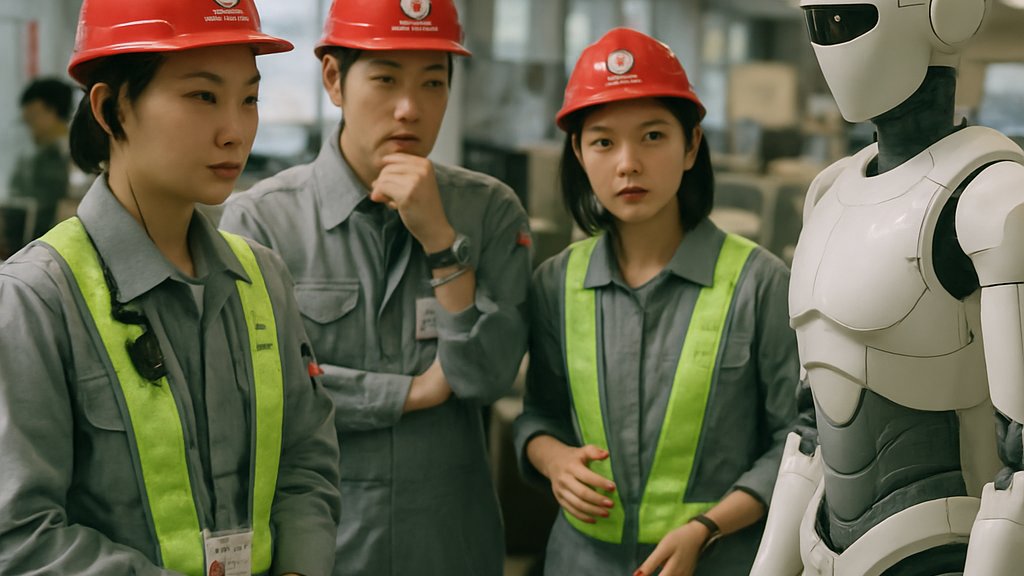
However, flight-line unpredictability makes humanoid deployment far tougher than factory automation.
This article examines objectives, technology, risks, metrics, and wider business implications.
Readers will gain actionable insight into a landmark use case for Autonomous Systems in passenger aviation.
Haneda Trial Overview Details
JAL and GMO announced the demonstration on 27 April 2026 through a joint press release.
The pilot starts in May 2026 and runs until 2028, covering baggage, cargo, and later cabin cleaning.
The demonstration positions Haneda as a real-world laboratory for Autonomous Systems at scale.
Initially, two to four humanoids will operate during off-peak windows while supervisors track safety metrics.
Subsequently, managers expect gradual duty expansion to forklift assistance and selected ground support equipment.
The schedule gives engineers time for iterative validation.
Consequently, understanding Haneda’s enormous scale becomes essential.
Scale Driving Automation Need
Haneda handled 79,247,726 passengers in 2024, placing it among the planet’s busiest hubs.
Each wide-body turnaround can involve thousands of bags, tons of freight, and narrow departure windows.
JAL Ground Service employs roughly 4,000 people who juggle loading, cleaning, and safety oversight.
Moreover, Japan’s ageing workforce intensifies recruitment challenges across aviation support roles.
Autonomous Systems promise scalable assistance without major facility redesign, unlike conveyor-centric alternatives.
Busy schedules and staff shortages create a compelling automation case.
Therefore, stakeholders are analysing exactly what the new robots can and cannot do.
Robot Capabilities And Limits
Media footage identified the 130-centimetre Unitree G1 style humanoid as the demonstrator platform.
The machine lifts small suitcases, walks uneven ramps, and places items onto motorised belt loaders.
Reported battery life reaches only two to three hours before a mandatory recharge.
Consequently, duty cycles must align with aircraft schedules or include hot-swap battery bays.
Sensors combine stereo cameras, depth modules, and proprioceptive feedback for balance within crowded Airport aprons.
Nevertheless, rain, jet blast, and foreign object debris remain serious reliability questions.
- Height: about 130 centimetres, easing baggage chute access.
- Runtime: two to three hours per charge, limiting continuous shifts.
- Load Rating: approximately 10 kilograms per lift, suitable for standard suitcases.
These specifications highlight impressive dexterity paired with clear endurance gaps.
In contrast, successful adoption depends equally on organisational alliances behind the machines.
Such Autonomous Systems must match human flexibility before replacing night shift positions.
Key Stakeholders And Partnerships
JAL sponsors the initiative, while subsidiary JAL Ground Service governs daily safety rules.
GMO AI & Robotics supplies integration support, motion planning, and cloud dashboards.
Unitree provides the humanoid hardware, even though official releases avoid naming the Chinese vendor.
Moreover, Haneda’s operator and Japan’s Ministry of Land, Infrastructure, Transport and Tourism must approve each operational phase.
Professionals can enhance their expertise with the AI Foundation Certification, aligning skills with emerging Airport automation demands.
Collaboration across public and private entities reduces technical risk and regulatory surprise.
Subsequently, risk management moves to the tarmac itself.
Operational Risks And Mitigations
Aircraft parking areas bring moving vehicles, tight clearance, noise, and unpredictable weather.
Therefore, JAL specifies that human crews will still oversee safety decisions and emergency stops.
Engineers built redundant perception layers to detect fuselage proximity, wing tips, and ground power units.
Nevertheless, battery constraints may force robots to retreat during lightning alerts, potentially disrupting turnaround pacing.
- Weatherproofing still unverified during typhoon season.
- Foreign object debris could jam actuators.
- Union acceptance remains a moving target.
These hazards illustrate the thin margin for error around jet operations.
Consequently, stakeholders will focus on quantifiable performance metrics.
By pairing humans with Autonomous Systems, planners hope to balance speed and oversight.
Metrics To Watch Next
JAL and GMO have outlined several key indicators for the 2026 phase.
- Throughput: bags moved per robot hour.
- Uptime: mean time between failures and recharges.
- Incident rate: safety events per 1,000 bag movements.
Moreover, auditors will track worker injury statistics to verify ergonomic benefits.
If Autonomous Systems consistently exceed baseline goals, cabin cleaning trials will begin in 2027.
Reliable data will determine whether humanoids shift from experiment to permanent tool.
Meanwhile, broader consequences for aviation strategy deserve examination.
Analysts advise setting conservative Autonomous Systems benchmarks to avoid premature scale decisions.
Strategic Implications For Aviation
Many carriers monitor this program as a bellwether for large-scale Autonomous Systems adoption.
Success could unlock multi-airport rollouts covering towing tractors, catering trucks, and even passenger shuttle duties.
In contrast, extended downtime or safety incidents would slow investor enthusiasm for humanoid Robotics.
Additionally, geopolitical scrutiny of Unitree sourcing may push airlines to diversify suppliers.
Regulators may also update certification pathways, spurring demand for staff trained in complex Autonomous Systems oversight.
Industry trajectories will hinge on both technical proof and public trust.
Consequently, the coming months warrant close observation.
Haneda’s experiment already signals a turning point for airport ground operations.
Robots have shifted from exhibition curiosities to field workers handling live luggage.
Data collected in 2026 will expose whether reliability, cost, and ergonomics justify further investment.
Meanwhile, employees, unions, and regulators will study safety logs before granting broader approvals.
Vendors should prepare modular upgrades that extend runtime and improve weather resistance.
Industry leaders can seize early advantage by upskilling teams through recognized AI certifications.
Explore the linked program above and position your career for the next robotics wave taking flight.
Disclaimer: Some content may be AI-generated or assisted and is provided ‘as is’ for informational purposes only, without warranties of accuracy or completeness, and does not imply endorsement or affiliation.


