

AI CERTS
2 months ago
Scam Intelligence Report: F-Secure Warns on AI Scam Surge
Meanwhile, the FBI’s IC3 data confirms nearly $893 million lost to AI complaints during 2025. Despite alarming numbers, 69 percent of Consumer respondents feel confident spotting fraud. However, 43 percent of those believers still fell victim last year. This gap between perception and reality frames the urgent conversation that follows. Consequently, security leaders must translate fresh Scam Intelligence into concrete defensive playbooks. The next sections unpack the data, risks, and response strategies with strict journalistic precision.
Rising AI Scam Boom
Leading analysts trace the boom to cheap, accessible large language models. Moreover, threat actors feed stolen Consumer data into those models, generating personal hooks in seconds. In 89 percent of sampled attacks, AI handled the persuasive writing or multimedia impersonation. Webroot researchers describe the effect as "spam factories with perfect grammar". Consequently, scale replaces labour as the dominant advantage for online Scams. The Scam Intelligence report labels this shift the “AI scam supply chain”.
Each chain stage—target selection, infrastructure building, content generation, outreach—now enjoys automation. Additionally, Bolster AI reports a 37 percent rise in brand impersonation domains since January. Nevertheless, defenders can mirror that automation, a point explored later. These findings confirm AI’s catalytic role in fraud expansion. However, data clarity helps shape responsive priorities for stakeholders. Subsequently, we examine the numbers behind that scale.
Key Global Data Highlights
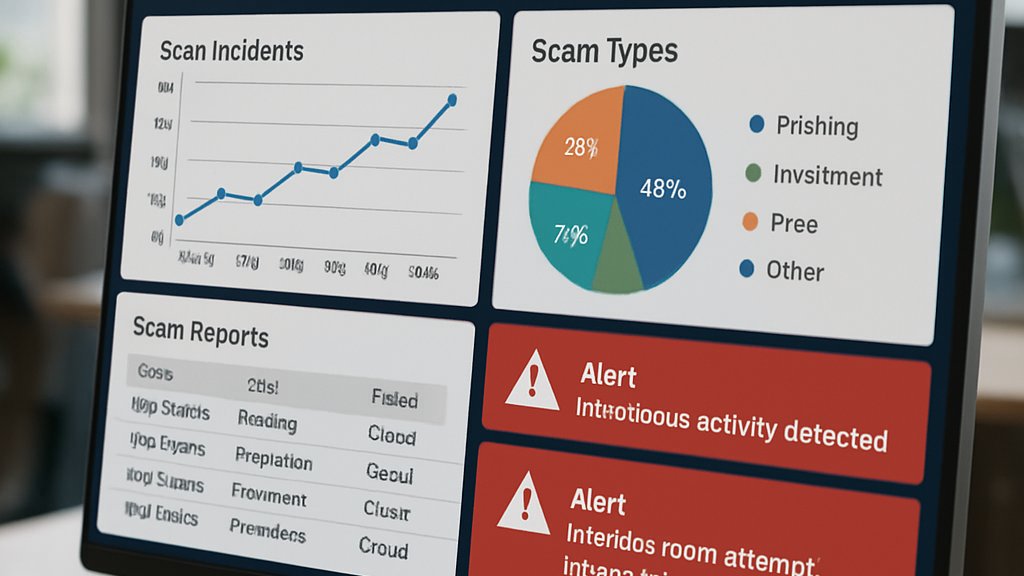
Research teams trace headline numbers to vendor studies and federal sources. Globally, reported Scams stole an estimated $1.026 trillion during 2023. In contrast, the United States alone saw cyber fraud losses reach nearly $21 billion in 2025. Moreover, the FBI isolated 22,364 AI related complaints costing close to $893 million. The Scam Intelligence dataset provides broader context for those raw FBI figures. F-Secure’s consumer survey revealed U.S. scam victimization jumping from 31 percent to 62 percent year over year. Additionally, 43 percent of confident respondents still admitted losses, underscoring optimism bias.
- AI complaints: 22,364 cases, $893 million losses (FBI, 2025)
- U.S. scam rate: 62 percent victims (F-Secure, 2025)
- 89 percent of AI fraud used generative content (F-Secure)
The Report emphasises that underreporting conceals even larger totals. These statistics showcase both velocity and scale. Consequently, raw numbers alone demand urgent allocation of resources. Therefore, attention shifts to the human factors fueling successful intrusions.
Human Factor Vulnerability Gap
Technical filters stop malware yet miss social engineering delivered via harmless looking text. Security experts stress that the primary attack surface is now emotional, not software. Furthermore, deepfake voices exploit urgency and familial trust with chilling efficiency. Academic studies show listeners rarely detect synthetic speech in pressured contexts. Researchers even found that stress hormones impair auditory judgement, worsening detection rates. Moreover, long-con “pig-butchering” Scams now run around-the-clock chatbots that nurture victims for months.
Users confront persuasive replicas of friends, banks, and even support agents. Nevertheless, layered verification protocols can interrupt that psychological momentum. The human layer remains the softest target despite hardware investments. Subsequently, public policy and corporate governance must adapt.
Policy And Industry Responses
Lawmakers worldwide draft bills addressing deepfakes and identity abuse. For example, the proposed DEFIANCE Act mandates watermarking synthetic media at scale. Meanwhile, financial regulators explore faster takedown protocols for fraudulent payment rails. Consequently, platform operators like Meta have launched prototype provenance tools for political ads. F-Secure urges service providers to embed Scam Intelligence feeds into fraud detection engines.
Moreover, industry groups push for standardised victim data sharing to accelerate incident correlation. Consequently, early warning times shrink from days to minutes in pilot programs. However, underreporting still obscures full risk pictures. Coordinated policy can reverse momentum when paired with strong analytics. Therefore, technology teams must harness defensive AI aggressively. Next, we review those countermeasures in detail.
Defensive AI Countermeasures Strategies
Automated detection now scans text, audio, and images for synthetic fingerprints. Furthermore, behavioural analytics flag suspicious session flows even when content appears legitimate. The company deploys transformer models that learn attacker phrasing patterns in real time. Additionally, bolstered identity verification uses liveness checks and cryptographic proofs. Professionals can enhance their expertise with the AI Security Specialist™ certification. Consequently, internal teams gain structured training that complements live Scam Intelligence feeds. Moreover, cross-vendor collaboration speeds fraudulent domain takedowns before campaigns mature.
Meanwhile, threat hunting teams use generative AI to model probable lure themes before attackers deploy them. In contrast, signature based engines alone detect under 7 percent of voice fraud. Therefore, investments in AI validation pipelines quickly pay operational dividends. Modern defences blend technical automation with skilled analysts. Subsequently, enterprises are better positioned for proactive guidance. The following section turns that guidance into concrete steps.
Actionable Guidance For Companies
Map your digital estate and prioritise high trust channels like payroll and customer support. Then, integrate real time Scam Intelligence alerts into ticketing workflows. Additionally, adopt multi factor verification for any transaction above preset risk thresholds. Provide mandatory Consumer awareness modules that include AI voice and video examples. Moreover, create an executive tabletop exercise simulating a viral deepfake crisis. Meanwhile, integrate a zero trust architecture to compartmentalise internal assets.
Consequently, leadership appreciates response gaps before real attackers strike. Finally, publish transparent post incident summaries to reinforce community trust. These steps convert abstract risk into measured action. Therefore, organisations can align tooling, policy, and people around a unified defense narrative. Consequently, the outlook becomes manageable rather than overwhelming.
Conclusion And Forward Outlook
Scam Intelligence now stands at the centre of modern security strategy. F-Secure’s findings, federal statistics, and vendor research all converge on one message. AI driven Scams are rising, yet decisive, informed action can restrict their reach. Moreover, integrated detection, training, and policy collaboration shorten attacker dwell time. Consequently, businesses that operationalise fresh Scam Intelligence enjoy measurable resilience gains. Industry collaboration has already slashed takedown times for verified phishing links to under four hours.
Additionally, early education shifts user behaviour faster than any filter update. Nevertheless, complacency invites costly surprises. Therefore, start implementing the outlined guidance today and explore additional expertise pathways. Visit our certification page to advance your AI security career and protect every Consumer touchpoint.
Disclaimer: Some content may be AI-generated or assisted and is provided ‘as is’ for informational purposes only, without warranties of accuracy or completeness, and does not imply endorsement or affiliation.


