

AI CERTS
2 months ago
Humanoid Robot Monk Gabi Joins Korean Buddhist Order
Jogyesa temple, headquarters of the Jogye Order, hosted the spectacle ahead of Buddha’s Birthday festivities. Meanwhile, South Korea’s industry ministry promotes humanoids as a growth engine under its K-Humanoid Alliance. Therefore, a courtyard ritual doubled as a national technology showcase. This article unpacks the ceremony, hardware, ethics, and broader policy forces shaping the headline-grabbing initiative. Readers will understand why Gabi matters for Buddhism, robotics, and society’s next coexistence chapter.
Temple Ceremony Breaks Tradition
On the warm May morning, hundreds gathered in the Jogyesa temple courtyard. Monks recited verses while the Humanoid Robot Monk bowed in sync with human counterparts. Reporters noted that Gabi answered ritual prompts with a clear synthesized voice. Additionally, engineers triggered precise palm-clasp gestures that matched liturgical timing. Consequently, spectators gasped when the Humanoid Robot Monk bowed three times before the main Buddha statue.
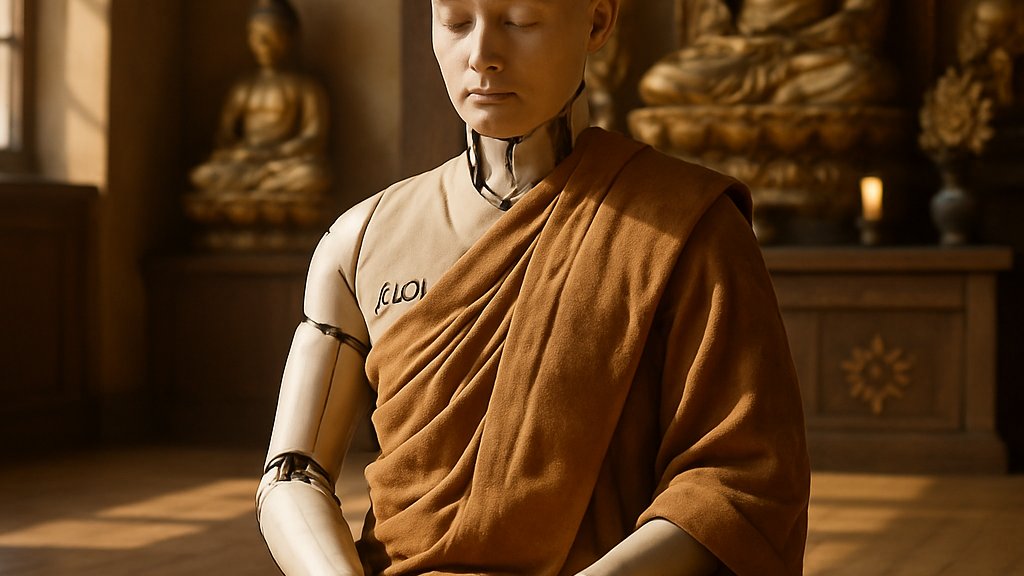
Ven. Seong Won explained the name Gabi means “to spread compassion globally.” He stressed that the vows were symbolic and conferred only lay status. Nevertheless, journalists saw flashes as visitors documented each movement. Thus the temple secured instant viral distribution for its message of coexistence. These details illustrate how ritual staging amplified technological spectacle.
The ceremony fused liturgy and robotics with theatrical precision. Next, we dissect the platform powering that performance.
Inside Hardware Behind Gabi
Gabi stands roughly 130 centimeters tall and weighs about 35 kilograms. The frame derives from Unitree Robotics’ commercial G1 model, a compact bipedal android. Moreover, lithium batteries provide up to two hours of continuous motion under festival workloads. Sixteen torque motors drive flexible joints, enabling kneeling and prostration required by Buddhist liturgy. Sensors include stereo cameras, depth perception, and force feedback for stable balance on temple stone.
- Height: 127-132 cm
- Weight: ~35 kg
- Battery life: 2 hours
- Motors: 16 high-torque units
- Sensors: stereo, depth, force
Developers loaded a speech stack that integrates cloud large-language models for responsive chanting translations. However, temple officials declined to specify whether teleoperation occurred during the ordination. Consequently, transparency around autonomy remains a pending question for observers. Professionals can enhance their expertise with the AI+ UX Designer™ certification to design respectful human-robot interfaces. These specifications reveal a versatile but still evolving platform.
The Humanoid Robot Monk shows how off-the-shelf hardware can perform nuanced ritual gestures. Subsequently, the project needed equally nuanced moral guidelines.
Rewriting Core Buddhist Precepts
Buddhism instructs followers through the Five Precepts centered on non-harm, honesty, and mindful conduct. In contrast, silicon bodies neither consume alcohol nor covet property. Therefore, Jogye scholars collaborated with Gemini and ChatGPT to adapt rules for mechanical disciples. Their draft instructs the robot to respect life, avoid damaging objects or other robots, and conserve energy. Moreover, a clause mandates obedience to human guardians unless such orders cause harm.
Ven. Seong Won hopes these guidelines influence broader societal codes for android coexistence. Nevertheless, critics argue that ethical outsourcing to chatbots risks superficial theology. Scholars of robot religion highlight ongoing debates over agency and authentic intention. Consequently, the precept rewrite sparks fresh interdisciplinary research proposals. These dynamics underscore moral complexity surrounding a Humanoid Robot Monk.
Reworked vows illustrate creative theology under technological pressure. Next, public reaction reveals acceptance limits.
Analyzing Public Reception Insights
Social platforms lit up with applause, memes, and skepticism. Many younger users praised the Humanoid Robot Monk as proof Buddhism remains relevant for digital natives. However, conservative Buddhists worried that spectacle overshadowed silent contemplation. Local media polls showed 48 percent approval, 32 percent disapproval, and the remainder undecided. In contrast, international outlets mainly framed the event as a tourism boost for Jogyesa temple.
Furthermore, activists raised data privacy questions about cameras operating within a sacred space. Temple spokespeople promised that no facial recognition ran during ceremonies. Nevertheless, experts anticipate stricter rules once humanoids guide festival crowds. These sentiments display society’s ambivalence toward android clergy.
Early feedback mixes excitement with caution. Therefore, policymakers are watching closely.
National Policy Context Matters
South Korea announced the K-Humanoid Alliance in April 2025 to commercialize bipedal robots by 2030. Consequently, ministries pledged multi-hundred-million-won investments in shared robot brains, servomotor supply chains, and safety standards. Industry analysts interpret the Humanoid Robot Monk Gabi’s ordination as soft-power marketing for that roadmap. Moreover, the event offers policymakers real-world data on public comfort levels with humanoids. Officials can adjust regulation, insurance, and liability frameworks before mass deployment.
In contrast, Japan’s Buddharoid projects operate mostly under university research exemptions. Therefore, Korea’s temple partnership signals a government willing to involve civil society early. Subsequently, foreign investors may view consistent policy backing as a competitive advantage. These factors intertwine economics and spirituality.
Policy frameworks will shape long-term adoption. Next, moral philosophy demands equal attention.
Broader Ethical Debate Intensifies
Philosophers ask whether intent exists without consciousness. Meanwhile, Buddhist scholars debate if ritual efficacy depends on a sentient officiant. Humanoid Robot Monk appearances push those questions from journals into temple courtyards. Moreover, engineers must mitigate safety risks and algorithmic bias during sacred interactions. Nevertheless, optimists see robots as mirrors reflecting human values rather than replacements.
Academic conferences now schedule panels on liturgical AI, machine personhood, and energy ethics. Consequently, cross-disciplinary collaboration deepens. These dialogues create safeguards and shared language for future implementations.
Debate highlights that code never floats free of culture. Subsequently, attention turns toward upcoming festivals.
Forecasting Future Ritual Robots
The robot will greet visitors during the Lotus Lantern Festival between 16 and 24 May. Developers plan software updates for multilingual chanting and crowd guidance. Furthermore, the Jogyesa temple hopes to pilot guided meditation sessions led by the Humanoid Robot Monk. In contrast, skeptics predict novelty fatigue once cameras leave. Market analysts estimate a domestic humanoid service sector worth $9 billion by 2030 if acceptance grows.
Consequently, temples could become living labs for iterative product testing. Moreover, interfaith networks may share best practices as robot clergy spread across Asia. These projections confirm that the story is only beginning.
Upcoming trials will reveal endurance, acceptance, and scalability. Therefore, continual monitoring remains essential.
Gabi’s ordination shows faith communities actively engaging technological change rather than resisting it. Furthermore, the Humanoid Robot Monk highlights Korea’s ambition to lead global humanoid commercialization. Hardware capabilities still lag human dexterity, yet ritual tasks demand only modest manipulation. Meanwhile, adapted precepts demonstrate creative governance models for emerging machine agents. Equally, alignment with Buddhism values ensures compassionate deployment.
Nevertheless, concerns about authenticity, privacy, and inequality persist. Consequently, technologists, monks, and regulators must collaborate on transparent design and accountability. Readers seeking to influence that dialogue should explore the linked certification and deepen interdisciplinary skills. Take the next step today and help shape humane robotics across sacred and secular domains.
Disclaimer: Some content may be AI-generated or assisted and is provided ‘as is’ for informational purposes only, without warranties of accuracy or completeness, and does not imply endorsement or affiliation.


