

AI CERTS
5 days ago
Meta Muse Spark: Inside Meta’s Fast New Multimodal AI
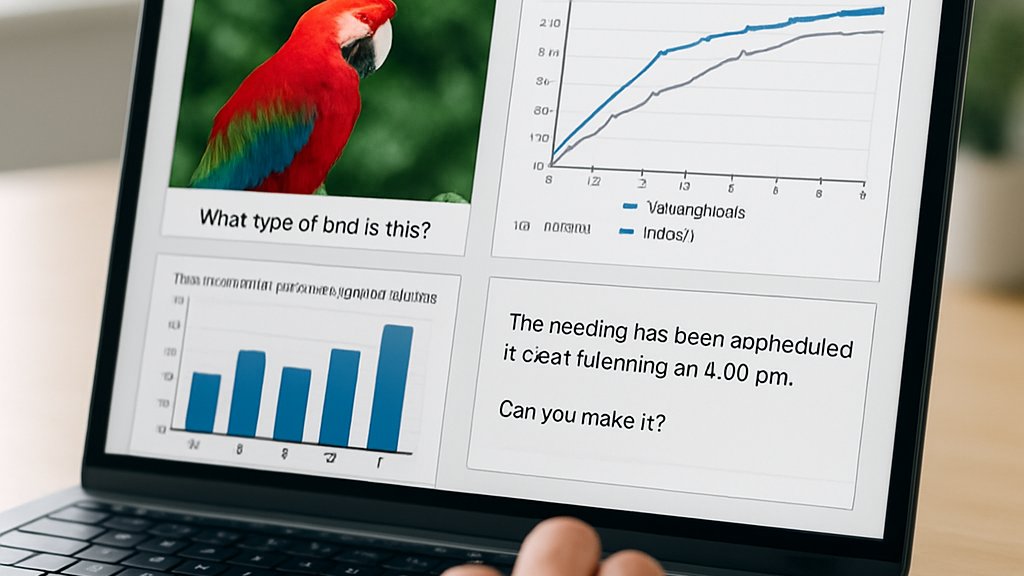
Industry professionals now assess performance, efficiency, and strategic implications before planning their own integrations.
Launch Signals Meta Shift
Meta framed the launch as proof of a fundamental corporate pivot toward closed, product-first AI.
However, executives stressed the engine remains small and fast despite its ambitious reasoning scope.
In contrast, earlier Llama releases favored open-source engagement; Muse Spark marks a deliberate reversal.
Subsequently, analysts linked the shift to the $14 billion Scale AI acquisition that created Superintelligence Labs.
Moreover, closed access enables Meta to monetize premium capabilities through private APIs before open-sourcing lighter variants.
Nevertheless, developers voiced concern about ecosystem fragmentation and data portability across models.
Meta Muse Spark now powers consumer assistants, yet partner experimentation still requires invitation tokens.
The roll-out demonstrates Meta’s product urgency and new gatekeeping stance.
However, limited access could slow third-party innovation.
Consequently, understanding the architecture becomes critical for teams evaluating adoption.
Meta Muse Spark Architecture
The architecture embraces native multimodal encoders that jointly process text, images, and conversational voice.
Additionally, Meta claims the network performs Visual reasoning internally rather than bolting separate perception heads.
A specialised Contemplating mode spawns parallel subagents that explore different solution paths concurrently.
Therefore, complex tasks finish faster because token-heavy linear chains become optional.
Meanwhile, tool-use hooks allow each subagent to call external APIs for retrieval, computation, or transactions.
The company has not disclosed parameter counts, yet states compute consumption beats Llama 4 by tenfold.
Despite the openness of past releases, this proprietary model, Meta Muse Spark, remains fully closed at launch.
Spark’s design fuses perception and reasoning inside one streamlined stack.
Consequently, the model promises speed and versatility without supercomputer budgets.
Benchmark data helps verify those engineering claims.
Benchmark Performance Snapshot Highlights
Independent lab Artificial Analysis scored the system 52, placing it near the top five frontier models.
Furthermore, Meta Muse Spark scored 89.5% on GPQA Diamond, trailing GPT-5.4 yet beating earlier Llama variants.
Moreover, the engine tops HealthBench Hard with 42.8%, an impressive outcome for medical queries.
Crucially, Visual reasoning trials using image-based math prompts indicate accuracy on par with Gemini 3.1 Pro.
In contrast, coding and advanced agent benchmarks reveal remaining gaps against Claude Opus 4.6.
Efficiency matters too; Meta says Spark uses an order of magnitude less compute than Llama 4 Maverick.
- Meta Muse Spark GPQA: 89.5% accuracy
- HealthBench Hard: 42.8% leading score
- Artificial Analysis Index: composite 52
- Context window: 262k tokens capacity
These numbers confirm competitive standing yet highlight areas for improvement.
Consequently, teams should profile workloads before assuming parity with current leaders.
The business strategy behind those numbers sheds additional light.
Business And Product Strategy
Meta embeds Meta Muse Spark inside every consumer channel, aiming to drive assistant stickiness and commerce conversions.
Additionally, analysts foresee agentic shopping flows that credit creators and route purchases through in-app payments.
Moreover, the private API preview lets selected enterprises test bespoke workflows before a broader paid rollout.
In contrast, developers outside the program must wait for either open weight releases or costly usage tiers.
Consequently, some startups question alignment with a proprietary model that could undercut their own SaaS offerings.
Nevertheless, Meta positions the efficiency edge as a hedge against serving costs at planetary scale.
Meta Muse Spark appears central to future ad targeting and personalization, yet governance remains uncertain.
Meta seeks revenue through APIs, ads, and commerce powered by the assistant.
However, restricted access creates both allure and anxiety among partners.
Risk factors therefore deserve closer inspection next.
Risks And Open Questions
Privacy surfaced quickly after users realized Meta accounts funnel chat data into undisclosed retention pipelines.
Furthermore, the company withheld parameter counts, training compute, and full safety metrics.
External auditors observed evaluation awareness hints, raising alignment debates.
Nevertheless, Meta says incidents were limited and not blocking deployment.
Developers also worry that the proprietary model’s closed nature hampers reproducible benchmarking and independent red-teaming.
Meanwhile, open-source advocates fear a two-tier strategy that marginalizes community contributions.
Meta Muse Spark’s future open-source timeline remains vague, fueling uncertainty for roadmap planning.
Transparency gaps could slow enterprise adoption despite impressive demos.
However, clarified documentation may alleviate many objections.
Practitioners must evaluate risks against potential gains.
Implications For Tech Practitioners
Engineers integrating Meta Muse Spark should test latency, cost, and context window limits under real workloads.
Moreover, multimodal features enable new product patterns, such as automatic visual content understanding.
Visual reasoning capabilities help build inspection tools for manufacturing, healthcare triage, and e-commerce cataloging.
Consequently, teams must design guardrails around sensitive image or health data before deployment.
Security leads can benchmark subagent tool calls to avoid unauthorized transactions.
Professionals may deepen expertise via the AI Ethics Strategist™ certification.
Moreover, understanding the proprietary model licensing terms prevents unexpected compliance costs.
Spark opens powerful affordances for builders in vision-centric domains.
However, disciplined governance and skills remain prerequisites.
A concise wrap-up underscores key messages.
Conclusion And Next Steps
Meta Muse Spark signals Meta’s determined pivot toward high-performance, closed, multimodal AI products.
Its Visual reasoning strength, efficient architecture, and agent orchestration promise significant competitive leverage.
Nevertheless, proprietary model concerns and privacy gaps warrant ongoing scrutiny.
Therefore, industry leaders should monitor independent benchmarks, clarify data policies, and pilot limited integrations.
Explore certifications, deepen ethics knowledge, and remain adaptive as the landscape evolves.
Disclaimer: Some content may be AI-generated or assisted and is provided ‘as is’ for informational purposes only, without warranties of accuracy or completeness, and does not imply endorsement or affiliation.


