

AI CERTS
1 month ago
Perplexity’s Paid Pivot Reshapes AI Search Monetization
This article unpacks the motivations, numbers, and risks behind the shift. It also explores what the decision means for developers, publishers, and enterprise buyers. Therefore, industry professionals gain a concise roadmap for the evolving AI Search landscape. Nevertheless, Perplexity continues offering a limited free tier, avoiding a full paywall. Meanwhile, investors monitor conversion rates to see if premium uptake offsets rising compute costs. Subsequently, Perplexity’s choices could influence how rivals frame their own roadmaps.
Trust Over Ad Revenue
Advertising inside synthesized answers alarmed many Perplexity users during 2024 pilots. In contrast, executives feared that perceived bias would erode User Trust built around transparency. Wired reported that internal data showed click-through gains but declining satisfaction scores. Consequently, the company killed the tests on 19 February 2026 and issued a clear statement. Perplexity said ads threatened its credibility as an impartial Answer Engine rather than a marketing channel.
Therefore, management reframed the product as a knowledge utility powered by multi-model AI Search. Analysts note that trust remains non-negotiable because generative systems already battle hallucination concerns. Removing ads addressed one variable within that larger confidence equation. Perplexity prioritized integrity over short-term ad revenue. However, sustaining that stance demanded alternative income streams.
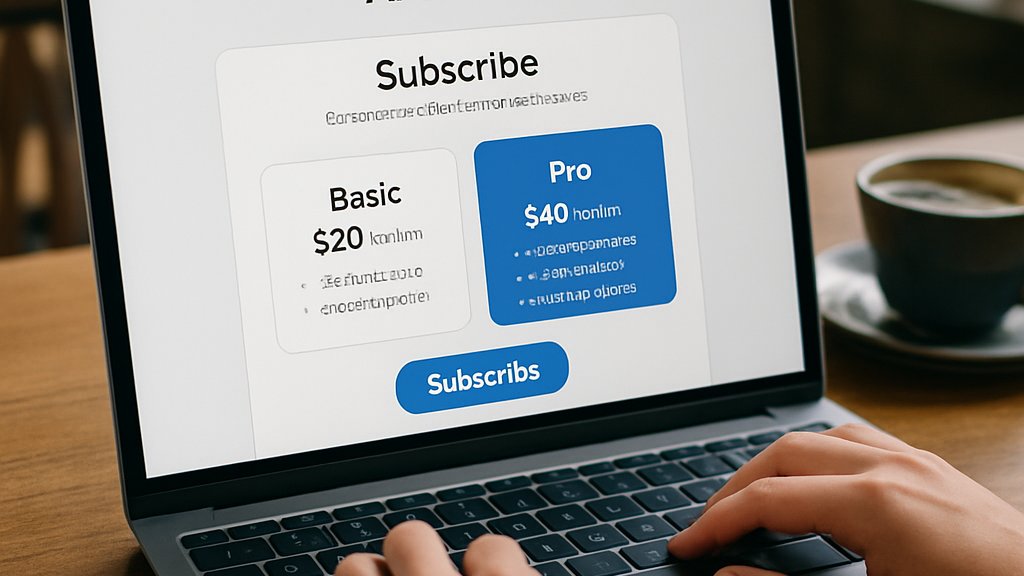
Driving Subscription Strategy Shifts
Subscriptions promise predictable cash flow unfettered by volatile ad markets. Moreover, Perplexity’s compute bills scale with usage, not impressions. Therefore, aligning revenue with active sessions offers healthier unit economics. CEO Aravind Srinivas argued that heavy users would pay for speed, context length, and model choice. Meanwhile, similar logic guided Netflix and Spotify during early streaming eras. In contrast, advertisement driven portals chased volume rather than depth.
Perplexity believes enterprise researchers, developers, and journalists represent high-value Business cohorts. Consequently, the firm now markets usage-based seats alongside consumer plans. Still, management insists the free tier remains to widen the funnel. These motivations clarify why Perplexity doubled down on premium AI Search access. Subsequently, the next section dissects exact price points.
Premium Subscription Tiers Breakdown
Perplexity operates a three-ladder offering positioned for distinct needs. Furthermore, each level bundles increasing requests, models, and support. Key details appear below.
- Free: Limited daily queries, standard model access, zero cost.
- Pro: $20 monthly, higher limits, priority routing, developer API credits.
- Max: $200 monthly, earliest feature releases, Computer agent, 19-model orchestration.
- Enterprise: Roughly $40 per seat, compliance tools, extended context windows.
Additionally, Comet Plus offers a $5 browser bundle with publisher payments. Reported ARR approached $200M by September 2025, though figures remain unaudited. Investors valued the Business at roughly $20B during that raise. Nevertheless, analysts question how many free users will convert. Perplexity answers that power users generate disproportionate load and must help fund compute. Professionals can enhance their expertise with the AI for Everyone™ certification. These price layers reveal a classic freemium stair-step. However, technology alone seldom secures loyalty, as the next section shows.
Multi Model Orchestration Edge
Computer, launched 26 February 2026, embodies Perplexity’s multi-model thesis. Furthermore, the agent coordinates 19 external models, including GPT-4, Claude, Gemini, and Grok. Task routing selects the cheapest or most capable engine per subtask. Consequently, users see faster coding suggestions and richer data synthesis. Analysts call this approach an Answer Engine on steroids. However, the strategy heightens dependency on competitors that supply those models. Any licensing change could disrupt Business continuity.
Nevertheless, orchestration differentiates Perplexity within the crowded AI Search arena. Developers also appreciate transparent citations and model labels, bolstering User Trust. These technical advantages underpin premium positioning. Yet publisher relationships tell another story.
Publisher Partnership Economics Explained
Publishers sued several generative platforms for unlicensed content use. In response, Perplexity created Comet Plus with an 80% revenue share. Moreover, it seeded a $42.5M pool to attract early partners. Jessica Chan said the aim was to convert conflict into cooperative Business models. Consequently, outlets like Nikkei and Chicago Tribune are evaluating participation. However, critics doubt whether small checks offset potential traffic loss. User Trust also hinges on clear source attribution within answers. Perplexity surfaces publisher logos and direct links, reinforcing transparency inside AI Search results. These measures may reduce litigation risk. Still, legal proceedings remain active, as the next section covers.
Risks And Open Questions
Subscriptions may not scale fast enough to fund spiraling inference outlays. Additionally, compute rates from OpenAI and Anthropic could rise unexpectedly. In contrast, ad giants subsidize costs through enormous inventory tied to AI Search expansion. Perplexity faces further uncertainty from pending copyright lawsuits. Moreover, Reddit forums highlight intermittent model downgrades for paying customers. Such glitches threaten User Trust at the exact moment conversion matters. ARR estimates above $450M lack audited confirmation, creating valuation fog. Nevertheless, sufficient liquidity from the September round buys execution time. Answer Engine competition also intensifies as Google integrates Gemini into traditional results. Therefore, Perplexity must keep innovating while containing burn. These risks inform procurement decisions, detailed next.
Implications For Enterprise Buyers
Enterprises already pay for specialized research assistants and dev copilots. Perplexity positions AI Search as a single pane for structured knowledge workflows. Consequently, buyers gain multi-model flexibility without negotiating multiple APIs. However, due diligence should examine uptime commitments and model licensing clauses. Additionally, finance teams should benchmark subscription costs against internal search tooling. A short checklist helps procurement teams:
- Verify data compliance certs and audit logs.
- Request refund policies for model outages.
- Compare Answer Engine latency to existing systems.
- Assess roadmap alignment with Business priorities.
Moreover, early adopters often negotiate discounted seat pricing. Perplexity’s momentum suggests leverage may wane after landmark reference deals close. Professionals seeking strategic skills can pursue the AI for Everyone™ program. These steps ensure informed procurement. Finally, we recap the broader narrative.
Perplexity’s retreat from ads underscores how fiercely credibility matters inside AI Search. Subscription revenue, multi-model orchestration, and publisher sharing now anchor that evolving Answer Engine. However, high compute costs, legal disputes, and supplier risk continue to challenge the Business. Nevertheless, early ARR momentum proves that users will pay for trusted, transparent AI Search tools. Consequently, enterprises evaluating generative platforms should watch conversion metrics and lawsuit outcomes. Meanwhile, professionals can future-proof careers through the AI for Everyone™ certification. Act now to deepen understanding and guide strategic adoption.
Disclaimer: Some content may be AI-generated or assisted and is provided ‘as is’ for informational purposes only, without warranties of accuracy or completeness, and does not imply endorsement or affiliation.


