

AI CERTS
6 days ago
SpaceX IPO governance sparks investor debate
Consequently, the structure could redefine expectations around Shareholder Rights in high-profile tech offerings. Meanwhile, market chatter still highlights breathtaking Valuation targets that dwarf recent aerospace deals. Elon Musk appears positioned to keep near-absolute influence despite selling stock to the public. Therefore, professionals must parse both opportunity and risk before committing capital. This article dissects core mechanics, financial metrics, and regulatory flashpoints in the upcoming SpaceX IPO. Subsequently, readers will gain practical insights for boardrooms and deal desks alike.
Governance Design Under Scrutiny
SpaceX plans a dual-class arrangement that allocates ten votes to each Class B share. Furthermore, Class A shares destined for public buyers carry only one vote. In contrast, similar tech listings seldom bundle so many control levers simultaneously. Elon Musk will hold roughly 42.5% of the economic stake yet secure about 83.8% of total voting power. Moreover, only Class B holders can remove him from executive roles, according to Reuters. Governance experts caution that such clauses effectively lock the boardroom door. Consequently, Shareholder Rights face rare constraints that could persist long after the SpaceX IPO launch.
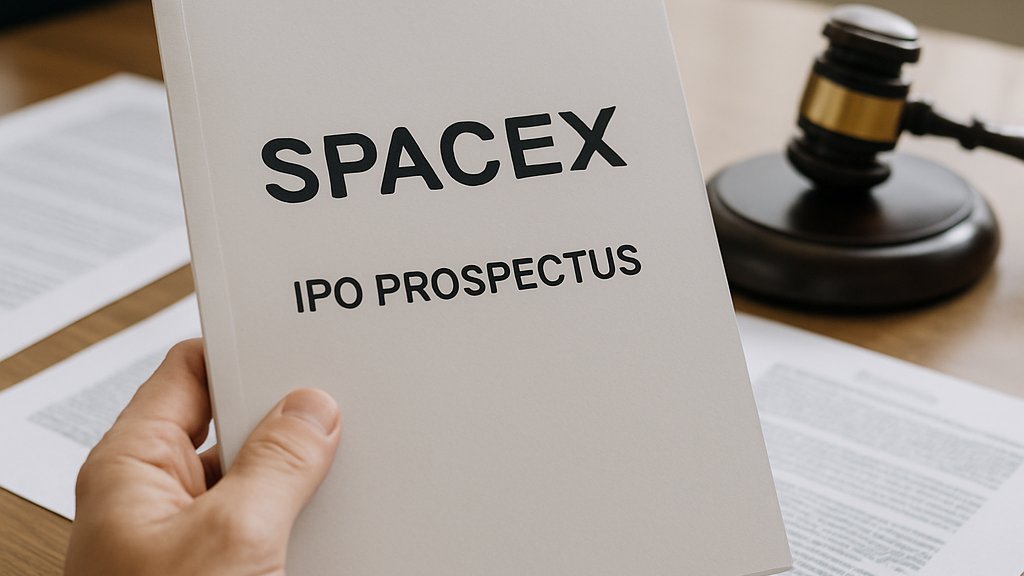
These mechanics concentrate authority in a narrow circle. Nevertheless, proponents claim mission continuity outweighs dilution of oversight. The debate around concentrated power therefore sits at the heart of this offering.
These elements spotlight founder entrenchment. However, deeper analysis requires examining the power amplifiers beneath them.
Dual-Class Power Mechanics
Mandatory arbitration entrenches the dual-class framework even further. Additionally, Texas corporate statutes raise proposal thresholds, hampering activist efforts. Consequently, investors cannot easily file derivative suits in open court. Meanwhile, Nasdaq’s controlled-company exemptions permit sidestepping certain independent-director rules. Therefore, SpaceX blends regulatory allowances into a protective shell.
Governance specialists cite three compounding barriers:
- Super-voting shares dominating any contested ballot
- Private arbitration restricting discovery and precedent
- State law provisions limiting tender or contest tactics
In contrast, prior mega listings such as Meta offered at least litigation in Delaware courts. Bruce Herbert summarized the stakes: “It closes the voting door, the courthouse door and the proposal door simultaneously.” Consequently, Shareholder Rights appear narrower here than in almost any recent tech debut.
Such restrictions challenge institutional norms. Subsequently, funds must rethink stewardship policies regarding the SpaceX IPO.
Investor Protection Concerns
Pension advisers have already urged the SEC to scrutinize the filing. Moreover, Glass Lewis policies discourage supporting multi-class structures lacking sunset provisions. Therefore, negative recommendations could emerge during proxy seasons following listing. Nevertheless, some managers may accept weakened safeguards to access the growth narrative.
Lucian Bebchuk of Harvard Law School noted the unusual clause limiting CEO removal. Additionally, risk language in the prospectus warns investors they “will not have the same protections.” Consequently, litigation risk shifts from the firm to minority holders.
These warnings emphasize potential downside. However, financial upside remains part of the conversation, so focus now turns to Valuation metrics.
Financial Metrics And Valuation
Reported 2025 revenue stands near $16 billion, with EBITDA around $8 billion. Meanwhile, Starlink drives most of that cash generation. Furthermore, the S-1 positions SpaceX as an integrated AI and space player claiming a $28.5 trillion total market. Consequently, some analysts tag headline Valuation scenarios between $1.5 trillion and $1.75 trillion. That range implies an EBITDA multiple exceeding 180× at the upper bound.
Critics argue the TAM estimate leans heavily on speculative AI revenues. Additionally, huge capital requirements for Starship and orbital data centers remain unfunded. Nevertheless, early indications suggest the SpaceX IPO could raise up to $75 billion, providing substantial war-chest capacity.
These figures reveal an aggressive pricing ambition. Subsequently, debate shifts toward market sentiment and allocation strategies.
Market Reactions So Far
Investor coalitions representing pension assets have voiced sharp reservations. Nevertheless, several growth-oriented funds privately express willingness to buy if discount tiers emerge. Moreover, underwriters, still unnamed publicly, reportedly field heavy inbound interest. Consequently, bookrunners may balance demand against governance backlash.
Proxy advisers will likely issue detailed scorecards once the public S-1 posts on EDGAR. Additionally, large sovereign funds often follow such guidance before anchoring sizeable orders. Therefore, early sentiment remains fluid, tracking every leak about pricing.
These dynamics illustrate a tug between excitement and caution. However, regulatory checkpoints could still shift the timeline.
Regulatory Watchpoints Ahead
The SEC continues its confidential review of the draft S-1. Furthermore, the agency’s 2025 stance on arbitration reduces legal barriers for approval. Nevertheless, comment letters could force disclosure tweaks, especially around risk language. Meanwhile, Texas charter provisions may face court challenges if conflicts arise after listing.
Professionals should monitor three milestones: public S-1 release, pricing roadshow, and final prospectus. Additionally, watch for any petitions challenging arbitration legality. Consequently, the SpaceX IPO timetable could slip if regulatory dialogue intensifies.
These checkpoints will shape final terms. Subsequently, strategic takeaways help stakeholders prepare responses.
Strategic Takeaways For Stakeholders
C-suite leaders should weigh governance concessions against potential upside. Moreover, portfolio managers must calibrate exposure caps given concentrated voting risk. Board advisers can benchmark policies using the upcoming proxy adviser opinions. Additionally, compliance teams should draft scenario plans for limited litigation venues. Professionals can enhance their expertise with the AI Executive™ certification.
These steps create actionable roadmaps. However, continuous monitoring remains imperative as terms evolve.
These conclusions integrate governance, risk, and reward perspectives. Consequently, informed decision-making around the SpaceX IPO becomes possible.
Key Points Recap
• Dual-class shares give Musk 83.8% voting power.
• Mandatory arbitration limits court access.
• Reported Valuation range hits $1.75 trillion.
• Shareholder Rights face unprecedented constraints.
• Regulatory reviews may reshape prospectus language.
These highlights summarize critical facts. Subsequently, the conclusion reinforces actionable insights.
Conclusion
SpaceX presents a paradox: staggering growth potential paired with tightly wound governance. Moreover, the SpaceX IPO blends super-voting stock, arbitration, and Texas law into a fortress of founder control. Nevertheless, some investors may tolerate reduced Shareholder Rights for front-row access to Starlink cash flows and AI ambitions. Therefore, each institution must balance Valuation upside against stewardship mandates. Professionals seeking sharper analytic tools can explore the linked certification. Consequently, continued diligence will determine whether this historic listing becomes a triumph or cautionary tale.
Disclaimer: Some content may be AI-generated or assisted and is provided ‘as is’ for informational purposes only, without warranties of accuracy or completeness, and does not imply endorsement or affiliation.


