

AI CERTS
6 days ago
Arm Earnings Lift AI Chip Stocks on Data Center Momentum
Consequently, the report shifted sentiment across the broader semiconductor landscape, forcing analysts to rerun valuation models. This article unpacks the numbers, explores risks, and explains why many managers are adding exposure. Throughout, we will reference licensing economics and longer-term Growth pathways. Finally, readers will find actionable takeaways, including professional upskilling opportunities. However, not every datapoint impressed, as capacity questions triggered intraday share volatility. Understanding these crosswinds is vital for navigating AI hardware cycles.
Record Quarter Highlights Detailed
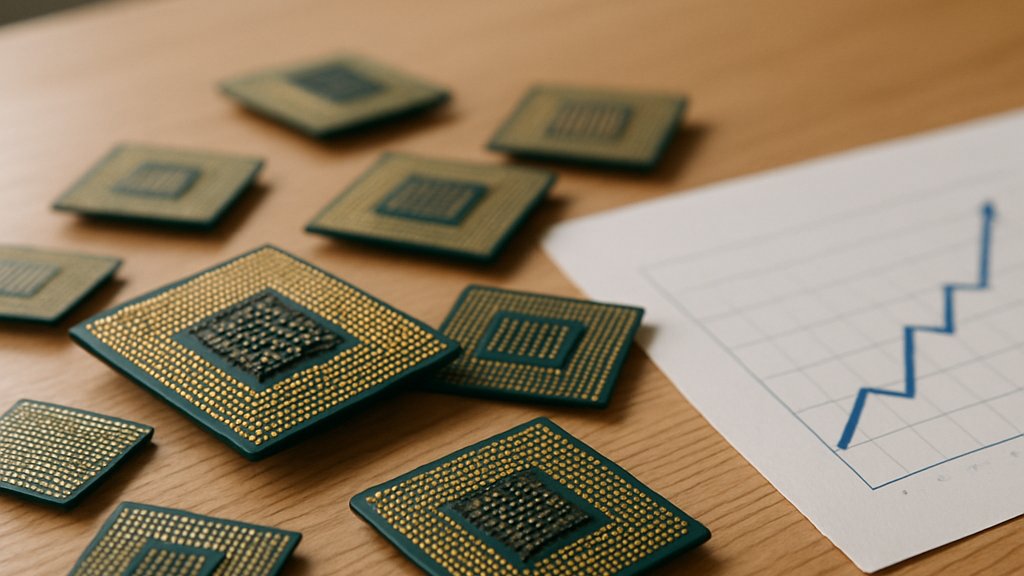
Arm generated $1.49 billion in Q4 revenue, marking 20 % Growth year over year. Full-year sales reached $4.92 billion, up 23 % despite smartphone softness. Furthermore, royalty revenue advanced 11 % to $671 million, while Licensing income leapt 29 % to $819 million. Consequently, non-GAAP operating margin climbed above 49 %, reinforcing the company’s capital-light model. Cash and equivalents ended at $3.6 billion, giving management flexibility for strategic moves. Meanwhile, Arm guided current quarter revenue to $1.26 billion at the midpoint, topping consensus figures. Analysts framed the beat as a pivotal catalyst for AI Chip Stocks tracking CPU exposure.
These figures confirm expanding demand across verticals. Nevertheless, the underlying accelerator product stole the spotlight, as the next section details.
AGI CPU Demand Surge
The March-announced AGI CPU represents Arm’s first foray into production silicon for hyperscale Data Center fleets. Management disclosed more than $2 billion in committed demand spanning fiscal 2027 and 2028. Moreover, slide decks outlined an ambitious $15 billion chip revenue target by fiscal 2031. Meta co-developed the part, while AWS, Microsoft, and Google Cloud pledged evaluation clusters. Consequently, analysts flagged a step-change opportunity for Arm to transcend its Licensing-only identity.
In contrast, some questioned supply because Arm has secured capacity for only half the demand. Semiconductor veterans warn that foundry lead times could stretch deployment schedules. Still, the announcement expands narratives influencing AI Chip Stocks across CPU and GPU ecosystems.
These developments illustrate Arm’s pivot toward silicon monetization. Subsequently, revenue composition may shift, as we examine next.
Revenue Mix Dynamics Shift
Arm’s business splits between upfront Licensing and royalties, attracting close study from AI Chip Stocks traders. Historically, Licensing produced lumpy bursts, while royalties delivered steady compounding. However, the latest quarter displayed synchronized strength, easing fears of smartphone drag. Additionally, management noted agentic AI raises CPU royalty rates because every accelerator needs orchestration cores. Data Center partners already ship Arm-based head nodes, supporting that view. Meanwhile, new silicon sales will record as product revenue, complicating traditional margin math. Consequently, analysts modeled blended gross margin compression offset by higher absolute profit dollars.
- Royalty revenue: $671 million, up 11 % YoY
- Licensing revenue: $819 million, up 29 % YoY
- Non-GAAP free cash flow: $882 million FY2026
- Guided Q1 revenue: $1.26 billion midpoint
These figures suggest diversified Growth drivers beyond handset cycles. Therefore, investors will watch mix shifts closely in coming quarters. That scrutiny feeds into market sentiment, covered next.
Market Reaction Volatility Seen
Shares initially surged 12 % after hours, then reversed to close down 5.5 %. Reuters attributed the swing to supply concerns and sky-high expectations. Moreover, Seaport’s Jay Goldberg said the setup was challenging given prior multiple expansion. Nevertheless, many quantified the pullback as typical price discovery for AI Chip Stocks following earnings. In contrast, broader Semiconductor indices remained flat, signaling company-specific turbulence. Options markets priced elevated implied volatility into the next catalyst window. Consequently, short-term traders adjusted positioning rather than abandoning the longer thesis.
Price swings reflect execution doubts more than demand skepticism. Subsequently, assessing risk factors becomes essential.
Strategic Risks Moving Ahead
Arm’s silicon adventure introduces unfamiliar supply-chain responsibilities. Moreover, capacity remains partially unbooked, leaving delivery timelines vulnerable. TSMC and Samsung are leading foundry candidates, yet allocation competition intensifies across Semiconductor markets. Additionally, vertical expansion can unsettle existing licensees that view Arm as neutral IP vendor. Licensing partners might perceive channel conflict if Arm sells finished silicon to their customers.
Consequently, revenue cannibalization risk deserves attention despite management assurances. Data Center customers also demand multi-year volume guarantees before migrating workloads. In contrast, smartphone weakness still threatens royalty forecasts should macro trends deteriorate. Short sellers of AI Chip Stocks argue these execution hazards justify caution.
These issues present material execution hurdles. Nevertheless, robust cash reserves and a proven Growth record provide cushions, paving way to opportunity analysis next.
Opportunities For Stakeholder Groups
Despite risks, Arm unlocks multiple upside levers. First, hyperscalers gain alternative CPU architectures that enhance power efficiency within constrained Data Center footprints. Second, system vendors such as Supermicro and Lenovo can bundle differentiated racks, boosting margin mix. Third, investors can diversify AI Chip Stocks exposure beyond GPU leaders. Furthermore, professionals seeking career acceleration can bolster credentials.
They may enhance expertise through the AI Product Manager™ certification. Such programs translate technical advances into product roadmaps, raising strategic value inside Semiconductor firms. Moreover, Arm projects chip revenue hitting $15 billion by 2031, implying compound annual Growth above 30 %. Consequently, stakeholders could capture outsized returns if AI Chip Stocks execution aligns.
These opportunities counterbalance earlier concerns. Therefore, the final section synthesizes an outlook for AI Chip Stocks.
AI Chip Stocks Outlook
Forecasting any emerging cycle requires discipline. Arm’s near-term guide appears conservative relative to the demand pipeline. Furthermore, sell-side models show royalty Growth moderating but chip revenue expanding through 2028. Assuming capacity ramps successfully, blended operating margin may dip only modestly. Nevertheless, execution slip could reignite volatility across AI Chip Stocks.
Investors should monitor foundry agreements, shipment milestones, and Licensing trends each quarter. Additionally, watch deployment benchmarks once Meta publishes performance data. Moreover, channel checks among OEMs will reveal real uptake. These guideposts inform tactical moves. Ultimately, patience and rigorous diligence will separate winners from bubble chasers.
Arm’s blockbuster quarter validates rising CPU demand inside agentic workloads. Moreover, diversified revenue streams and partner endorsements strengthen the investment thesis. Nevertheless, supply unknowns and strategic friction warrant measured optimism. For analysts tracking AI Chip Stocks, monitoring capacity, royalties, and head-node benchmarks remains mandatory. Consequently, continuous learning delivers an edge. Professionals should pursue the AI Product Manager™ certification to translate technical change into market leadership. Take action today to stay ahead.
Disclaimer: Some content may be AI-generated or assisted and is provided ‘as is’ for informational purposes only, without warranties of accuracy or completeness, and does not imply endorsement or affiliation.


