

AI CERTS
1 week ago
Google Pivot: Vertex AI Evolves Into Gemini Enterprise
Why Google Pivoted Now
Google cites soaring developer momentum as the prime catalyst. Moreover, one million builders adopted the CLI within three months.
Financial urgency also shaped the choice. Reuters reported Cloud revenue nearing twenty billion dollars per quarter, yet margins stay tight.
By consolidating features, executives expect higher paid conversion. Thomas Kurian called the new suite 'the home for agentic workforces' during the keynote.
In contrast, many observers view the Google Pivot as brand alignment that unifies lifecycle policies under clearer governance.
These motives illuminate Google’s strategy. However, product capabilities deserve closer inspection before teams commit budgets.
Key Product Features Overview
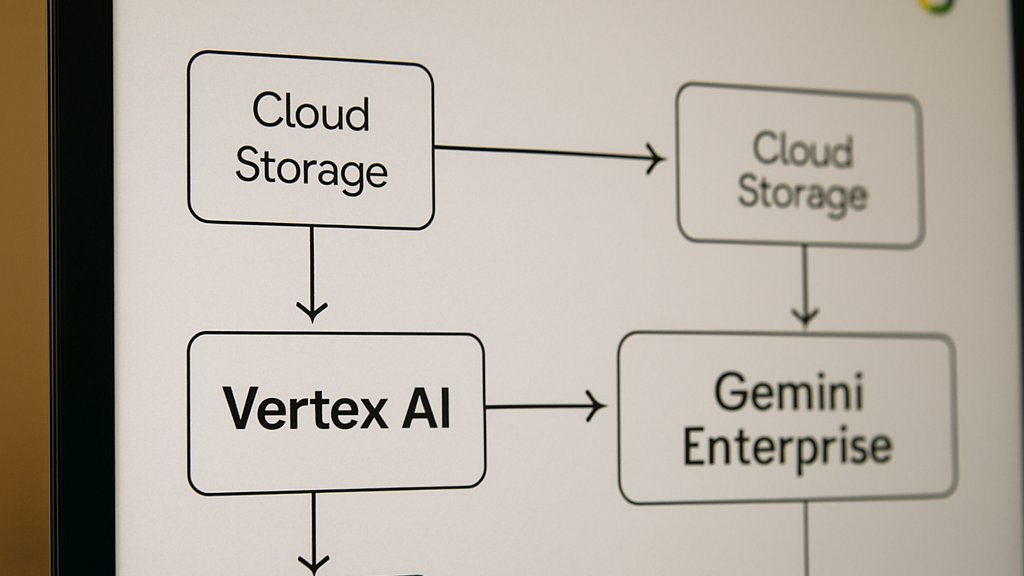
Gemini Enterprise bundles Model Garden, Agent Builder, Vector Search, and Governance Center into one Platform console.
Furthermore, over two hundred frontier models share unified endpoints, including the 2.5 Flash model scheduled for June 17 2026 discontinuation.
- Agent Runtime executes multi-step workflows across private data.
- Agent Identity secures credential delegation between tasks.
- Agent Gateway monitors external calls and rate limits usage.
- Lifecycle tables outline model sunset windows with exact dates.
Consequently, teams gain predictable governance without stitching separate services.
Feature consolidation reduces integration toil. Nevertheless, the Google Pivot also centralizes dependency on one vendor control plane.
Impact On App Developers
Most developers welcome richer tooling. However, some resent new billing meters tied to multimodal generation workloads.
Community threads share stories of unexpected five-figure invoices. Therefore, cost observability becomes vital before scaling agents.
Developers shifting from Vertex SDKs must update scopes, endpoints, and parameters. Subsequently, automated tests should verify identical outputs.
Professionals can enhance their expertise with the AI Architect™ certification, covering cloud model governance essentials.
Developer velocity improves through integrated UX. Yet, the Google Pivot introduces fresh operational responsibilities for every engineering team.
Risks And Market Concerns
Independent analysts warn about vendor lock-in. Moreover, centralizing identity, runtime, and data paths on one Platform tightens dependency.
Model churn presents another headache. Google often deprecates versions within months, pressuring validation cycles.
Billing uncertainty persists across modalities. In contrast, AWS and Azure publish clearer simulators for price estimation.
Skeptics also criticize messaging clarity. The term 'sunsets' appears in docs, yet no firm service sunset statement exists.
These risks complicate the Google Pivot timeline. Consequently, architects must embed contingency designs within every agent rollout.
Migration Best Practices Guide
First, inventory each Vertex API your workloads call. Subsequently, map every invocation to its Enterprise counterpart.
Second, enable dual-write patterns during cutover. Moreover, automate regression tests against both stacks for confidence.
Third, watch lifecycle notices weekly. Sunsets can land quickly, as the stable flash example demonstrated.
Finally, negotiate enterprise SLAs that cap exposure if a future Google Pivot realigns pricing or access tiers.
Following these steps lowers migration risk. Nevertheless, continuous monitoring ensures surprises remain minimal.
Future Business Implications Ahead
Market watchers expect Google Cloud to package more premium agents. Consequently, revenue per customer should climb if adoption holds.
Partner ecosystems will adjust offerings. For instance, Deloitte promotes accelerator kits referencing the Google Pivot migration roadmap.
Meanwhile, competitors highlight open standards to counter lock-in narratives. IBM advertises a multi-Platform agent fabric spanning clouds.
A single model family alone will not secure dominance. However, the Enterprise brand gives Google a fresh earnings narrative.
Business dynamics remain fluid under the Google Pivot. Therefore, executives must revisit strategy each quarter.
Google’s consolidation of Vertex AI into the newer suite signals a decisive strategic turn. The Google Pivot unifies tooling, governance, and billing within a single interface, delivering speed yet concentrating risk. Moreover, developers gain agent orchestration features, but they must track rapid model deprecations and potential cost volatility. Consequently, prudent teams will prepare exit paths, automate regression tests, and negotiate protective SLAs. Professionals seeking deeper mastery can explore the AI Architect™ certification for structured guidance. Act now, assess your posture, and steer your organisation confidently through this evolving landscape.
Disclaimer: Some content may be AI-generated or assisted and is provided ‘as is’ for informational purposes only, without warranties of accuracy or completeness, and does not imply endorsement or affiliation.


