

AI CERTS
2 months ago
IBM Concert Debuts To Unify Enterprise Operations
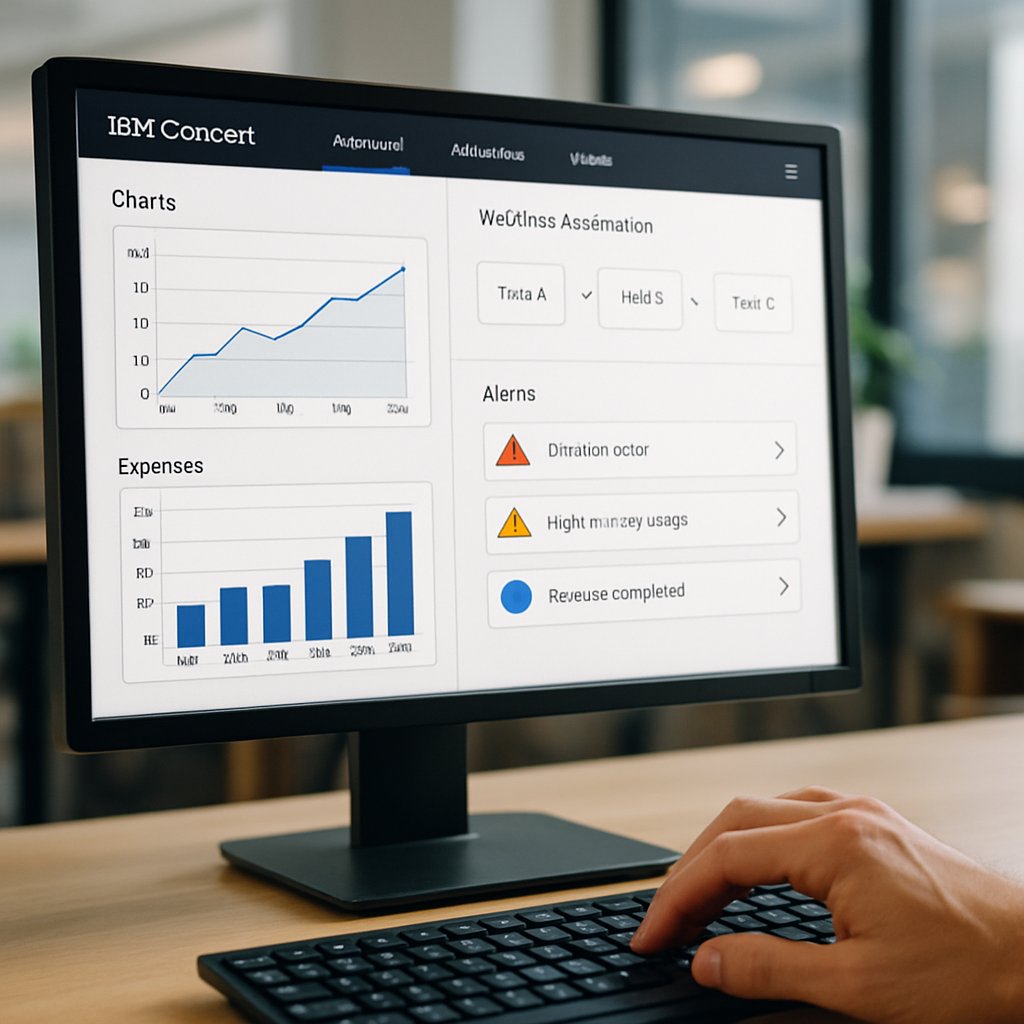
However, public preview status means early adopters must weigh benefits against maturity. The following sections unpack market forces, modules, access, governance, competition, and integration hurdles.
Market Forces Drive Adoption
Agentic platforms now crowd analyst decks. Furthermore, MarketsandMarkets sees agentic security spending hitting $13.5 billion by 2032. These projections set fertile ground for adoption.
Gartner’s 2026 forecast adds urgency. Enterprises lacking coherent operations layers risk fragmented workflows and slower incident response.
Meanwhile, analysts like Jason Andersen call IBM Concert “the glue” for IBM’s acquisitions. Vendors such as Datadog and Dynatrace chase similar visions, yet IBM wields a broader stack.
These trends spotlight high stakes for unified monitoring. Nevertheless, market optimism coexists with caution over governance and integration.
The surge shows clear momentum. Therefore, organizations want strategic anchors before agent proliferation accelerates.
Platform Modules Explained Clearly
IBM bundles six core modules inside the platform. Additionally, each inherits capabilities from older IBM products.
- Observe – full-stack monitoring powered by Instana and SevOne.
- Operate – cross-domain incident detection and response.
- Optimize – performance plus GPU cost insights via Turbonomic.
- Protect – risk analysis and Secure Coder shift-left security.
- Resilience – dependency mapping to harden services.
- Workflows – low-code orchestration aided by a watsonx model.
Moreover, the Workflows assistant defaults to ibm/granite-4-h-small and supports IAM, CP4D, or bearer tokens. Engineers receive step-by-step enablement within documentation.
Professionals can enhance their expertise with the AI Network Security™ certification.
These modules promise unified operations while preserving existing investments. Consequently, teams may reduce tool fatigue and shorten mean time to repair.
Cohesive capabilities matter for uptime. However, realizing synergy depends on meticulous data onboarding.
Public Preview Access Steps
Interested firms join a gated waitlist. Subsequently, IBM offers an interactive demo before granting broader sandbox rights.
Documentation stresses preview features lack production SLAs. Therefore, leaders should restrict usage to non-critical workloads during assessment.
The Secure Coder VS Code plug-in and IBM Bob integration also remain in preview. Early testing should verify IDE compatibility and policy alignment.
Furthermore, Concert Workflows marks AI-generated playbooks as experimental. Operators must review each suggestion before execution to avoid unintended impact.
Controlled entry keeps quality high. Nevertheless, tight gating could slow ecosystem feedback.
Governance And Security Focus
Autonomous agents raise oversight questions. Consequently, IBM touts built-in governance spanning audit trails, policy engines, and human-approval gates.
Microsoft and Salesforce market similar controls for their agent systems. In contrast, IBM Concert embeds governance across operations, security, and workflow layers.
Moreover, Secure Coder scans code within IDEs, prioritizes vulnerabilities, and suggests remediations. That shift-left stance supports faster response cycles.
Nevertheless, analysts warn about “rogue agent” scenarios. Teams must validate policies continuously and monitor agent behavior.
Strong governance eases executive concerns. However, adoption success will hinge on real-world compliance audits.
Competitive Landscape Snapshot
Rivals scramble to claim agentic territory. Datadog extends Watchdog, while Dynatrace promotes Davis AI. Meanwhile, Microsoft’s Agent 365 targets workplace automation.
Salesforce pushes Agentforce for CRM operations. Additionally, ServiceNow blends orchestration with its Flow Designer suite.
IBM Concert differentiates through integrated modules and hybrid cloud depth. Gartner sees advantage in unifying observability, optimization, and security under one license.
However, breadth invites scrutiny. Competitors argue nimble point tools offer quicker iteration and lighter footprints.
Diverse options empower buyers. Therefore, proof-of-value pilots remain critical before long-term commitments.
Implementation Challenges Ahead
Pulling cross-domain telemetry into a single model is arduous. Data mapping, semantic alignment, and real-time ingestion demand sustained effort.
Moreover, culture shifts accompany tool consolidation. Teams accustomed to niche consoles may resist unified dashboards.
Preview status complicates production rollout. Operators must isolate experimental workflows and maintain fallback paths for critical monitoring.
IBM Concert supplies connectors, yet custom integrations will emerge. Consequently, implementation partners could see heightened demand.
Early friction should fade with maturity. Nevertheless, leaders must allocate resources for change management.
The hurdles emphasize due diligence. Meanwhile, a structured adoption plan mitigates disruption risks.
Unified visibility, faster remediation, and embedded governance define IBM Concert advantages. Additionally, market momentum and growing agent adoption make evaluation timely. However, preview constraints and integration complexity require measured pilots. Ultimately, success depends on disciplined execution and continuous feedback.
These insights outline current realities. Prospective users should engage IBM, request demos, and gauge fit through limited trials.
Looking ahead, IBM Concert could reshape enterprise tooling once general availability arrives. Meanwhile, professionals seeking deeper security skills can pursue the AI Network Security™ credential to stay competitive.
Disclaimer: Some content may be AI-generated or assisted and is provided ‘as is’ for informational purposes only, without warranties of accuracy or completeness, and does not imply endorsement or affiliation.


