

AI CERTS
19 minutes ago
ServiceNow Projection Targets $30B Subscription Revenue by 2030
Consequently, shares oscillated yet finished modestly higher after the event. Our deep dive unpacks that $30B target, the supporting metrics, and looming risks. Moreover, we evaluate whether the ServiceNow Projection holds water against competitive dynamics and governance challenges. Finally, professionals will find certification guidance to strengthen their market value amid rapid platform change. Therefore, read on for a data grounded, transition rich assessment tailored to technical leadership teams.
Analyst Day Key Highlights
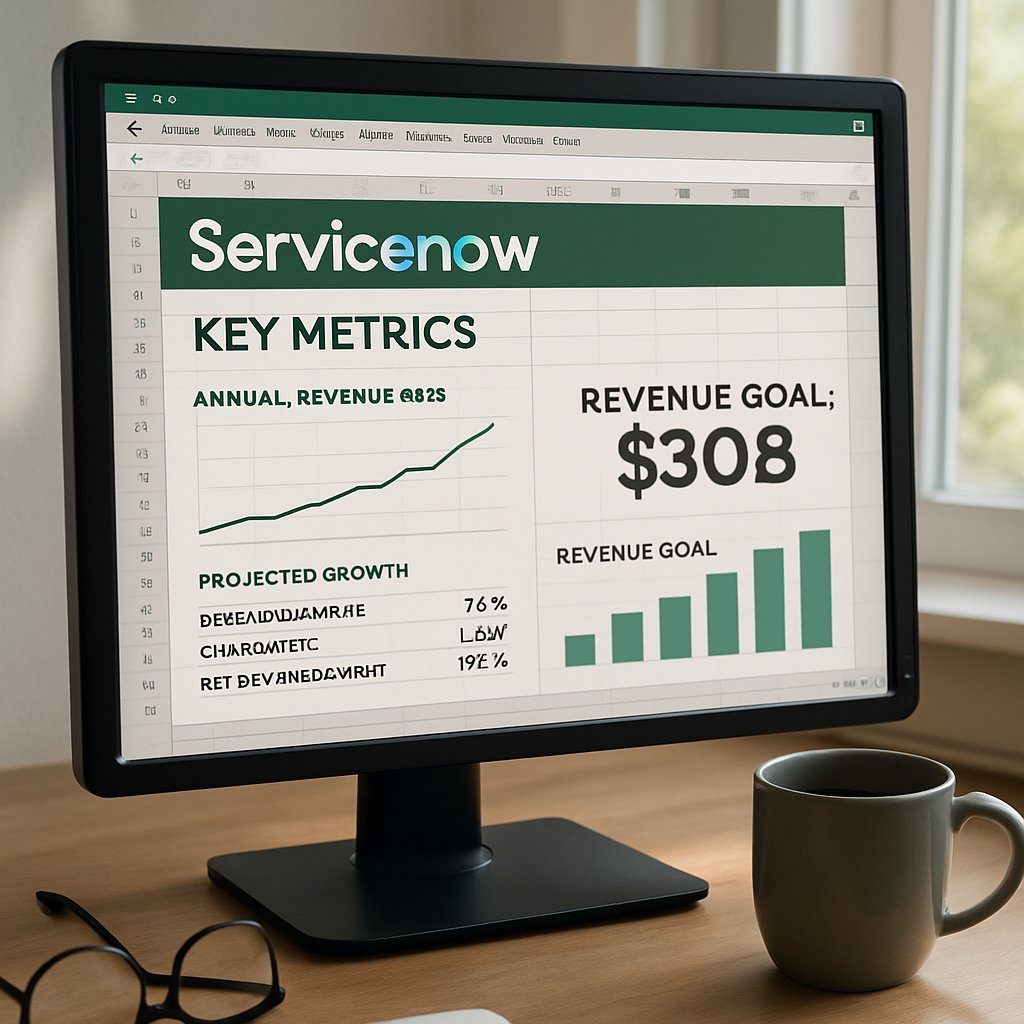
ServiceNow leaders devoted most slides to AI momentum. Firstly, they lifted the 2030 subscription midpoint to $31 billion, forming the headline ServiceNow Projection. Secondly, management outlined a rule-of-60 ambition combining high growth with expanding free cash flow margins. Meanwhile, the Now Assist suite surpassed $750 million ACV, signalling measurable demand traction. Consequently, about 30% of future ACV is expected to stem from AI packages.
- Q1 2026 subscription revenue: $3.671B, up 22% year over year.
- Current RPO reached $12.64B, signaling backlog strength.
- AI ACV target for 2026 raised to $1.5B.
- Long-range subscription target set at $30B-$32B by 2030.
Several sell-side desks immediately raised price targets, citing clearer modeling transparency. In contrast, cautious analysts flagged execution complexity as a potential brake on scaling speed. These headline numbers captured attention. However, deeper model mechanics reveal both promise and fragility. The analyst deck mixes solid near-term performance with ambitious scaling assumptions. Consequently, understanding the AI monetization logic becomes essential.
AI Monetization Growth Engine
Now Assist anchors the monetization thesis. ServiceNow bundles agentic features inside workflow subscriptions rather than selling standalone tokens. Therefore, management expects a 20% to 30% price uplift as customers adopt AI infused bundles. Moreover, usage based Action Fabric fees could add incremental revenue beyond seat counts. Subsequently, the ServiceNow Projection assumes AI accounts for nearly one third of 2030 annual contract value. Evercore ISI analysts endorsed that view, citing early ACV acceleration. Nevertheless, Gartner warns up to 40% of early agent projects may stall without governance.
Those cancellations could compress the projected uplift if workflows fail to operationalize. Management also highlighted early wins where customers tied agent output to ticket resolution service-level agreements. Consequently, consumption based charges scaled alongside resolved incidents, boosting lifetime contract value. These concerns showcase why rigorous customer success programs remain vital. AI monetization appears credible yet sensitive to deployment quality. In contrast, inorganic expansion adds clearer numerical support.
M&A Driven Expansion Strategy
ServiceNow bought Moveworks and Armis to widen total addressable market. Armis alone cost $7.75 billion, generating immediate security workflow credibility. Consequently, management attributes near-term subscription uplift partly to the acquisition. Furthermore, integrating asset intelligence data lets AI agents act with richer context. However, integration introduces margin drag during 2026, according to CFO Gina Mastantuono. Management expects synergies to reverse the drag by 2027, restoring annual free cash flow momentum.
Meanwhile, Moveworks expands employee experience coverage, appealing to HR buyers outside IT. Post close, ServiceNow launched a unified security workspace blending Armis intelligence with Now Assist. Furthermore, early design partners reported faster breach triage during beta programs. These deals provide quantifiable pipeline additions supporting the ServiceNow Projection. Acquisitions clearly add scale yet complicate operations. Therefore, margin management warrants closer inspection.
Margin Outlook And Details
Gross margins remain above 80%, even after AI inference expenses. Additionally, leadership projects $300 million annualized cost savings from internal AI deployment across 2025-26. Therefore, management believes free cash flow margin can exceed 30% by 2030. Nevertheless, Armis integration will trim 2026 operating margin by roughly 150 basis points. Subsequently, scale efficiencies and pricing uplift should restore trajectory. In contrast, unexpected GPU cost spikes could offset those savings if model usage surges.
CFO models assume inference costs fall as model weights specialize for domain tasks. Meanwhile, the company plans further datacenter optimization, including direct liquid cooling racks. These variables feed into the probabilistic ServiceNow Projection scenario planning. Margin math looks grounded yet sensitive to integration pace and compute pricing. Competitive forces add another uncertainty layer.
Competitive Landscape Risk Factors
Hyperscalers, Salesforce, and specialist startups all chase the same agentic orchestration wallet. Gartner predicts many early agent projects will fail, eroding perceived ROI. Consequently, some customers may delay renewals, pressuring revenue durability. Moreover, Microsoft positions Copilot as a workflow layer, challenging ServiceNow’s context moat. Nevertheless, ServiceNow’s unified CMDB remains a differentiator for regulated industries requiring governance. Evercore argues this data depth supports the ServiceNow Projection despite mounting rivalry. In contrast, sceptics highlight execution risk around large deal renewals above $5 million.
Boards increasingly demand audit logs for every autonomous action taken by agents. Therefore, vendors offering native traceability may win longer term trust. These tensions underline the importance of skilled program leadership within customer organisations. Competition may compress price uplift unless ServiceNow sustains unique workflow depth. Professionals can counteract risk through upskilling.
Certification Path And Forward
Enterprise teams need leaders who grasp both AI economics and workflow governance. Professionals can enhance credibility with the AI Project Manager™ certification. Additionally, the curriculum covers monetization modelling, risk auditing, and value uplift measurement. Therefore, certified managers can translate the ServiceNow Projection into actionable execution roadmaps. Moreover, continuous learning signals commitment to business resilience during platform evolution. Workshop modules focus on KPI mapping, ensuring initiatives align with executive dashboards. Moreover, alumni receive access to quarterly trend briefings that spotlight emerging governance patterns.
- Identify measurable workflow candidates.
- Establish cross-functional steering committees.
- Prototype agents within sandbox environments.
- Track model drift continuously.
- Iterate governance policies quarterly.
Robust certification frameworks strengthen human capital powering AI strategies. Consequently, we close with practical takeaways.
ServiceNow’s bold $30B aim blends AI pricing, M&A expansion, and operational discipline. Our analysis shows the ServiceNow Projection stands on credible early metrics yet hinges on flawless execution. However, revenue momentum could waver if agent deployments underperform or integration delays persist. Furthermore, competitive responses from hyperscalers threaten price power across key business workflows. Nevertheless, the platform’s contextual data remains sticky, offering defensive barriers.
Consequently, leaders should monitor AI adoption velocity, margin trends, and acquisition synergy delivery. Certified professionals can turn the ServiceNow Projection into tangible business outcomes by guiding governance and measuring uplift. Act now and pursue the certification to future-proof your career.
Disclaimer: Some content may be AI-generated or assisted and is provided ‘as is’ for informational purposes only, without warranties of accuracy or completeness, and does not imply endorsement or affiliation.


