

AI CERTS
1 week ago
Tiger Global’s $950M Sierra Funding Breaks Records
Consequently, executives across industries are now asking what the deal signals for agent platforms and enterprise AI budgets.
Record Round Details Unpacked
Tiger Global led the Series E, while GV joined as strategic co-lead. Sierra Funding lifted the total cash available to the startup above $1 billion. Additionally, press outlets such as TechCrunch quoted a $15.8 billion post-money figure, though Sierra prefers “over $15 billion.” Nevertheless, either figure places the company among the five most valuable private AI players.
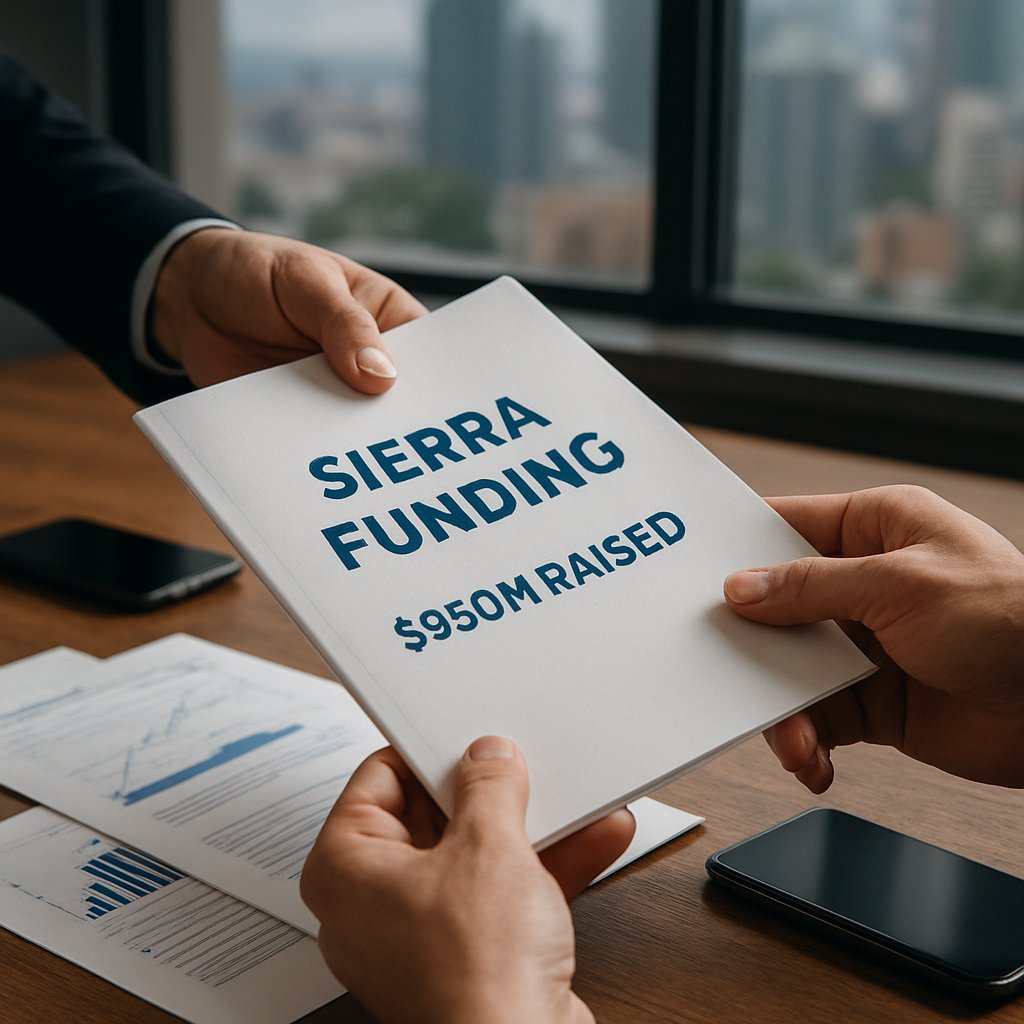
Sierra hit $100 million ARR last November and surpassed $150 million by February. Furthermore, management claims agents now handle billions of conversations and serve over 40 percent of Fortune 50 firms. These metrics helped convince late-stage backers that rapid revenue scaling justifies the lofty valuation. Sierra Funding therefore represents one of the largest single agent deals on record.
Key numbers at a glance:
- $950 million primary capital injected
- Lead investors: Tiger Global, GV, with participation from Benchmark, Sequoia, Greenoaks
- Implied valuation: “over $15 billion” to $15.8 billion
- Annual recurring revenue: $150 million+
These figures illustrate unusual late-stage appetite. However, they also raise questions about sustainability in a cooling venture climate. The next section explores that broader backdrop.
Broader Market Context Shifts
Agentic AI experienced a financing surge during 2025. CB Insights tracked multibillion-dollar inflows as enterprises chased automation gains. Consequently, Sierra Funding arrives within a sector still drawing hefty checks despite macro uncertainty. In contrast, many consumer AI ventures faced valuation cuts after hype cycles stalled.
Tiger Global has trimmed some late-stage exposure recently. Nevertheless, the firm still writes bold tickets for perceived category winners. By anchoring Sierra Funding, Tiger Global signals conviction that autonomous agents will cement themselves as mission-critical infrastructure. Moreover, GV’s involvement hints at future integrations with Alphabet cloud and model services.
Market watchers therefore interpret the round both as validation and as a high-stakes bet. Should public multiples compress, private marks could follow. These dynamics set the stage for Sierra’s product roadmap, covered next.
Key Product Strategy Highlights
Ghostwriter, launched in April, headlines Sierra’s portfolio. The tool lets customers describe a task in natural language; the platform then builds and deploys the required agent. Furthermore, recent PCI Level 1 compliance allows agents to process payments inside chat or voice sessions. Consequently, regulated industries can automate sales or support flows while staying within audit requirements.
Sierra uses outcome-based pricing rather than standard licenses. Therefore, customers pay when handle times drop or conversions rise. Analysts view that model as appealing, though revenue predictability may suffer during early pilots. Sierra Funding will subsidize continued R&D on benchmarks, multi-modal reasoning, and memory systems that keep agents context-aware over long sessions.
Professionals can deepen strategic insight through the AI Executive Essentials™ certification, which covers governance and deployment patterns for enterprise agents.
These product moves aim to widen Sierra’s moat. However, capital alone does not guarantee execution, prompting an inspection of investor logic.
Investor Motives Explained Clearly
Tiger Global’s participation reflects a refined thesis. The fund now concentrates capital into fewer, larger positions. Consequently, Sierra Funding embodies that shift toward high-conviction bets. Meanwhile, GV brings distribution advantages, including potential workspace integrations and easier access to Google’s model ecosystem.
Benchmark and Sequoia re-upped to defend earlier positions. Moreover, Greenoaks, known for patient growth investing, joined to provide operational counsel. Collectively, these players accept valuation risk in exchange for first-mover leadership. Additionally, Sierra’s Fortune 50 footprint offers proof of enterprise willingness to pay for agents delivering measurable customer experience gains.
Their logic ultimately hinges on sustained demand and expanding average contract values. The following risks highlight why that thesis remains debated.
Risks And Key Counterpoints
Valuation concerns top the list. A $15 billion price against $150 million ARR implies a 100× multiple. In contrast, public software peers trade below 20×. Therefore, any market correction could force down-round scenarios.
Implementation cost is another hurdle. Uber’s CTO confessed the firm “blew through” its AI budget before seeing returns. Consequently, customers may delay renewals if agent benefits materialize slowly. Dependence on upstream model providers also introduces margin and performance risk.
Finally, Bret Taylor’s board seat at OpenAI draws governance scrutiny. Nevertheless, supporters argue that access accelerates experimentation. Sierra Funding gives the company runway to navigate these uncertainties, yet prudent observers will monitor KPI transparency closely.
These risks temper exuberance. However, potential upside remains compelling, as the next outlook section details.
Enterprise Adoption Outlook Ahead
Large corporations continue reallocating budgets toward automation. Moreover, outcome-based vendor pricing lowers entry barriers. Consequently, analysts predict agent penetration across service desks, sales channels, and back-office workflows will triple by 2028.
Sierra plans global data residency zones and multilingual voice agents. Additionally, planned capex covers specialized inference clusters to reduce latency and unit cost. Venture insiders suggest that Sierra Funding alone could bankroll acquisitions of complementary security or analytics startups, further hardening the platform.
Seen together, product depth and financial muscle position Sierra as a likely consolidator. Nevertheless, customer proof points and sustainable gross margins will determine whether today’s optimism converts into durable cash flow.
These projections reveal both promise and pressure. Yet professionals still need skills to steer such deployments, leading to the final section on talent development.
Certification Pathways For Leaders
Boards increasingly demand executives who grasp agent architectures, compliance, and ROI modeling. Therefore, upskilling has become urgent. Professionals can validate their expertise through the AI Executive Essentials™ credential. Moreover, the program covers governance frameworks aligned with PCI, SOC2, and ISO standards that Sierra emphasizes.
Completing such certificates prepares leaders to evaluate offers like Sierra Funding-backed deployments. Additionally, certified managers speak the same language as technical teams, streamlining integration efforts. Consequently, organizations accelerate time-to-value while mitigating compliance gaps.
Certification demand has mirrored agent adoption growth. In contrast to traditional MBA refreshers, specialized AI governance courses address immediate operational realities.
These educational pathways close capability gaps. Consequently, enterprises can capture full value from next-generation platforms.
Conclusion
Sierra Funding marks a defining moment for agentic AI. The $950 million infusion, steered by Tiger Global and GV, crowns Sierra a top-tier private player. Moreover, robust ARR growth, differentiated product capabilities, and heavyweight customers underscore tangible traction. Nevertheless, lofty valuation multiples, integration costs, and supplier dependence present real threats. Consequently, prudent leaders will balance excitement with disciplined KPI tracking.
Further skills remain essential for navigating this landscape. Therefore, readers should explore the linked certification to sharpen governance fluency and capitalize on emerging agent opportunities.
Disclaimer: Some content may be AI-generated or assisted and is provided ‘as is’ for informational purposes only, without warranties of accuracy or completeness, and does not imply endorsement or affiliation.


