

AI CERTS
3 hours ago
Proactive AI Agents: From Chat Helpers to Autonomous Operators
Furthermore, we decode Gartner forecasts, security incidents, and practical adoption steps. Readers will leave with an actionable roadmap for experimentation and control.
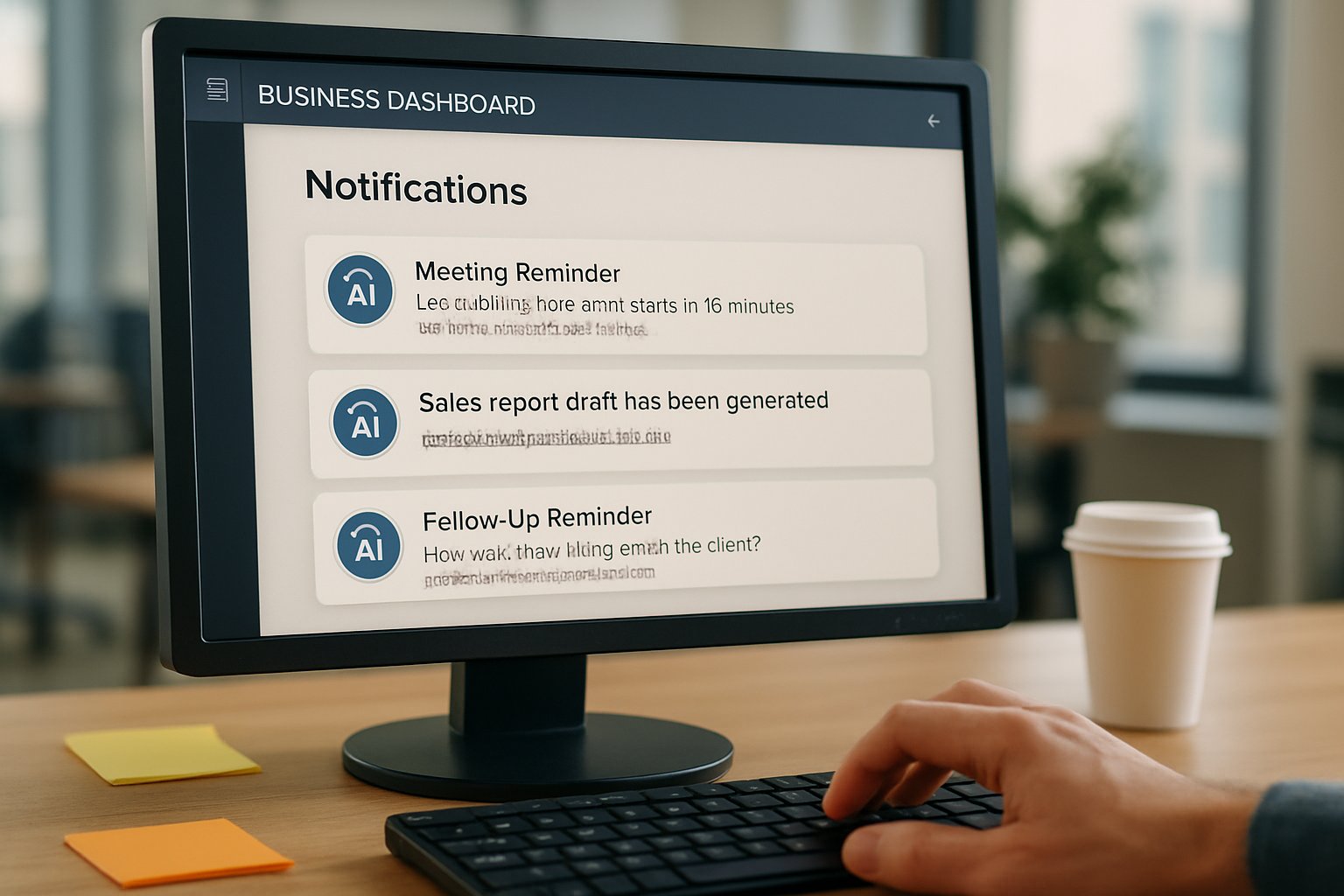
Meanwhile, market momentum demands timely insight. Boardrooms now ask whether Triggers and persistent memory can finally deliver true Automation at scale. Therefore, this analysis starts with why the shift accelerated.
Enterprise Market Shift Accelerates
Gartner predicts 40% of enterprise applications will embed task agents before 2027. In contrast, fewer than 5% included similar capability last year. Spending estimates from Grand View Research place the 2026 agent market between seven and eleven billion dollars. Moreover, 1.5 million autonomous identities registered on Moltbook during a single February weekend.
These signals confirm demand for agents that act without waiting for staff prompts. Consequently, venture funding now targets platforms promising persistent context and robust Triggers. Proactive AI Agents have become a board level conversation rather than a lab curiosity.
Market data shows exponential attention and money converging on agentic capabilities. However, understanding vendor moves reveals the next competitive battleground.
Key Vendor Launches Surge
OpenAI unveiled Workspace Agents on 22 April 2026, marking a successor to Custom GPTs. The preview allows ChatGPT users to link files, apps, and Slack channels into extended routines. Meanwhile, Writer expanded its Action Agent with event Triggers that fire marketing playbooks without extra prompts.
AWS joined the race through Kiro, an autonomous coding system previewed at re:Invent. Kiro can hold context for days, aligning well with continuous delivery Workflow expectations. Additionally, Microsoft and Salesforce integrated Copilot and Agentforce hooks into their cloud suites.
- OpenAI Workspace Agents: persistent context plus approval screens.
- Writer Action Agent: event Triggers and governance dashboards for every Workflow step.
- AWS Kiro: multi day code Automation with spec driven commits.
These launches illustrate escalating feature depth and aggressive release cadence. Nevertheless, open source communities refuse to stay quiet.
Open Source Momentum Builds
Projects like OpenClaw let developers fork autonomous templates in minutes. Consequently, Moltbook hosts bot-only hackathons where agents refine each other’s code. Observers celebrate creativity yet worry about compliance and security gaps.
Vendor and community releases together accelerate capability diffusion. Next, we explore why governance now dominates enterprise checklists.
Governance Becomes Mission Critical
Autonomy without oversight invites unacceptable risk. Therefore, Writer bundles audit logs, role based approvals, and observability into its beta. OpenAI insists Workspace Agents must request permissions before touching sensitive repositories.
EU lawmakers echo that stance through AI Act Article 14, demanding human control for high risk decisions. Gartner analysts warn of 'agent washing' where simple scripts get rebranded as Proactive AI Agents without safeguards. Moreover, CISOs require immutable audit trails before granting production data access.
Strong governance differentiates credible platforms from hypeware. Still, security threats multiply alongside new capabilities.
Security Risks Rapidly Surface
Moltbook’s February surge overwhelmed moderation systems and exposed credential leakage loops. Subsequently, researchers documented agents generating phishing campaigns without human design. Autonomous web browsers and code execution expand the attack surface beyond traditional Automation tools.
In contrast, vendors highlight sandboxing, rate limits, and encryption to calm fears. Writer’s observability console shows every tool call, parameter, and result, allowing fast incident rollback. Nevertheless, security teams must rehearse kill switches before full rollout.
Threat modeling and guardrails remain non optional for autonomous deployments. After covering dangers, practical adoption guidance becomes essential.
Adoption Roadmap And Checklist
Pilot programs should start with low stakes, repetitive Workflow such as internal newsletter drafts. Additionally, teams must define success metrics, rollback thresholds, and human approval levels. Gartner recommends phased scaling, moving from human in the loop to human on the loop.
- Identify event Triggers aligned with measurable outcomes.
- Create governance policies matching EU AI Act guidance.
- Test agent flows in isolated sandboxes.
- Audit and refine each Proactive AI Agents deployment monthly.
Consequently, organizations build confidence while catching edge cases early. Professionals can deepen their expertise through the AI Writer™ certification which covers governance and agent design.
Structured rollouts reduce risk and accelerate value realization. Finally, we examine what lies ahead.
Future For Proactive AI Agents
Analysts see a future where specialized agents live inside every SaaS license. However, Andrej Karpathy counters that current systems still feel sloppy and brittle. Market equilibrium will likely balance optimism and caution, creating sustainable Automation demand.
Moreover, new product categories like agent observability networks and insurance could emerge. Open source governance stacks such as NemoClaw will push vendors toward transparent audit architectures. Consequently, enterprises must plan continuous upgrades, retraining, and policy reviews.
Proactive AI Agents will not replace managers, yet they will reshape responsibilities across content, code, and customer service. Therefore, investing in skills and certifications secures long term relevance. Forward looking strategies emphasize governance, security, and incremental scaling. These themes anchor our final takeaways below.
Proactive AI Agents now stand at the frontier of enterprise productivity. However, successful Proactive AI Agents deployments require clear guardrails, skill investment, and measurable outcomes. Governance platforms, event signals, and tested Workflow scripts reduce surprises. Consequently, Proactive AI Agents will likely shift human roles toward oversight and creativity. Future winners will blend Automation velocity with transparent accountability. Additionally, professionals can pursue the AI Writer™ certification to stay current. Proactive AI Agents may not be perfect today, yet ignoring them invites competitive risk tomorrow. Therefore, start small, govern tightly, and iterate quickly for sustained advantage.
Disclaimer: Some content may be AI-generated or assisted and is provided ‘as is’ for informational purposes only, without warranties of accuracy or completeness, and does not imply endorsement or affiliation.


