

AI CERTS
2 months ago
Gas Town: Next-Gen AI Agent Management IDE
Therefore, early adopters report unprecedented parallelism yet caution about runaway compute costs. This article explains how the open-source IDE ecosystem reached stability, and where it heads next. It weighs benefits, risks, and concrete resource numbers from published experiments. Readers will gain actionable guidance for piloting agent swarms responsibly. Let us begin with why the project matters.
Why Gas Town Matters
Software teams chase faster delivery without sacrificing quality or audit trails. However, traditional CI pipelines treat model generated code as opaque artifacts. Gas Town tackles that gap by storing every agent decision as a Bead commit. Consequently, leadership can replay history, compare outputs, and attribute responsibility. The platform therefore positions itself as compliance-friendly Automation, not a reckless experiment. These features resonate with sectors facing regulatory scrutiny. Meanwhile, architects want deeper architectural details, which the next section provides.
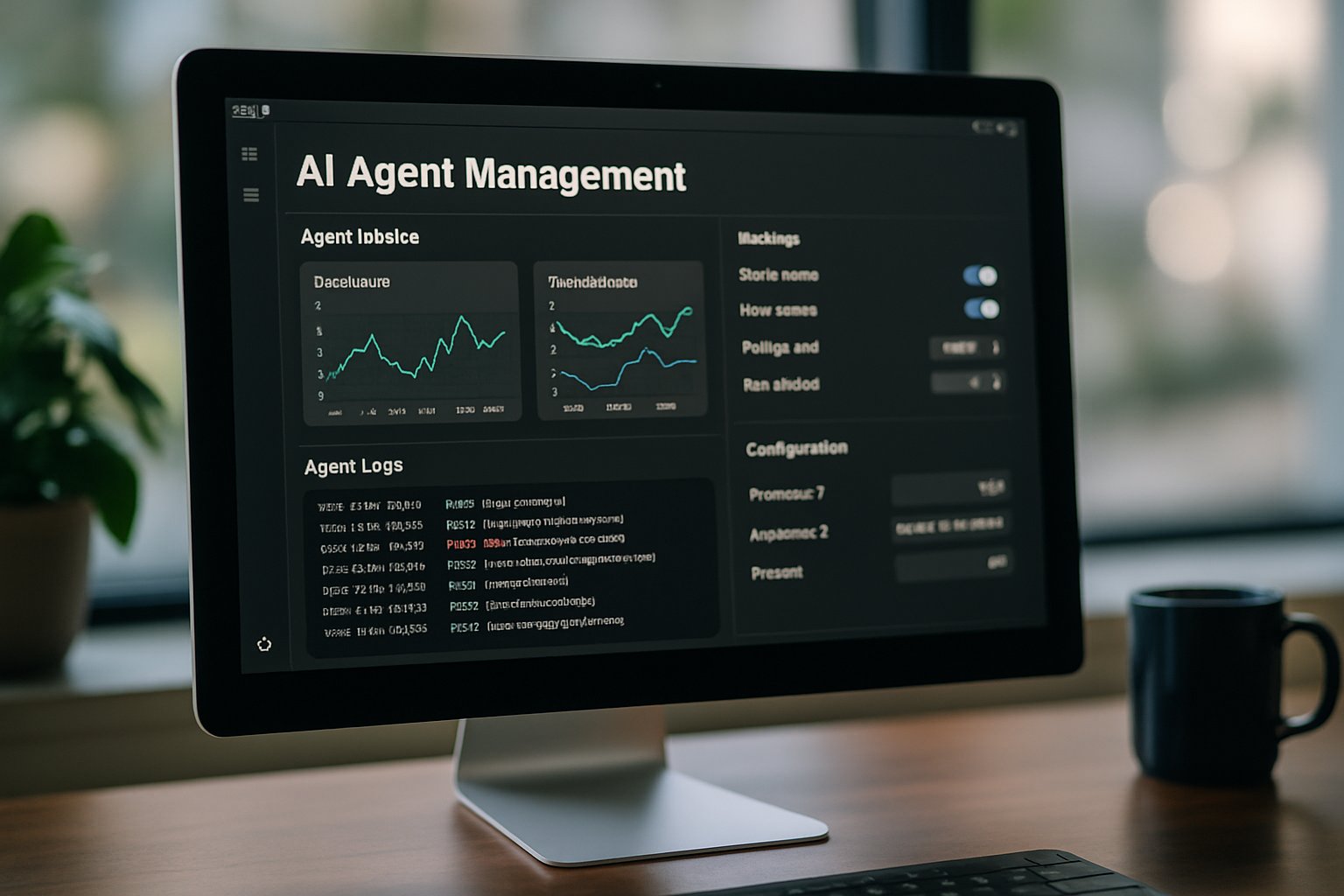
Gas Town Architecture Basics
Gas Town’s design mirrors a modular IDE people already understand. Beads persist each task using Dolt, a Git-versioned database. Moreover, the Mayor agent coordinates polecats, ensuring deterministic handoffs. Polecats spawn ephemeral Claude sessions that execute isolated Coding actions. In contrast, Convoys batch beads to monitor progress across dozens of workers. Molecules define multi-step workflows, while Formulas template entire release trains. Consequently, the stack offers granular composability and predictable restart behavior.
Robust AI Agent Management here prevents orphaned tasks during restarts. The architecture thus blends familiar Git metaphors with novel orchestration primitives. Gas City reuses the same primitives, exposing them through a lightweight Go SDK. Subsequently, metrics reveal whether those primitives scale, as the next section explains.
Recent Milestones And Stats
April 2026 delivered several production-ready announcements. Firstly, Gas Town hit v1.0.1 with roughly 14.8k GitHub stars. Secondly, the sibling Gas City SDK debuted, exposing the same internals through reusable packs. Additionally, Beads migrated to Dolt, completing the provenance layer refactor. Community engagement also spiked across Discord and GitHub issues.
- 14.8k stars and 1.3k forks on GitHub
- 220 open issues under active triage
- Claimed 600+ concurrent agents in Gas City tests
- DoltHub’s week-long run cost roughly $3,000
Community contributors opened more than 300 pull requests during the last release cycle. ThoughtWorks Radar highlighted the release, advising measured adoption. Consequently, enterprises now treat the toolchain as viable rather than experimental. Growing adoption demonstrates community trust in AI Agent Management foundations. These numbers validate community momentum. However, practical value depends on benefits for engineering teams, which we evaluate next.
Benefits For Engineering Teams
Parallel polecats finish well-specified tasks significantly faster than traditional human sprints. Moreover, every change lands as a committed Bead, simplifying root-cause analysis. Evaluators praise the integrated observability metrics exported through OpenTelemetry. Claude integration lets reviewers chat with agents about implementation rationale. Furthermore, the IDE interface resembles tmux sessions, easing onboarding for seasoned developers. Teams can A/B test models, capturing cost and quality deltas automatically.
Therefore, AI Agent Management promises evidence-driven productivity gains. Effective AI Agent Management transforms pull request review into a metric-driven conversation. Internal dashboards surface time-to-merge metrics, letting leaders spotlight bottlenecks. These advantages appear compelling during controlled pilots. Nevertheless, every upside hides latent risks, discussed next.
Risks And Governance Considerations
Token spend represents the loudest concern in public experiments. DoltHub burned $3,000 in one week while prioritizing speed over frugality. Additionally, ThoughtWorks warns about cognitive debt from rapid, write-only agent code. In contrast, Gas Town’s audit trail mitigates blame but not mental overload. Security responsibility also shifts from SaaS vendors to in-house teams. Operators must sandbox polecats, manage secrets, and monitor outbound calls. Moreover, the git-heavy workflow occasionally confuses branch tracking logic.
Governance neglect can invite subtle prompt injections that corrupt downstream code. Consequently, governance frameworks and human review gates remain essential. Without disciplined AI Agent Management, costs and code debt scale uncontrollably. These challenges highlight critical gaps. However, practical implementation guidance and cost modeling help teams prepare, as we now explore.
Implementation Tips And Costs
Successful pilots usually start on a single rig before scaling. Install Go, Dolt, and the gt CLI inside a dedicated workspace. Furthermore, configure Claude credentials and tmux for interactive sessions. Budget forecasting should use conservative price ceilings per model invocation. Tim Sehn’s DoltLite experiment offers concrete numbers worth copying. He spent $3,000 orchestrating roughly forty agents concurrently. Therefore, enterprises should track cost per accepted pull request, not raw token volume. Developers aiming to lead these rollouts can validate skills.
Professionals can enhance their expertise with the AI Prompt Engineer™ certification. Such credentials strengthen internal credibility during new Automation initiatives. Document every default override in version control to maintain a dependable trail. These practical steps control exposure. Careful AI Agent Management of budgets and workflows will sustain momentum. Subsequently, the roadmap reveals where added efficiencies may arise.
Future Roadmap And Outlook
Steve Yegge positions Gas City as the long-term evolution of the ecosystem. Gas City decomposes orchestration primitives into an SDK developers can embed anywhere. Moreover, planned Kubernetes runners promise elastic agent pools. The team also intends first-class IDE plugins for JetBrains and VS Code. Consequently, AI Agent Management may soon resemble everyday continuous delivery. Sustained investment in AI Agent Management research will standardize best practices across languages.
ThoughtWorks expects governance tooling to mature alongside these releases. Meanwhile, security auditors are drafting reference architectures with isolated execution sandboxes. If those blueprints materialize, enterprises could shift Automation away from niche prototypes. These projections indicate significant momentum. Nevertheless, strategic pilots remain advisable before full production adoption. The following conclusion distills actionable next steps.
Conclusion And Next Steps
Gas Town delivers transparent parallel development through disciplined AI Agent Management. Its Git-backed Beads, Claude integration, and modular IDE patterns attract engineering innovators. However, high token costs, security duties, and cognitive debt demand rigorous oversight. Consequently, leaders should pilot limited scopes, capture metrics, and refine governance early. Furthermore, professionals can build authority by earning specialized certifications. Therefore, enterprises that act early secure a competitive head start. Strategic planning today positions teams for efficient Automation tomorrow. Start experimenting, measure everything, and unlock the next wave of Coding productivity.
Disclaimer: Some content may be AI-generated or assisted and is provided ‘as is’ for informational purposes only, without warranties of accuracy or completeness, and does not imply endorsement or affiliation.


