

AI CERTS
2 hours ago
Hospitals Grapple With AI Health Accuracy Crisis
Furthermore, the conversation extends beyond statistics into workflow burden, governance, and liability. In contrast, vendors highlight earlier detection and operational efficiency. Nevertheless, regulators, researchers, and patient-safety groups warn that optimism must align with evidence. This article unpacks the numbers, incidents, and policy shifts shaping hospital AI adoption.
AI Health Accuracy Crisis
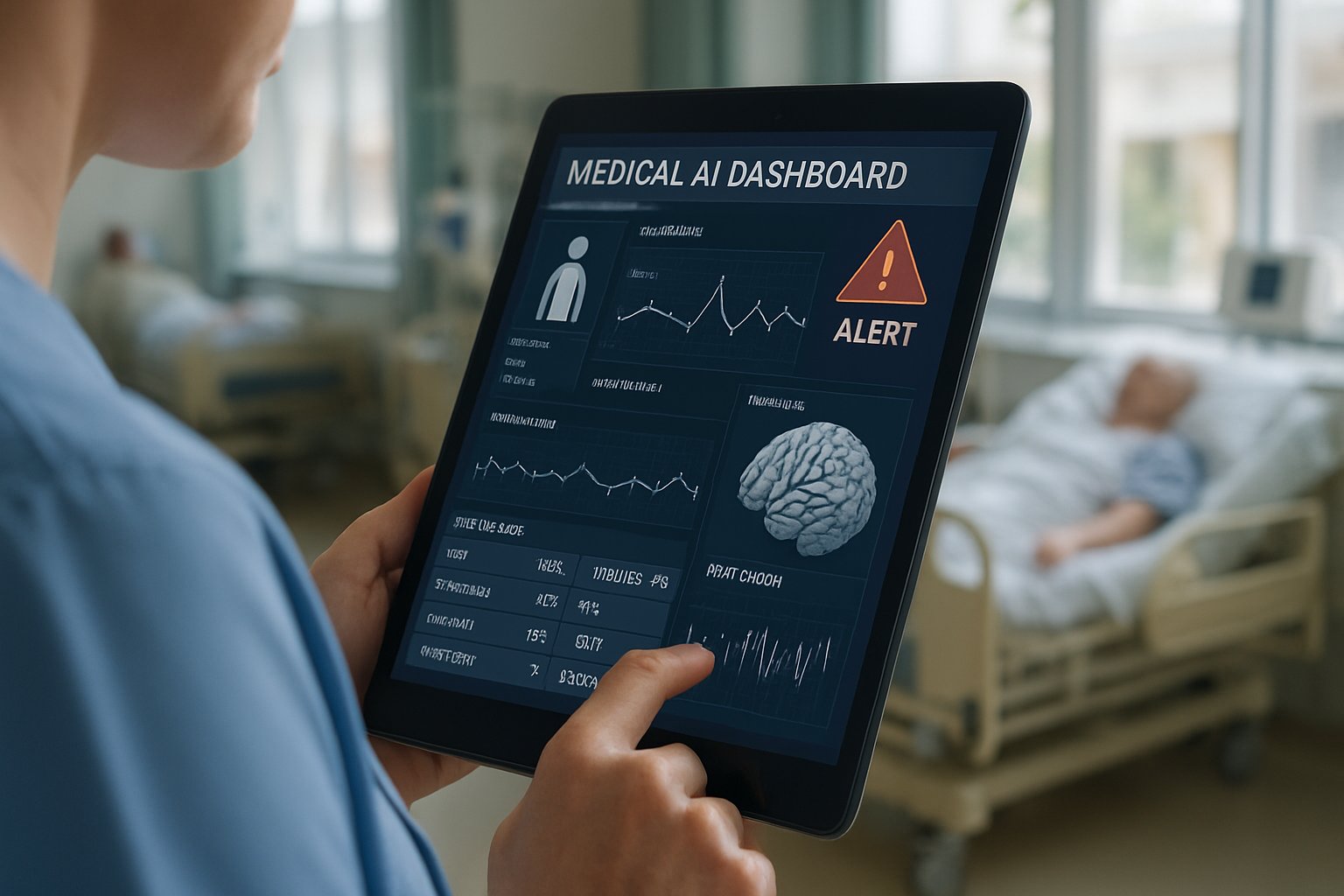
JAMA data from February 2026 documented the updated Epic sepsis model across four hospitals. At encounter level, AUROC ranged 0.82 to 0.92, suggesting high discrimination. However, positive predictive value stayed low, between 0.13 and 0.26 at 60 percent sensitivity. Consequently, clinicians faced thousands of alerts, many of them false alarms. Such overload erodes trust and ultimately undermines AI Health Accuracy performance at the bedside. Moreover, variability among sites exposed portability limits, an often hidden Medical Risk. Therefore, authors urged internal validation and alert-silencing protocols before broad deployment.
ECRI echoed the warning by ranking diagnostic AI as the top technology hazard for 2025. Meanwhile, an ASTP survey showed 82 percent of hospitals review accuracy metrics, yet depth varies widely. In contrast, only large systems fund dedicated algorithm safety teams. Consequently, smaller facilities rely on vendors, raising another Medical Risk. The gap creates uneven defenses against drift and governance failures.
These findings confirm a mixed safety picture. However, deeper lessons emerge from the sepsis experience.
Sepsis Model Lessons Learned
Epic’s first sepsis algorithm drew criticism for rampant false positives. Subsequently, version two improved discrimination but kept a heavy alert burden. Furthermore, prediction lead times varied from two to ten hours among sites. Such inconsistency complicates nursing workflows and can mask early clinical deterioration. Hallucination is not exclusive to text models; risk scores can hallucinate relevance when context shifts. Consequently, experts recommend local recalibration, silent trial phases, and clinician feedback loops. Additionally, skeptics argue AI Health Accuracy cannot improve until vendors release transparent calibration data.
Whisper-quiet alarms were proposed to reduce noise without removing decision support. However, too quiet alerts risk being missed entirely. Therefore, hospitals now experiment with tiered escalation similar to telemetry monitoring. Nabla researchers supplied design principles based on user-centered testing across French clinics. Their findings mirror U.S. experiences, highlighting universal challenges around Medical Risk.
This case reveals the balance between sensitivity and alert load. Consequently, workflow engineering remains pivotal.
Alert Fatigue And Workflow
Alert fatigue emerges when false positives drown meaningful warnings. Moreover, low PPV magnifies clinician skepticism, slowing response times. In contrast, high NPV rarely receives attention despite its reassurance value. Routine dashboards color-code AI Health Accuracy by ward, revealing pockets of underperformance. Whisper analysis of pager logs found clinicians silenced 30 percent of AI prompts. Consequently, some true positives never reached bedside teams.
- AUROC 0.82-0.92 across hospitals, reflecting good discrimination yet uncertain precision.
- PPV 0.13-0.26 at 60% sensitivity, producing heavy alert volumes.
- 82% hospitals verify accuracy; only 79% monitor after deployment.
- ECRI placed diagnostic AI as top hazard for 2025-26.
- Sepsis contributes to 350,000 U.S. deaths each year.
Hallucination also appears when language models draft discharge instructions without oversight. Therefore, hospitals exploring LLM triage must pair guardrails with robust audit trails. Nabla pilots now embed real-time clinician confirmation steps, reducing downstream edits.
Alert fatigue illustrates the human factors dimension. However, regulation is rapidly closing gaps.
Regulators Tighten AI Oversight
The FDA now enforces a lifecycle approach for adaptive algorithms. Specifically, Predetermined Change Control Plans define safe update boundaries. Moreover, hospitals must show continuous performance monitoring under the SaMD framework. WHO and EU regulators adopt similar stances, labeling many tools high risk. Consequently, AI Health Accuracy tracking becomes a compliance mandate rather than an option.
Algorithmic drift triggers mandatory reporting when metrics cross preset thresholds. Additionally, public hospitals could face Freedom of Information requests for audit logs. Professionals can enhance governance skills with the AI Security Compliance™ certification. Such credentials align teams around standardized monitoring protocols. Hallucination incidents must now be disclosed during post-market surveillance.
Stronger oversight raises accountability stakes. Nevertheless, technology providers also pursue solutions beyond policy.
Generative Tools Raise Flags
Large language models now answer patient questions in portals and chatbots. However, peer-reviewed studies found unsafe advice rates that concern clinicians. Researchers documented Hallucination of drug interactions, dosages, and even fabricated citations. Consequently, WHO guidance limits autonomous deployment without human verification.
Whisper errors compound risks when speech recognition mishears medication names. Therefore, multimodal systems need synchronized accuracy thresholds. Nabla integrated double-check loops that flag ambiguous phrases back to users. Without stringent testing, AI Health Accuracy in chatbots may lag behind clinician expectations. Such design patterns address Medical Risk while preserving convenience.
Generative AI expands opportunity yet widens safety exposure. Subsequently, governance strategies must adapt.
Governance Pathway Moving Forward
Hospitals increasingly craft multidisciplinary AI oversight committees. Moreover, committees track AI Health Accuracy, bias, and alert volumes on monthly dashboards. Clear role definitions ensure accountability when metrics deteriorate. In contrast, vendor-led monitoring alone can obscure root causes.
Leading systems adopt PCCPs linked to contractual service-level agreements. Consequently, updates pause automatically when AUROC or PPV drop below agreed thresholds. Medical Risk scores are displayed alongside financial and operational indicators. Furthermore, shared dashboards encourage rapid remediation across IT, nursing, and quality teams.
Robust governance aligns technology with clinical reality. Therefore, leadership attention must remain constant.
Key Actions For Leaders
Executives should start by quantifying AI Health Accuracy within their own data. Subsequently, teams must benchmark PPV, alert counts, and override rates weekly. Moreover, publish metrics to frontline staff to build transparency. Integrate Whisper error analytics and Hallucination reports into the same scorecards. Nabla style user feedback loops can refine prioritization without extra coding.
- Validate every model on local data before activation.
- Set alert thresholds that balance sensitivity and workload.
- Monitor AI Health Accuracy and Medical Risk indicators continuously.
- Publish quarterly reports for regulators and clinicians.
Additionally, invest in staff education on PCCPs and bias testing. Professionals pursuing the AI Security Compliance™ credential gain practical monitoring frameworks. Consequently, organizations build internal capacity rather than depending solely on vendors.
Actionable governance reduces surprise failures. Meanwhile, sustained investment keeps improvements on track.
Clinical AI promises earlier intervention and efficiency. However, the accuracy crisis reminds us that performance on paper rarely translates directly to practice. Therefore, health systems must marry metrics with workflow design, governance, and transparent auditing. When leaders monitor AI Health Accuracy rigorously, alerts rescue patients instead of eroding trust.
Moreover, addressing Hallucination, Whisper transcription gaps, and Medical Risk in one framework shortens remediation cycles. Consequently, forward-looking teams empower clinicians, satisfy regulators, and protect patients. Explore certifications like the AI Security Compliance™ program to strengthen oversight skills. Start today and turn the crisis into a catalyst for safer, smarter care.
Disclaimer: Some content may be AI-generated or assisted and is provided ‘as is’ for informational purposes only, without warranties of accuracy or completeness, and does not imply endorsement or affiliation.


