

AI CERTS
2 hours ago
Google AI Revenue Surges Across Alphabet Segments
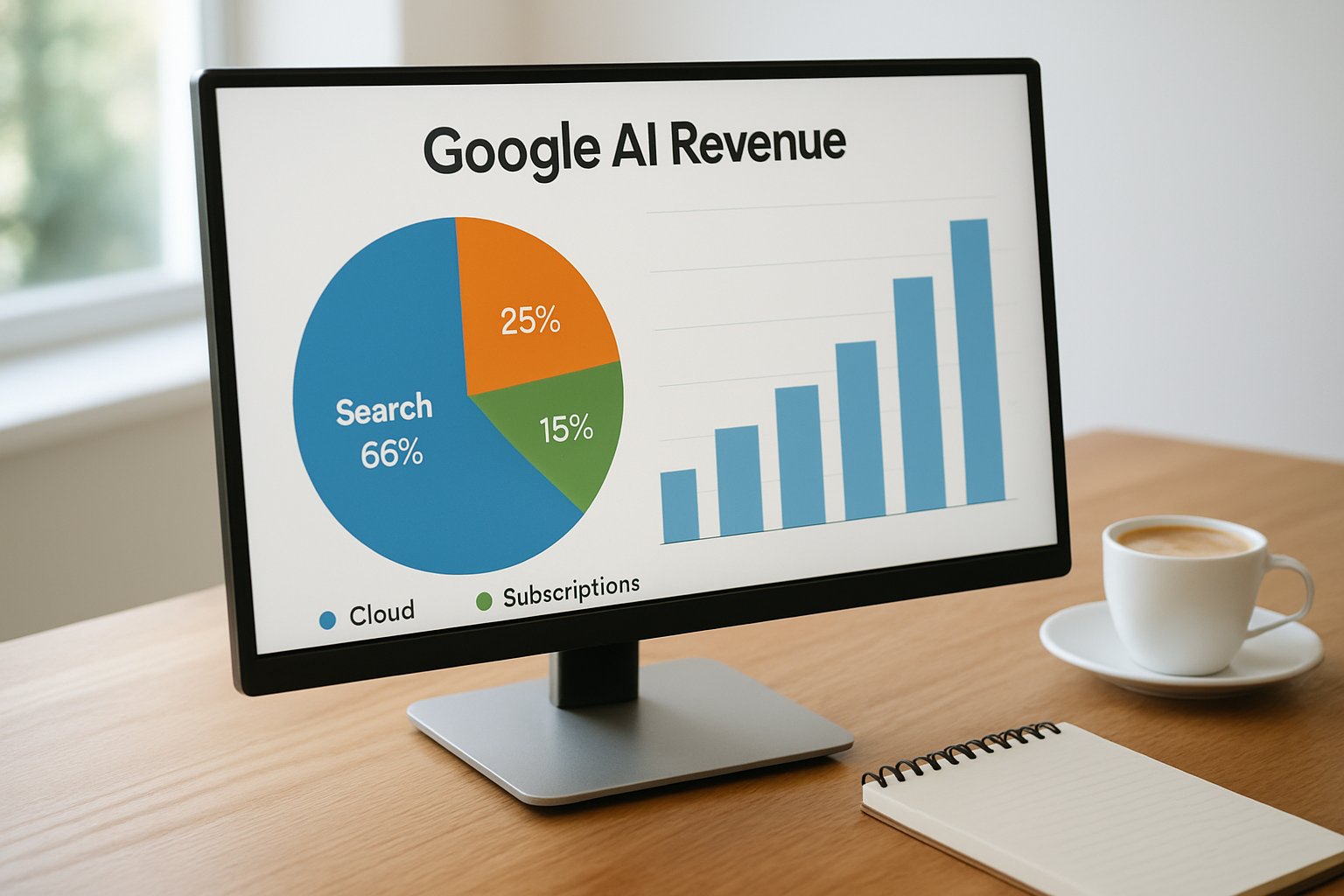
Net profit margin widened despite soaring capital expenditure.
Analysts quickly framed the outcome as tangible proof that AI investments finally monetize.
However, the result also reignited debate about free cash flow pressure.
That tension now defines short-term sentiment around the company’s Stocks.
The following deep dive dissects numbers, drivers, and risks behind Google AI Revenue momentum.
Quarter Sets New Records
Firstly, the top line reached $109.896 billion, climbing 22% year over year and 19% in constant currency.
Moreover, Google Services contributed $89.637 billion, with Search and other ads growing 19% to $60.399 billion.
YouTube ads added $9.883 billion, increasing 11% despite tougher advertising comparisons.
Furthermore, other bets like Waymo posted rising ridership yet remain immaterial to consolidated figures.
The Earnings release explicitly linked every line item to AI adoption.
Google AI Revenue emerged as the common engine powering these gains, according to CEO Sundar Pichai.
Together, the headline figures reveal durable demand spanning Alphabet’s sprawling portfolio.
Consequently, investors shifted focus toward segment specifics, beginning with Cloud.
Core Figures At Glance
- Consolidated revenue: $109.896 billion, plus 22% year over year.
- Net income: $62.578 billion, rising 81% YoY.
- Google Cloud revenue: $20.028 billion, a 63% surge.
- Cloud backlog: more than $460 billion, nearly doubling quarter on quarter.
- Tokens processed: 16 billion every minute, up 60% sequentially.
Consequently, these statistics validate management’s claim that AI adoption is expanding rapidly.
Therefore, the Cloud unit warrants a closer examination.
Cloud Growth Drives Momentum
Google Cloud produced $20.028 billion, posting its fastest growth since inception and beating consensus estimates.
Furthermore, the unit delivered an improved operating margin, signaling scale efficiencies despite aggressive hiring.
Backlog exceeded $460 billion, giving multi-year visibility and reducing revenue volatility.
Therefore, Google AI Revenue is becoming more predictable thanks to contractual backlog.
Morgan Stanley analysts consequently argued that Stocks still underprice long-term Cloud upside.
Additionally, customers adopted new TPU 8t instances, chasing performance gains at lower inference cost.
Case studies from financial services to biotech highlighted training jobs completing 40% faster on Google hardware.
Consequently, switching costs rise, deepening customer lock-in and supporting margin leverage over time.
Google AI Revenue flows directly through GCP as enterprises pay for compute, models, and managed services.
These factors position Cloud as the company’s most visible growth lever.
In contrast, consumer subscriptions show a different yet complementary trajectory.
Consumer AI Plan Surge
Paid subscriptions reached roughly 350 million, marking the company’s strongest consumer quarter on record.
Moreover, Gemini App upgrades and bundling strategies boosted conversion into premium tiers.
Management highlighted models processing 16 billion tokens each minute, reflecting heavy user engagement.
Google AI Revenue also accrues here through high-margin subscription fees across YouTube, Google One, and Gemini.
Additionally, family bundling discounts expanded reach in emerging markets.
Consequently, lifetime value per subscriber is tracking higher than the 2025 cohort.
Professionals can enhance their expertise with the AI for Everyone™ certification, aligning skills with rising demand.
Subscription momentum diversifies Alphabet’s revenue beyond advertising cycles.
Nevertheless, capital expenditure plans raise near-term cash concerns.
CapEx Debate Intensifies Now
Alphabet guided 2026 capital spending between $175 billion and $190 billion, echoing industrywide hyperscaler escalation.
Consequently, some analysts warn that Profit growth could stall if monetization lags investment.
Furthermore, compute supply constraints may force prioritization among customers, limiting short-term capacity.
Google AI Revenue must therefore scale fast enough to offset cash burn, an unresolved question for cautious observers.
Capital intensity remains the central swing factor in valuation models.
Subsequently, investors compare Alphabet against rival hyperscalers to gauge relative risk.
Risks And Competitive Landscape
Generative AI success invites fierce competition from Microsoft, Amazon, Meta, and specialist vendors.
In contrast, regulators scrutinize advertising changes driven by AI Overviews, potentially affecting publisher economics.
Furthermore, supply chain hiccups could delay TPU deliveries, squeezing margin expansion.
In contrast, legal scrutiny over data sourcing for model training could spur compliance costs.
Moreover, rapid open-source advances may compress pricing power faster than anticipated.
Therefore, portfolio managers must balance upside potential with these structural uncertainties.
Investors will watch whether Google AI Revenue continues outpacing the sector despite these headwinds.
Stocks reacted positively after the report, yet volatility may persist as debates play out.
Collectively, the uncertainties temper exuberance about long-run Profit trajectories.
Nevertheless, the strategic upside remains compelling, leading investors to seek clear signals.
Key Takeaways For Investors
Earnings quality indicators, such as deferred revenue growth and stable receivables, further support optimistic models.
Meanwhile, option markets price moderate volatility, implying room for positive surprises.
Ultimately, fundamental data suggest sustained momentum if management executes on scale, cost discipline, and ecosystem trust.
- Search resilience: ad revenue up 19% despite format experimentation.
- Cloud acceleration: 63% growth and $460 billion backlog secure future flows.
- Subscription base: 350 million paid users spread risk across products.
- CapEx watch: $175-190 billion guidance demands efficient capital deployment.
- Competitive moat: proprietary TPUs and Gemini differentiate versus rivals.
Google AI Revenue underpins each pillar, turning experimental projects into measurable cash streams.
Consequently, Stocks may rerate upward if subsequent Earnings confirm conversion of backlog into realized Profit.
Conclusion And Next Steps
Alphabet’s first quarter proves that generative AI already drives significant top-line acceleration.
Moreover, Cloud backlog, subscription momentum, and resilient advertising combine to fortify cash generation prospects.
However, vast capital needs and competitive threats mean vigilance remains essential.
Google AI Revenue must continue scaling quickly to justify unprecedented spending levels.
Consequently, investors should track backlog conversion, margin trends, and regulatory developments.
Professionals can strengthen their market value by pursuing the AI for Everyone™ certification.
Act now to stay ahead as AI reshapes every metric that matters.
Disclaimer: Some content may be AI-generated or assisted and is provided ‘as is’ for informational purposes only, without warranties of accuracy or completeness, and does not imply endorsement or affiliation.


