

AI CERTS
2 hours ago
Ukraine’s Fight Powered by Autonomous Defense AI Advances
Moreover, it has declared data-driven speed a life-or-death metric in modern Warfare. This article examines how Ukraine built the system, what still fails, and why the stakes extend beyond its borders. It draws on government figures, field reporting, and independent analysts to provide a balanced, technical view. Finally, we outline next steps for developers, policymakers, and allies considering similar deployments.
Data Turns Into Power
Ukraine’s drone war generates an ocean of video. OCHI founder Oleksandr Dmitriev told Reuters the archive tops two million hours and grows by terabytes daily. Additionally, the Ministry of Defence says millions of annotated frames now sit on a controlled training platform.
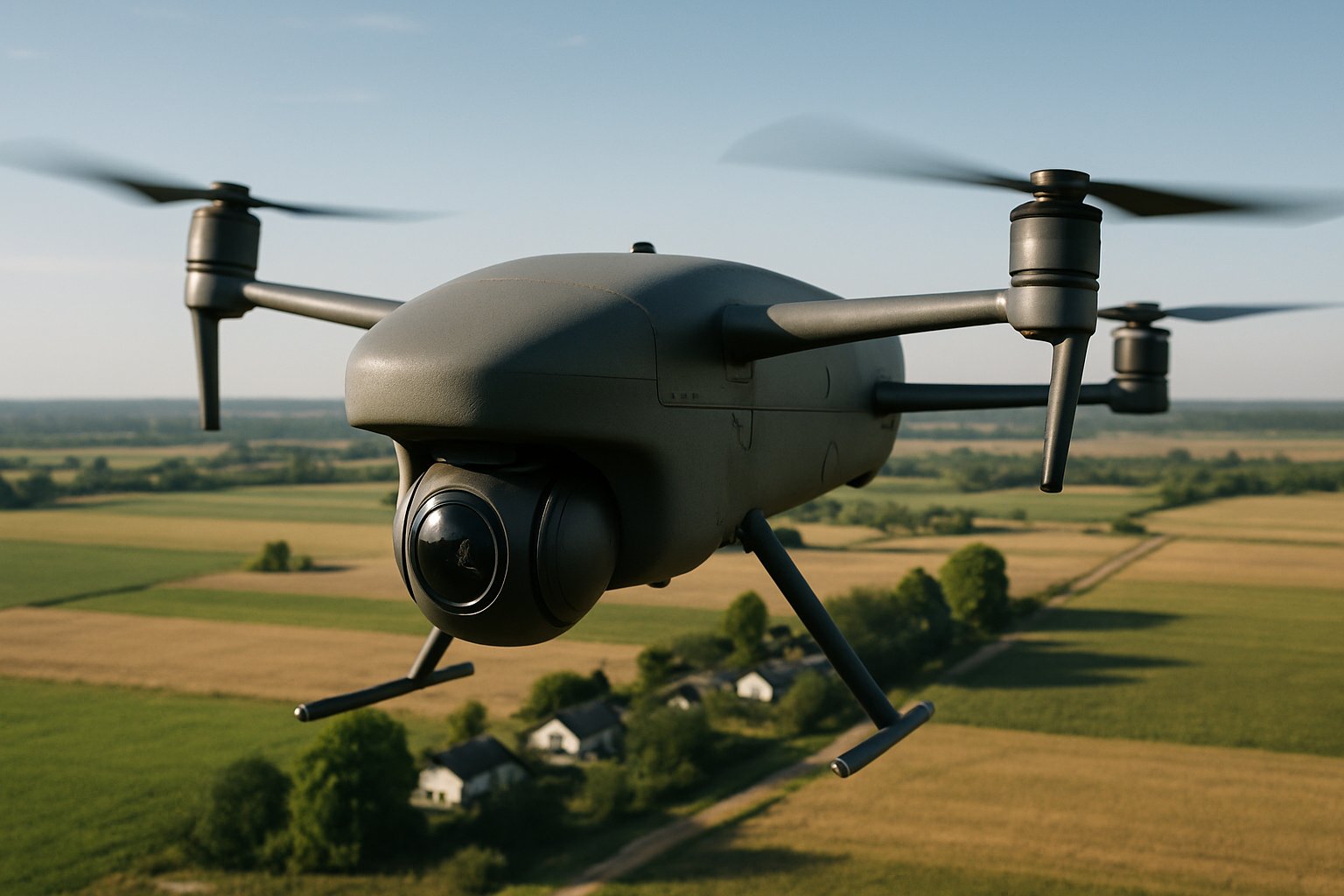
The data feeds machine vision models that detect tanks, artillery, and enemy Drones. Consequently, detection volume reportedly reaches 12,000 enemy items every week, according to MoD statements. Such scale gives Autonomous Defense AI hungry algorithms the fuel they demand. That Autonomy also reduces operator workload during peak fire missions.
- 2 million hours of drone footage stored by OCHI.
- 5–6 TB of new data added each day.
- Millions of annotated frames available for allied model training.
- 200,000 DELTA users across Ukrainian forces.
These figures show a data advantage Ukraine cannot waste. However, raw video means little until processed inside DELTA. The next section looks at how that processing works.
DELTA Speeds Kill Chain
DELTA fuses drone feeds, satellite cues, and human reports on a single map. Avengers and Vezha modules run convolutional networks that flag vehicles in near real time. Moreover, commanders confirm targets and push coordinates directly to artillery or loitering munitions teams.
The MoD claims this pipeline cuts target delivery time by 45 percent and removes 30 percent duplicate sightings. Nevertheless, independent audits remain unavailable, so external analysts urge caution. Autonomous Defense AI again appears as the invisible assistant, not the final authority. Field officers interviewed by AP reported measurable drops in friendly fire after adopting the interface.
DELTA demonstrates how software narrows the sensor-to-shooter loop. Consequently, Ukraine offsets numerical disadvantages with information speed. Shared data with partners could accelerate that edge further.
Scaling Allied Model Training
On 12 March 2026 Kyiv opened restricted combat datasets to vetted allies and industry. Germany signed the first bilateral data memorandum one month later. Furthermore, Palantir and European drone makers now run sandbox experiments against real trench imagery.
The Ministry insists partners access only non-sensitive slices, audited through tokenized queries. In contrast, core DELTA systems remain off-limits to prevent adversary compromise. Autonomous Defense AI models trained abroad will later reintegrate into Ukrainian nodes for front-line validation.
Data exchange amplifies coalition innovation without shipping hardware. However, openness raises new security and governance questions. Technical hurdles also slow fully autonomous strike capability.
Challenges Limit Full Autonomy
Machine vision still struggles with smoke, camouflage, and electronic jamming. ISW notes most Ukrainian Drones operate under assisted Autonomy, not full independence. Therefore, radio interference often forces operators to switch to manual piloting during complex manoeuvres.
Battery life, sensor quality, and weather further constrain algorithmic accuracy. Moreover, rugged edge chips remain scarce, keeping costs high for infantry units. Autonomous Defense AI thus appears in modular form, guiding munitions only during terminal flight.
Technical ceilings delay widespread lethal autonomy, yet they threaten Survival today. Nevertheless, iterative field testing shrinks those ceilings each quarter. Ethical constraints may prove harder to lift.
Ethics And Legal Guardrails
Carnegie scholars warn that algorithmic speed can create manufactured clarity, masking hidden uncertainties. Consequently, Ukrainian doctrine still demands human confirmation before any lethal strike. European allies insist the same rule govern shared algorithms.
Further, Kyiv’s new Defense Artificial Intelligence Center drafts policy on accountability and audit trails. Professionals can enhance their expertise with the AI Ethics Certification to navigate these frameworks. Nevertheless, no public law yet defines liability for autonomous misfires.
Autonomous Defense AI, they contend, must never erode human agency on the battlefield.
Policy formation chases rapid technical deployment. Therefore, transparent audit tools will decide global trust in Ukrainian solutions. Industry actors now race to supply those tools.
Industry Fuels Rapid Iteration
More than 200 domestic firms build sensors, software, and FPV kits on Brave1 procurement portals. Start-ups like The Fourth Law sell TFL-1 terminal guidance boards assembled in garage workshops. Meanwhile, Western vendors test vision stacks on Ukrainian ranges, exchanging prototype parts for combat feedback.
Iterative releases reach brigades within weeks, mirroring consumer software sprints. Moreover, Brave1 dashboards broadcast needs, letting small shops propose niche fixes overnight. Consequently, repair shops improvise 3D-printed fins overnight to match evolving explosives. Autonomous Defense AI capabilities thus evolve through tight operator-developer loops rather than multiyear programs.
Field operators rate Autonomous Defense AI enhancements more valuable than extra explosives.
A distributed industrial base keeps innovation resilient under fire. However, scale-up funding remains uneven across small suppliers. Upcoming initiatives aim to stabilise that funding.
Next Battlefield AI Steps
Ukrainian leaders outline three priorities for 2026. First, expand secure data pipes to NATO cloud regions. Second, harden autonomy algorithms for Drones against jamming through synthetic vision training. Third, codify accountability so allies adopt outputs without hesitation.
Consequently, officials expect broader coalition funding and deeper technical co-development. Autonomous Defense AI is projected to guide most loitering munitions within two years. In contrast, fully independent kill decisions remain outside near-term roadmaps.
Roadmaps reveal ambition balanced by caution. Therefore, continued validation will shape export credibility. The story now circles back to strategic significance.
Conclusion Strategic Outlook
Ukraine demonstrates how data-centric warfare doctrine can offset bigger adversaries. Furthermore, open collaboration accelerates tool maturity while testing them under fire. Challenges remain around electronic Warfare, rugged hardware, and legal clarity. Nevertheless, each iteration narrows the gap between assisted and full autonomy. Autonomous Defense AI will likely define future battle rhythms and national Survival far beyond Eastern Europe. Consequently, policymakers and engineers worldwide should monitor Ukraine’s experiments closely. Readers seeking structured guidance can explore the linked certification to deepen strategic and ethical expertise.
Disclaimer: Some content may be AI-generated or assisted and is provided ‘as is’ for informational purposes only, without warranties of accuracy or completeness, and does not imply endorsement or affiliation.


