

AI CERTS
2 hours ago
Goldman HK Bankers Face AI Access Restriction After Claude Cut
Furthermore, it underscores how rapidly model governance decisions ripple across global operations. Goldman's move follows heightened scrutiny of Anthropic's powerful Mythos variant. Meanwhile, competitors monitor the fallout, measuring compliance risk against efficiency gains. Industry surveys show six in ten banks ranking generative AI as a top priority. Yet the latest clampdown illustrates that hard borders still exist in the cloud era.
Timeline And Immediate Impact
Financial Times broke the story on 28 April 2026. Bloomberg and Reuters subsequently verified the lockout within hours. Goldman declined public comment, yet internal tickets showed login failures dating back several weeks. Anthropic told reporters its enterprise support never officially covered Hong Kong.
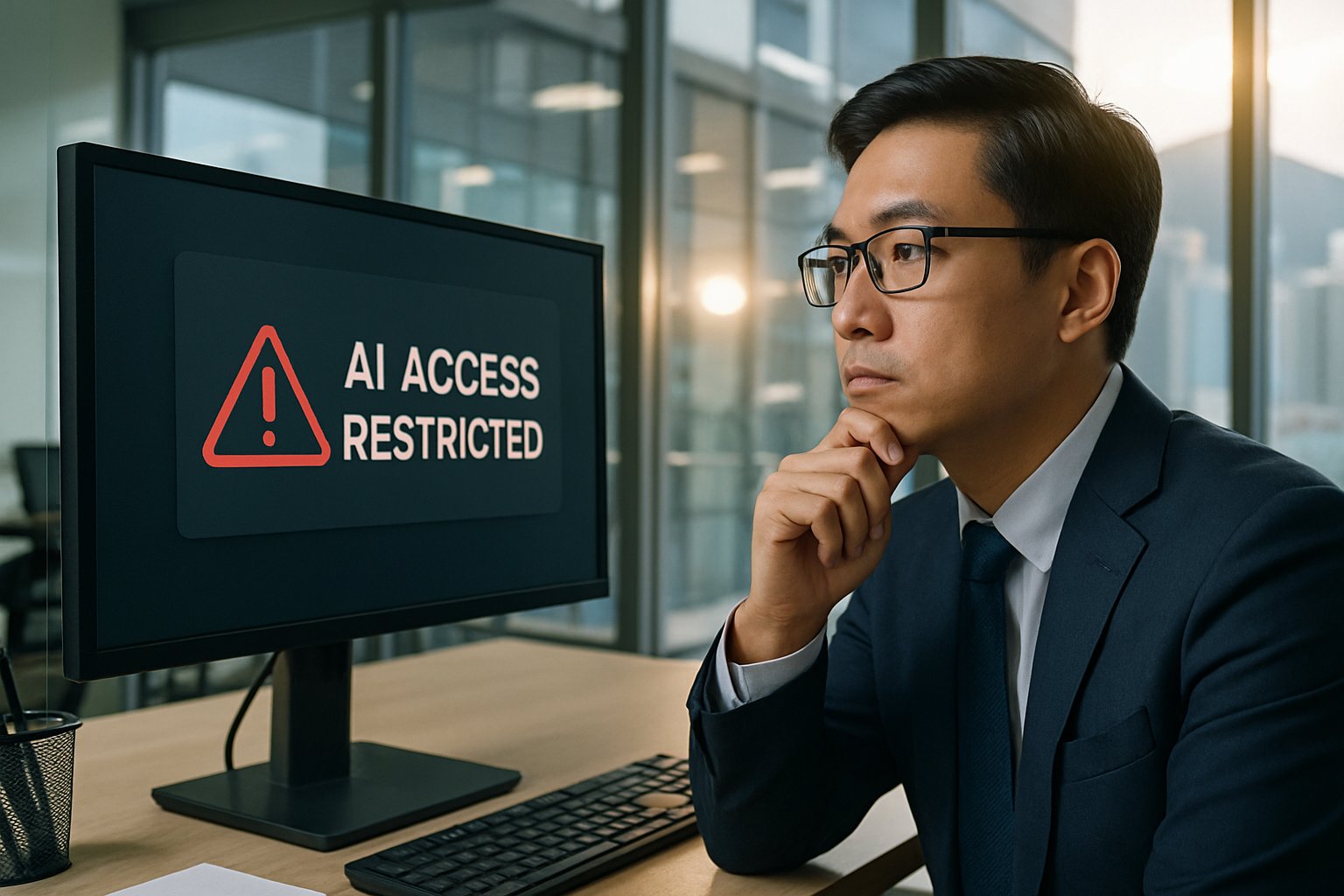
Therefore, the bank interpreted contract language strictly and halted Claude endpoints on its internal AI platform. Other providers, including OpenAI and Google, remained available. However, the AI Access Restriction applied to any device geolocated inside HK, even for traveling Bankers.
The rapid cutoff surprised teams relying on Claude-powered draft emails and trade reconciliations. However, deeper contractual questions awaited detailed review.
Contractual Fine Print Pressures
Legal teams scrutinized the master services agreement signed with Anthropic last year. In contrast, early drafts referenced only "supported regions" without listing HK explicitly. Consequently, counsel warned that continued usage could breach territorial warranties. Bankers worried about sudden data workflow breaks as Access shifted unexpectedly.
Goldman therefore adopted an internal AI Access Restriction carve-out clause for Hong Kong. The same contract still lets New York or London analysts query Claude for client onboarding tasks. Nevertheless, executives insisted no sensitive trading data had flowed through unsupported nodes.
Regulators have not mandated these Restrictions, yet contract governance drove the immediate decision. Moreover, the episode highlights how vendor terms can act like private export controls.
Territorial clauses now rival statutory rules in shaping digital borders. The next pressure point comes from official watchdogs assessing Mythos.
Regulatory Scrutiny Intensifies Globally
Early April saw the U.S. Treasury and Federal Reserve summon major banks to Washington. Officials expressed concern that Mythos could autonomously discover exploitable software flaws. Subsequently, European supervisors and the HKMA asked institutions for updated risk assessments. HK authorities did not instruct an AI Access Restriction directly, yet their tone was unmistakably cautious. Consequently, Goldman ensured other model endpoints passed new cyber testing protocols.
Finma issued a memo arguing Mythos posed "systemic vulnerability amplification" risks. Meanwhile, the HKMA reminded banks to document third-party model alignment with local data rules. These signals compounded board-level anxiety already stirred by contract lawyers.
Supervisors now expect evidence of continuous control over model capabilities. Geopolitical considerations further complicate that task.
Geopolitics Shape Vendor Policies
Anthropic currently omits Hong Kong from its officially supported market list. Analysts note the omission echoes broader U.S. export licensing debates around advanced semiconductors. Furthermore, the company weighs reputational risk if powerful code-analysis features reach disputed jurisdictions. Therefore, corporate clients inherit de facto geopolitical boundaries embedded in SaaS dashboards.
For global Bankers, the split environment forces creative workflow routing. Teams in HK must send draft documents to colleagues in Singapore for Claude assistance. However, that relay can slow deal execution and raise further data transfer Restrictions.
Vendor geography decisions now hold operational weight equal to regulatory mandates. Banks are redesigning risk frameworks accordingly.
Operational Risk Management Strategies
Goldman’s technology office began mapping critical processes dependent on specific models. Subsequently, each workflow received a fallback provider or rule-based automation script. Moreover, the firm tightened data-loss-prevention filters to flag unsanctioned model Access attempts.
- Dual-vendor architecture for chat agents
- Strict geo-fencing based on IP
- Continuous penetration testing of prompts
- Staff training on policy Restrictions
Nevertheless, executives admit the AI Access Restriction added unplanned engineering overhead. Cost projections include redundancy fees and productivity drag until stable governance emerges.
Proactive risk tooling can soften such blows. Forward-looking analysis offers clearer perspective.
Future Outlook And Preparedness
McKinsey estimates generative AI could unlock up to $300 billion in annual banking value. Yet territorial uncertainty chips away at predicted gains. Consequently, boards demand scenario plans for sudden supplier withdrawals. Experts advise embedding AI Access Restriction logic within policy engines so toggles activate instantly. In contrast, slower manual processes risk reputational damage during regulator sweeps.
Banks also consider on-prem models for sensitive workloads in HK and mainland data centers. However, that approach reduces direct benefit from Anthropic’s rapid update cadence.
Preparedness hinges on flexible architectures and diligent contract monitoring. Skill development supports that effort.
Certification Pathways For Professionals
Teams need talent that blends compliance, cloud engineering, and vendor management. Professionals can enhance their expertise with the AI Cloud Strategist™ certification. Moreover, structured programs clarify governance patterns and teach rapid mitigation techniques. Subsequently, Bankers mastering such credentials become pivotal liaisons during policy shifts.
Targeted training accelerates institutional readiness for any AI Access Restriction. Explore available courses and update your skill stack before the next vendor surprise.
Goldman’s Claude suspension shows that cutting-edge tools remain tethered to old-fashioned boundaries. However, the episode also demonstrates institutional agility when contracts, regulators, and geopolitics align against unfettered innovation. An AI Access Restriction may surface overnight, yet cascading effects can linger for months. Therefore, banks must hard-wire contingency playbooks, diversify providers, and train staff continuously. Moreover, proactive dialogue with vendors and watchdogs reduces surprise triggers.
Another AI Access Restriction could target mainland data centers or specific agent functions tomorrow. Consequently, organizations equipped with certified cloud strategists will adapt faster and safeguard client trust. Seize that advantage now by reviewing governance processes and pursuing credentials before the next AI Access Restriction hits.
Disclaimer: Some content may be AI-generated or assisted and is provided ‘as is’ for informational purposes only, without warranties of accuracy or completeness, and does not imply endorsement or affiliation.


