

AI CERTS
2 hours ago
AI Legal Ethics: Pennsylvania Courts Tighten Agentic AI Risks
The Pennsylvania Bar Association, federal judges, and the state Supreme Court have responded decisively. Their message is simple yet stern: verify or face sanctions. This article maps the current landscape, key data, and concrete action items for technology focused counsel. Moreover, it outlines certifications and resources that support ethical Practice in this high-stakes environment. In contrast, ignoring the escalating Risk invites penalties, reputational damage, and possible disciplinary referrals.
Pennsylvania Courts Tighten Rules
Pennsylvania’s judiciary has moved beyond suggestions toward enforceable mandates. Judge Michael Baylson’s standing order demands a disclosure whenever counsel uses generative tools. However, the obligation extends further because it compels human verification of every citation and fact. Judge Karoline Mehalchick imposes a similar certificate across Middle District dockets, reinforcing consistent federal expectations.
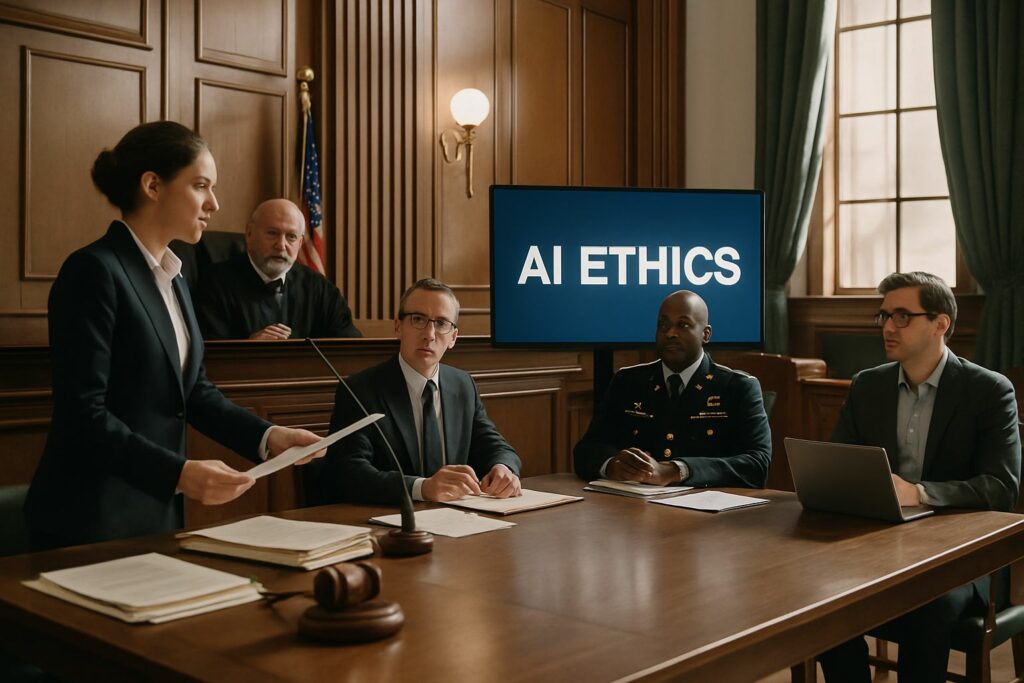
State tribunals echo the federal stance. The Commonwealth Court struck an appellate brief on 24 November 2025 for being, in its words, “replete with hallucinations”. Moreover, the opinion referenced the Joint Formal Opinion 2024-200, linking courtroom discipline to bar guidance. Subsequently, the Pennsylvania Supreme Court adopted an Interim Policy that restricts court personnel’s GenAI experimentation.
Together, these actions cement AI Legal Ethics as an operational requirement rather than academic debate. Practice teams must log tool usage, maintain audit trails, and supervise outputs as they would any junior associate. Failure now triggers monetary penalties, mandatory CLE, and potential disciplinary investigation.
Federal Certification Orders Rise
Judges Baylson and Mehalchick pioneered mandatory certificates that detail every generative tool used. Therefore, filers must attach sworn statements verifying citations and factual assertions. Non-compliance routinely results in show-cause hearings or monetary sanctions.
Compliance with AI Legal Ethics now influences judicial trust.
The judiciary’s shift signals real consequences. Therefore, counsel should review every new order before filing the next motion. We now turn to data quantifying hallucination frequency statewide.
Hallucination Trends And Data
Reliable numbers clarify the scale of the hallucination problem facing Pennsylvania lawyers. Damien Charlotin’s global tracker listed 1,356 cases by April 2026, including at least 13 within the Commonwealth. Consequently, judges monitor filings more closely than many practitioners realize. Stanford bench studies cited in ABA Opinion 512 measured error rates between 17 and 33 percent for popular research systems. Courts cite AI Legal Ethics frameworks when evaluating those statistics.
- Hallucination cases worldwide: 1,356 recorded incidents.
- United States share: 919, with 13 confirmed in Pennsylvania.
- Federal sanctions in Pennsylvania: several fines, highest reported at $5,000.
- Estimated system error range: 17–33 percent in controlled tests.
Moreover, public discipline may understate true exposure because many errors die in chambers conferences or private letters. Litigation funders and insurers now request verification protocols before underwriting complex matters. Subsequently, firms adopting structured review pipelines see fewer corrective filings and reduced Risk.
These figures confirm a non-trivial threat. However, the nature of that threat changes when Agentic systems enter daily workflows. The next section dissects those autonomous tools.
Agentic Workflows Multiply Risk
Agentic architectures delegate planning, research, and drafting to interconnected agents that call external services autonomously. Therefore, mistakes can propagate through multiple steps before any human notices. In contrast, a simple chatbot provides output only once a lawyer prompts it and can verify immediately.
Industry governance papers from NIST and the IMF warn that Agentic autonomy erodes accountability structures demanded by Rule 5.3. Furthermore, Pennsylvania’s Interim Policy forbids uploading non-public records to public models, closing one high-stakes Risk vector. Practice leaders must implement throttles, sandbox environments, and mandatory human sign-off before documents leave the firm.
Firms piloting these agents often pair them with chain-of-thought logging, version control, and red-team testing. Consequently, error detection happens earlier, and Litigation teams avoid courtroom embarrassment. Robust logs also support AI Legal Ethics audits requested by regulators.
Agentic designs promise efficiency yet amplify liability. Therefore, governance must scale alongside technical adoption. Next, we review practical compliance tactics.
Compliance Playbook For Firms
A coherent playbook translates abstract guidance into daily procedures. Firstly, map every AI touchpoint across client lifecycles, from intake to Litigation briefs. Secondly, deploy dual verification: human review plus automated citation checking before any filing.
Moreover, maintain a disclosure template that satisfies Baylson and Mehalchick certification orders. Template fields should capture tool names, version dates, verification steps, and supervising attorney signatures. Subsequently, store certificates with matter files for later audits.
Pennsylvania ethics bodies also emphasize continuous education. Professionals can enhance their expertise through the AI Network Security™ certification. Course modules cover data protection, model governance, and AI Legal Ethics fundamentals.
Furthermore, update engagement letters to inform clients when generative systems assist work product. Transparency aligns with AI Legal Ethics disclosure imperatives and builds trust.
These measures embed defensible governance into daily Practice. Consequently, firms lower sanction Risk while preserving innovation benefits. Attention now shifts to looming policy developments.
Future Court Policy Outlook
Regulators signal more detailed rules within the next 12 months. The Pennsylvania Supreme Court is collecting feedback on its Interim Policy for permanent adoption. Meanwhile, several district judges discuss converting standing orders into local rules, making certifications universal.
Moreover, national bar groups explore model Rule amendments that expressly reference AI Legal Ethics duties. Agentic tool governance appears central to those drafts. Therefore, vendors now build audit logs and watermarking to reassure skeptical courts.
Analysts expect insurers to demand documented controls before renewing professional liability coverage. In contrast, firms lacking coherent protocols may face higher premiums or limited coverage.
Policy momentum favors stricter verification and fuller disclosure. Consequently, proactive alignment with emerging standards future-proofs operations. The conclusion distills actionable takeaways for immediate execution.
Ethical Duties And Sanctions
Pennsylvania has entered an enforcement era that blends bar guidance with judicial muscle. However, counsel retain tools to navigate that terrain confidently. Adopt layered reviews, maintain certificates, and drill teams on evolving AI Legal Ethics obligations. Moreover, align every Practice checklist with interim and future court policies. Consequently, firms will convert Risk into reputational advantage rather than liability. Explore advanced learning like the linked certification to deepen technical fluency and sustain AI Legal Ethics compliance. Therefore, start auditing systems today and stay ahead of the accelerating governance curve.
Disclaimer: Some content may be AI-generated or assisted and is provided ‘as is’ for informational purposes only, without warranties of accuracy or completeness, and does not imply endorsement or affiliation.


