

AI CERTS
2 hours ago
EPA milestones drive US AI Regulation momentum
However, watchdogs argue the disclosure still hides critical model details. Meanwhile, budget proposals promise huge AI investment tied to data-center permitting and chemical safety. This article evaluates milestones, governance, use cases, legal flashpoints, and environmental tradeoffs shaping the conversation. Moreover, it tracks how Federal requirements intersect with EPA ambitions and broader US AI Regulation momentum.
Readers will gain a clear Assessment of benefits, gaps, and next steps, plus resources to upskill. Consequently, professionals can align strategy and compliance before algorithms write the rulebook.
EPA Implementation Timeline Highlights
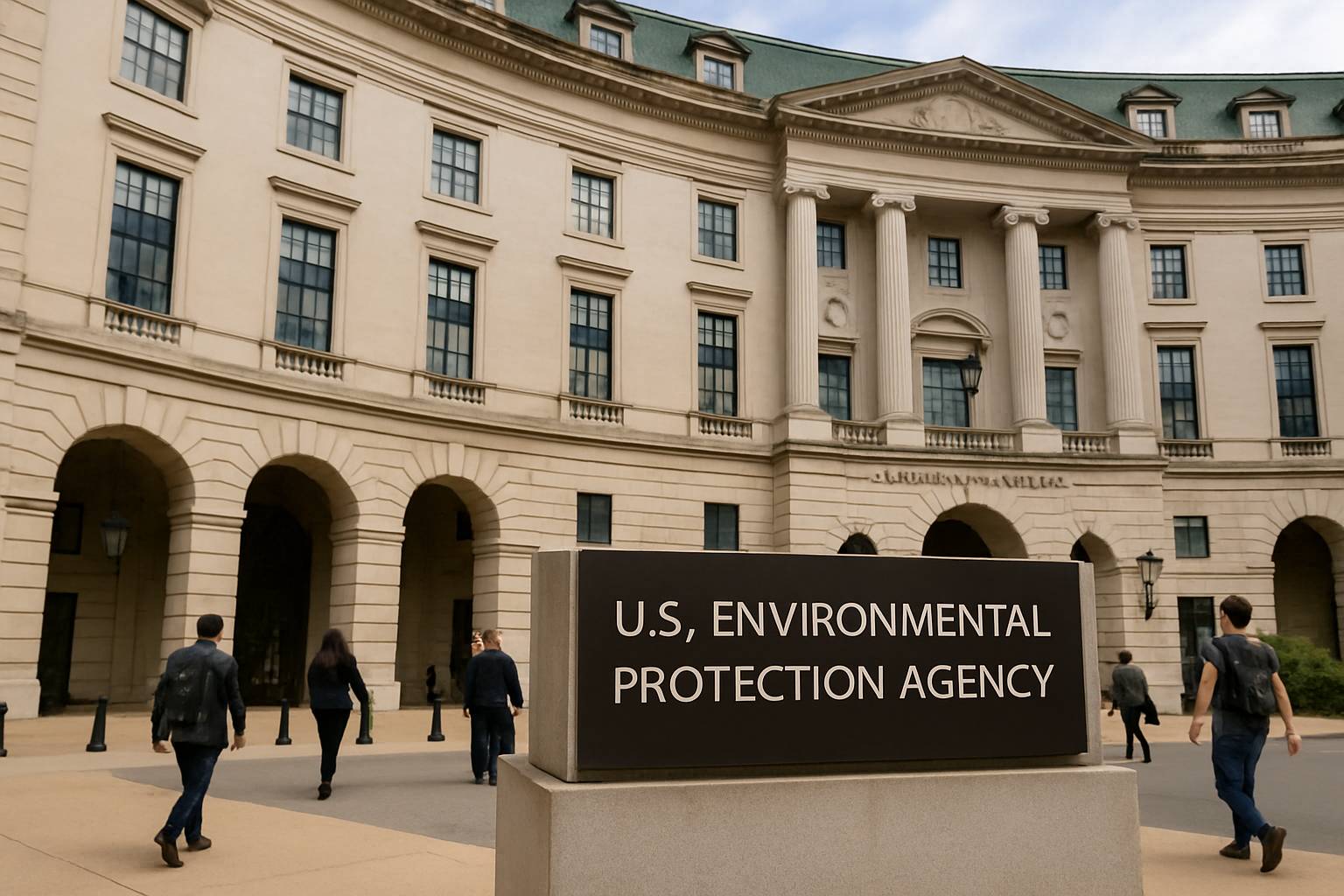
EPA accelerated from planning to limited deployment between September 2025 and April 2026. Firstly, the AI Compliance Plan landed on 30 October 2025, creating governance boards and risk processes. Subsequently, an Administration roundtable on 15 September 2025 signaled political backing for rapid permitting reforms. The Agency then released its public 2025 AI Use Case Inventory on 10 February 2026, updating on 7 April. GAO later confirmed that inventory satisfies current Federal guidance under memorandum M-25-21.
Meanwhile, Public Employees for Environmental Responsibility filed Freedom of Information requests on 5 March 2026. Therefore, transparency demands rose alongside deployment speed. These milestones show structured momentum. However, they also expose schedule pressure, driving quick decisions under US AI Regulation deadlines.
- Oct 30 2025 – AI Compliance Plan finalized
- Feb 10 2026 – 82-item inventory published
- Mar 5 2026 – FOIA requests escalate oversight
- Apr 2026 – Budget proposes $202.2 million under US AI Regulation initiatives
EPA’s timeline mirrors broader Federal urgency toward operational AI. Nevertheless, each date reveals unfinished governance, a point we examine next.
Governance Structures Rapidly Evolving
The Compliance Plan established an AI Governance Board, a Chief AI Officer, and program-level stewards. Consequently, cross-office policies now guide model design, testing, and independent Assessment before launch. However, only three systems are publicly tagged high-impact, limiting formal oversight triggers. OMB rules require extra documentation when a model affects individuals or critical Regulatory outcomes. EPA labels its RCRA enforcement prioritizer deployed, a lead abatement screener pilot, and a surveillance tool pre-deployment.
Moreover, internal counts suggest more than the 82 items listed publicly, raising inventory credibility questions. Watchdogs insist the Agency publish model cards, datasets, and validations to meet Federal transparency expectations. These governance mechanisms are improving. Yet misaligned classifications could undermine US AI Regulation confidence.
Governance progress appears real but provisional. Subsequently, deployment details must match policy paperwork, which leads directly to specific use cases.
Key Use Cases Deployed
EPA highlights four prominent operational or near-operational tools. Firstly, the hazardous-waste inspection model ranks large generators for RCRA enforcement visits. Secondly, natural language processing categorizes public comments during major rulemakings, accelerating Regulatory drafting. Thirdly, literature-screening algorithms support chemical risk Assessment, trimming weeks from manual reviews. Additionally, disaster response teams test image classifiers that map flood impacts for cleanup prioritization.
Independent analysts found only the enforcement model meets high-impact thresholds under US AI Regulation definitions. Nevertheless, each pilot teaches lessons about data quality, bias, and human oversight. Scientists like Thomas Hartung stress open toxicology datasets as a prerequisite for trustworthy outcomes. Consequently, EPA requires domain experts to review algorithmic outputs before final Agency action.
Concrete examples illustrate tangible benefits. However, they also highlight why hefty budgets have arrived.
Budget Fuels AI Expansion
The FY2027 proposal allocates $202.2 million and 730 full-time equivalents for AI modernization. Of that, $81.3 million funds "Powering AI," while $120.8 million backs secure internal systems. Moreover, the plan ties brownfield redevelopment guidance to data-center investments, promising economic gains. Administrator Lee Zeldin pledged to "cut red tape" and accelerate permits supporting AI infrastructure.
Therefore, budget rhetoric intertwines environmental stewardship with national competitiveness under US AI Regulation politics. Federal lawmakers will scrutinize line items, yet early signals suggest bipartisan appetite for digital capacity. Industry lobbyists also favor predictable permitting timelines. Nevertheless, watchdogs warn that funding without matching oversight could magnify risk.
Money is arriving quickly. Subsequently, transparency debates intensify, bringing legal questions forward.
Transparency And Legal Tensions
PEER’s March 2026 FOIA filing exemplifies growing legal scrutiny. Law professors argue the Administrative Procedure Act still demands reasoned explanations traceable through the rulemaking record. Consequently, any hidden algorithm undermines judicial deference even under supportive US AI Regulation statutes. ABA guidance advises agencies to disclose model influence, training data, and human overrides during Regulatory drafts. In contrast, some Agency officials worry detailed disclosures might reveal confidential business information.
GAO’s cross-government audit recommended completing governance artifacts and ensuring inventories remain accurate. Moreover, employee-monitoring allegations raise labor rights concerns alongside privacy obligations. Therefore, EPA faces twin transparency and Constitutional pressures.
Legal tension could slow adoption. However, clear documentation may defuse courts and critics, letting environmental tradeoffs take center stage next.
Environmental Tradeoffs Under Scrutiny
Data centers driving AI consume large amounts of water and electricity. EPA seeks to streamline permits while demanding efficiency commitments, a delicate Regulatory balance. Independent lifecycle Assessment shows modern centers can still strain regional aquifers during droughts. Meanwhile, Superfund and brownfield guidance encourages reuse of contaminated land, reducing greenfield sprawl.
Consequently, environmental justice groups ask whether local communities will see promised jobs or only resource pressure. Federal agencies coordinate on siting, but critics want cumulative-impact modeling before approvals. Nevertheless, supporters argue AI-driven climate modeling can offset the footprint by improving mitigation strategies. The debate keeps US AI Regulation in the headlines far beyond Washington.
Tradeoffs remain unresolved. Subsequently, strategic recommendations become essential for professionals steering compliance and investment.
Strategic Outlook And Recommendations
Executives should map every AI workflow against OMB risk tiers and prepare documentation early. Moreover, aligning with Federal inventories helps avoid surprise classification changes. Organizations interacting with EPA must monitor inventory updates and comment periods to protect interests. Consequently, robust Assessment methods, including bias testing and scenario analysis, increase credibility during audits.
Legal counsel should prepare APA briefs outlining how human decision makers override algorithmic suggestions. Additionally, ethics officers ought to track data provenance and consent, anticipating forthcoming Regulatory harmonization. Professionals can deepen market advantage through the AI Sales Professional™ certification. Such credentials strengthen resumes while signalling readiness for stringent US AI Regulation environments.
- Map AI systems to risk tiers
- Document data lineage and audits
- Engage counsel for APA reviews
Good governance offers competitive edge. Therefore, acting now positions teams for smoother compliance as future rules harden.
EPA’s first operational year with broad AI adoption reveals impressive momentum and serious challenges. Timeline milestones, governance boards, deployed tools, and ambitious budgets demonstrate institutional commitment. However, transparency fights, environmental tradeoffs, and looming court reviews show that oversight structures remain unfinished. Consequently, stakeholders must blend technical diligence, legal foresight, and community outreach to succeed under US AI Regulation.
Moreover, acquiring specialized skills through certified programs empowers professionals to guide compliance and innovation. Visit the EPA inventory, review governance documents, and secure certifications to stay ahead in this dynamic landscape.
Disclaimer: Some content may be AI-generated or assisted and is provided ‘as is’ for informational purposes only, without warranties of accuracy or completeness, and does not imply endorsement or affiliation.


