

AI CERTS
2 hours ago
Sanders Sparks AI Global Policy Firestorm on Chinese Cooperation
Critics call Sanders’ outreach a symbolic gamble that favors Beijing. Supporters counter that cross-border dialogue beats a Runaway technological spiral. Meanwhile, businesses worry the proposed construction freeze could derail domestic investment. These swirling narratives demand careful unpacking. Therefore, this analysis examines legislative text, expert testimony, and geopolitical backlash in equal measure.
Capitol Hill Flashpoint Unfolds
Sanders selected the Kennedy Caucus Room, a venue usually reserved for war hearings, to host the 75-minute forum. Moreover, panelists included MIT physicist Max Tegmark, Canadian researcher David Krueger, and Chinese scholars Xue Lan and Zeng Yi. In contrast, conservative lawmakers labeled the event propaganda. They argued Beijing would harvest insights without offering reciprocity. Observers framed the exchange as an early stress test for AI Global Policy alignment.
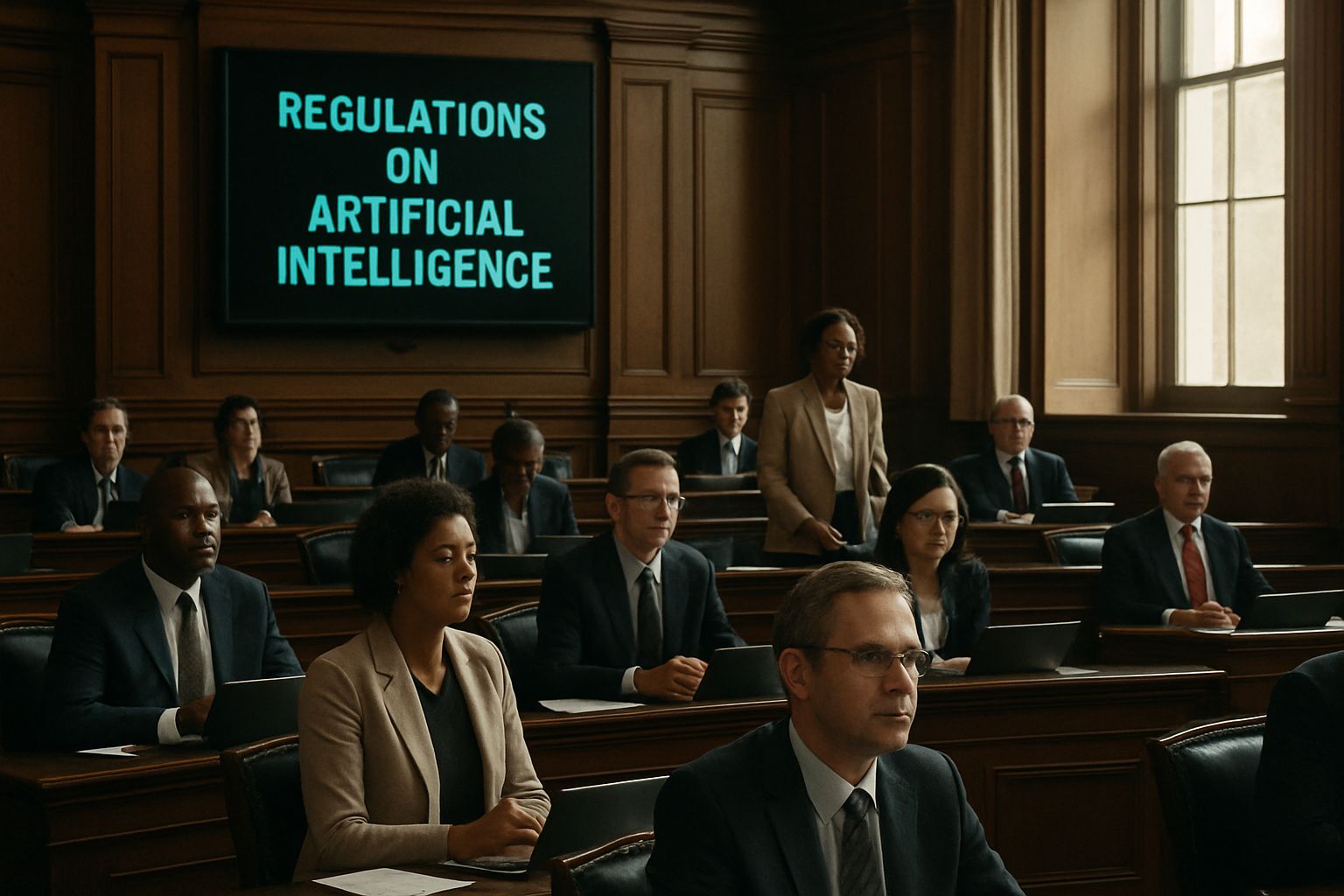
Journalists noted that audience questions focused on catastrophic scenarios, not technical mitigation timelines. Consequently, the session echoed Sanders’ repeated ‘Runaway Train’ metaphor about unchecked algorithms. Tegmark endorsed stronger global safeguards, while Zeng advocated transparent model evaluations. Xue stressed that energy demands require joint infrastructure planning. The flashpoint revealed bipartisan anxiety and unresolved trust gaps. However, deeper legislative details sharpen the stakes ahead.
Moratorium Bill Details Explained
The Artificial Intelligence Data Center Moratorium Act arrived on March 25, 2026. It proposes an immediate halt on facilities exceeding 20-megawatt peak loads or hosting large-scale training. Furthermore, upgrades that push existing centers above that threshold would also freeze. The moratorium lifts only after Congress enacts comprehensive AI safety Regulation. Sanders warned that the computing boom resembles a speeding Train lacking brakes.
Sanders anchors his argument in three headline statistics. He cites predictions of nearly 100 million American jobs at risk within a decade. Moreover, his office compares one proposed center's electricity use to 750,000 homes. Nevertheless, independent verification of those numbers remains pending. Supporters claim the pause would reset AI Global Policy toward public interest objectives. These provisions illustrate an aggressive precautionary approach. Therefore, opponents emphasize economic and security downsides next.
Security Critics React Loudly
Industry groups warn the freeze punishes domestic builders while foreign rivals accelerate. In contrast, Senator Mark Warner branded the moratorium ‘idiocy’ that gifts advantage to China. Warner argued that stalling infrastructure contradicts credible AI Global Policy leadership. Moreover, the Information Technology and Innovation Foundation dismissed the bill as a blunt weapon. They recommend targeted audits, not construction bans.
Consequently, conservative lawmakers sent letters to major AI firms on April 29 demanding personnel-vetting disclosures. Grassley replied that America must not let a foreign Train outpace domestic innovation. The questionnaire seeks counts of privileged staff holding passports from the People’s Republic. Additionally, it requests policies for safeguarding model weights and critical software. Companies must respond by May 20 under threat of subpoenas. Critics frame these demands as pragmatic defense against espionage. Meanwhile, advocates of dialogue stress broader International cooperation, a debate examined next.
Global Cooperation Debate Intensifies
Sanders insists that existential threats ignore borders. Therefore, he welcomed Chinese academics despite political heat. Xue Lan argued both nations share incentives to narrow the digital divide. Moreover, Zeng Yi proposed joint evaluations so researchers can flag failure modes early.
International civil society groups echo that sentiment and push for binding model reporting standards. However, several security analysts counter that open technical exchanges risk accelerating adversarial labs. Consequently, the room split between transparency champions and containment strategists. Runaway scenarios dominated public headlines, overshadowing granular safety protocols. Chinese scholars urged symmetrical AI Global Policy commitments from Washington and Beijing. The cooperation debate underscores clashing time horizons. Next, we examine the economic ripple effects at stake.
Economic Stakes Outlined Clearly
Data centers drive jobs, property taxes, and power-grid upgrades across rural America. Therefore, local officials fear a protracted freeze will stall infrastructure subsidies. In contrast, environmentalists highlight soaring water consumption and fossil electricity loads. Moreover, labor unions worry automation could displace call-center, logistics, and coding roles.
Think tanks estimate the global AI market may exceed $1.3 trillion by 2030. Consequently, any slowdown invites competitors in Europe and Asia to capture share. Regulation, investors argue, should calibrate risk without freezing capital flows. Meanwhile, grid operators lobby for efficiency standards rather than blanket bans. Investors track every hearing for AI Global Policy signals that shift valuation models.
- Estimated 100 million U.S. jobs vulnerable to automation (Sanders office)
- Peak 20-megawatt threshold triggers proposed moratorium
- 750,000 home energy equivalent cited for one center
- May 20 deadline for corporate security responses
International investors also scrutinize supply-chain restrictions embedded in the proposal. These numbers frame a high-stakes balancing act for legislators. Consequently, watchers anticipate intense committee negotiation in coming months.
Next Legislative Steps Ahead
The bill awaits referral to the Senate Commerce Committee. Subsequently, staff will solicit testimony from utilities, chipmakers, and labor organizations. Furthermore, parallel House hearings could merge discrete proposals into an omnibus AI Global Policy package. Senators Grassley and Banks intend to fold security questionnaire results into the mark-up record. International committees within OECD plan parallel discussions this summer.
Nevertheless, election-year calendars constrict floor time. Leadership will require broad bipartisan buy-in to advance any Regulation quickly. Industry lobbyists prepare amendments offering targeted reporting mandates instead of construction bans. Meanwhile, advocates rally grassroots groups that already secured more than 100 local moratoria. The legislative gauntlet promises numerous revisions. Therefore, strategic guidance helps executives navigate uncertain AI Global Policy horizons.
Strategic Takeaways Moving Forward
Policy volatility demands proactive risk management for AI builders and buyers. Consequently, companies should audit energy footprints, hiring practices, and export-control compliance now. Moreover, governance teams must track every committee hearing and draft amendment to anticipate fresh Regulation. Professionals can boost expertise through the AI Human Resources™ certification focused on ethical workforce deployment.
Meanwhile, public affairs teams should prepare concise talking points on Runaway scenarios and realistic guardrails. In contrast, investors may pivot portfolios toward firms supplying efficiency hardware rather than mega centers. Firms should avoid boarding every flashy AI Train without evaluating governance costs.
- Monitor Senate Commerce hearings weekly
- Model 12-month scenarios for multiple moratorium outcomes
- Document International partnerships for compliance reviews
Subsequently, coordination across legal, engineering, and sustainability units fosters agile decision pathways. These tactics build resilience. The strategic agenda converts uncertainty into structured planning. Consequently, organizations remain adaptive as AI Global Policy debates evolve.
Sanders’ moratorium bill and his high-profile panel have accelerated Washington’s reckoning with frontier algorithms. However, fierce debate shows consensus on AI Global Policy remains distant. Industry seeks predictable timelines; security hawks demand ironclad safeguards; climate advocates push energy transparency. Consequently, the Senate Commerce hearings will become pivotal indicators of final bill shape.
Meanwhile, executives must map scenarios, engage regulators, and brief boards on emerging International obligations. Therefore, readers should explore the linked AI Human Resources™ certification to navigate workforce transformations responsibly. Act today to stay ahead of policy shifts and protect competitive advantage.
Disclaimer: Some content may be AI-generated or assisted and is provided ‘as is’ for informational purposes only, without warranties of accuracy or completeness, and does not imply endorsement or affiliation.


