

AI CERTS
2 hours ago
Google Agents CLI: Accelerating the AI Agent Framework Lifecycle
Consequently, the tool positions itself as an essential AI Agent Framework for enterprise delivery pipelines. This article dissects the launch, maps the workflow, and examines critical security nuances for decision makers. Furthermore, it outlines fast-start steps and strategic considerations for scaling into full Production environments. Readers will leave prepared to test the release and challenge its guardrails.
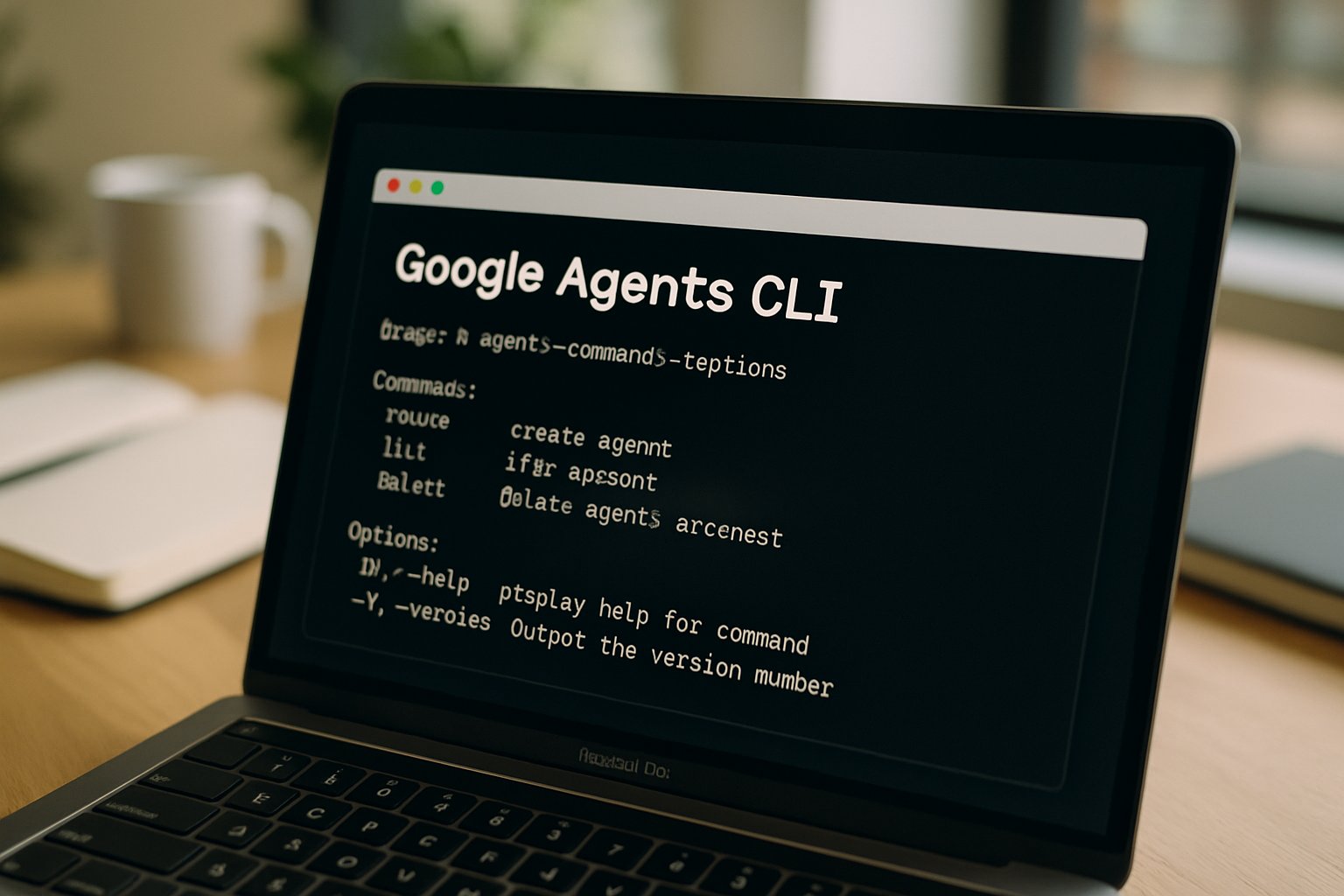
Moreover, early community metrics—about 1.9k GitHub stars—hint at healthy curiosity despite preview status. Independent reports applaud the automation, yet security researchers raise caution after the March Double study. Nevertheless, balanced evaluation demands hands-on measurement rather than hype. Consequently, the following sections provide that pragmatic lens.
CLI Launch Context Overview
Historically, cloud operators juggled assorted scripts to move experimental code into Production. In contrast, Agents CLI centralizes the Agent Development Lifecycle, or ADLC, into one command surface. The project debuted on the Google Developers Blog on April 22, 2026. Furthermore, PyPI shows three fast successive releases, signaling tight iteration loops.
Version 0.1.2, signed by Google, landed one week after initial publication. Consequently, the cadence demonstrates active maintenance despite pre-GA disclaimers. GitHub interest also climbed, reaching 1.9k stars and 200 forks within days. Moreover, the AI Agent Framework branding signals that Google intends parity with established DevOps instruments.
Rapid releases underscore commitment but also preview volatility. However, deeper feature study is required, leading into the next analysis.
Key Features Explained Clearly
Agents CLI packages so-called skills that coding assistants can parse without extra prompt engineering. Moreover, each skill maps to discrete ADLC stages such as scaffold, evaluate, and deploy. Local simulation allows teams to validate Prototypes offline before risking cloud spend. Subsequently, comparative reports highlight score deltas across iterations.
The scaffold command produces a working folder, test harness, and infrastructure template in under one minute. Additionally, deploy automates Google Cloud Run or Agent Runtime provisioning through IaC blueprints. Human Mode freezes automation, giving operators deterministic control over each step. Consequently, the AI Agent Framework positions itself as both autonomous and auditable.
These capabilities reduce toil while exposing cloud hooks. Meanwhile, workflow impact becomes clear when viewed through a developer lens.
Developer Workflow In Practice
Picture a small fintech validating conversational risk checks. First, engineers install the package with a single uvx command targeting the PyPI wheel. Next, they run the scaffold command which yields boilerplate code, tests, and Terraform files. Consequently, a runnable microservice appears within seconds.
Developers then open human-readable YAML where environment variables and IAM roles are pre-populated. After local passes, the eval run command scores trajectories against curated scenarios. Moreover, eval compare surfaces regressions in latency or compliance metrics. Once confident, engineers invoke deploy, and the blueprint spins up Cloud Run instances alongside CI/CD pipelines.
Therefore, what once took days compresses into an hour, even for regulated workloads. The AI Agent Framework orchestrates these transitions, shielding coders from low-level plumbing. Consequently, the workflow doubles as a living tutorial for any AI Agent Framework enthusiast.
Hands-on use proves the promised speed. However, speed without security invites risk, addressed next.
Security Posture And Risks
Automation that provisions cloud infrastructure can over-grant permissions if templates lack least-privilege defaults. In contrast, the CLI generates service accounts automatically, which could replicate similar issues if unchecked. Moreover, Model Armor and Security Command Center now scan prompts and tool calls for policy violations. Nevertheless, content filtering cannot fix structural IAM mistakes.
Consequently, teams should Bring Your Own Service Account and validate generated roles before Production rollouts. Experts also advise network isolation and explicit egress controls for high sensitivity workloads. Furthermore, penetration tests should be integrated into CI pipelines produced by the tool. Nevertheless, an AI Agent Framework that automates IAM must expose opinionated defaults for least privilege.
Unchecked automation magnifies permission risk. Subsequently, ecosystem considerations come into focus.
Ecosystem And Vendor Implications
The tool sits within a broader cloud conversation about portability and lock-in. Many enterprises already build Prototypes on multiple clouds, then select one for Production scaling. However, deep integration with Vertex AI, ADK, and Gemini Enterprise favors a single provider strategy. Nevertheless, the uniform skill interface can lower switching friction for coding Agents, at least conceptually.
Independent analyst InfoQ praised the machine-readable approach for reducing prompt token waste. Meanwhile, some architects worry about policy drift when auto-generated pipelines diverge from corporate standards. Teams should version control the generated Terraform and run cross-cloud linting before merges. Consequently, strategic governance frameworks remain paramount despite operational gains.
The AI Agent Framework harmonizes workflows but cannot negate vendor management responsibilities. Platform ties grant speed while inviting scrutiny. Therefore, concrete getting-started guidance is valuable.
Quick Getting Started Steps
Below is a condensed path for evaluation in a sandbox account.
- Ensure Python 3.11, uv, and Node.js are installed locally.
- Run 'uvx cli setup' to pull the latest signed wheel.
- Execute 'cli scaffold demo-bot' to generate code, tests, and infrastructure templates.
- Invoke 'cli eval run' to score sample dialogues against golden baselines.
- Deploy with 'cli deploy' to provision Cloud Run and CI/CD pipelines automatically.
Additionally, professionals can enhance delivery leadership through the AI Project Manager™ certification. That credential complements technical mastery by sharpening governance and communication skills. Consequently, certified leaders align accelerated engineering with organizational objectives. Meanwhile, these commands illuminate the AI Agent Framework in action for new adopters.
These steps cut startup friction dramatically. Subsequently, leaders must extract strategic lessons from the rollout.
Strategic Takeaways For Leaders
Mature adoption requires balanced attention across speed, security, and vendor economics. Firstly, treat the tool as an opinionated accelerator, not a silver bullet. Secondly, bake IAM reviews, penetration testing, and BYOSA policies into every pipeline. Thirdly, maintain cross-functional playbooks so compliance, security, and development teams share vocabulary.
Moreover, track upstream roadmaps to anticipate breaking changes during preview cycles. In contrast, early adopters who ignore lifecycle signals could face disruptive refactors later. Therefore, schedule quarterly reviews that overlay product maturity against your risk register. The AI Agent Framework can underpin ambitious automation strategies when disciplined governance persists.
Ultimately, aligning people, process, and platform turns Prototypes into durable value. Strategic rigor converts speed into resilience. Nevertheless, continual learning cements competitive advantage.
Conclusion
This latest CLI demonstrates how machine-readable skills can compress the distance between idea and Production. However, unchecked automation may widen the blast radius if security diligence lags. Adopters should pair rapid pipelines with strict IAM review, network segmentation, and continuous monitoring. Consequently, enterprises retain velocity without sacrificing governance.
The AI Agent Framework shines when blended with disciplined DevSecOps culture and clear executive sponsorship. Meanwhile, preview status signals that feedback loops remain open for community influence. Professionals now possess a roadmap to test, evaluate, and scale the release responsibly. Explore the certification options and start a controlled pilot today. Start by registering for the previously linked AI Project Manager™ credential and schedule your first sandbox experiment.
Disclaimer: Some content may be AI-generated or assisted and is provided ‘as is’ for informational purposes only, without warranties of accuracy or completeness, and does not imply endorsement or affiliation.


