

AI CERTS
2 hours ago
AWS Quick Suite: Local Decisions in AI Cloud Computing
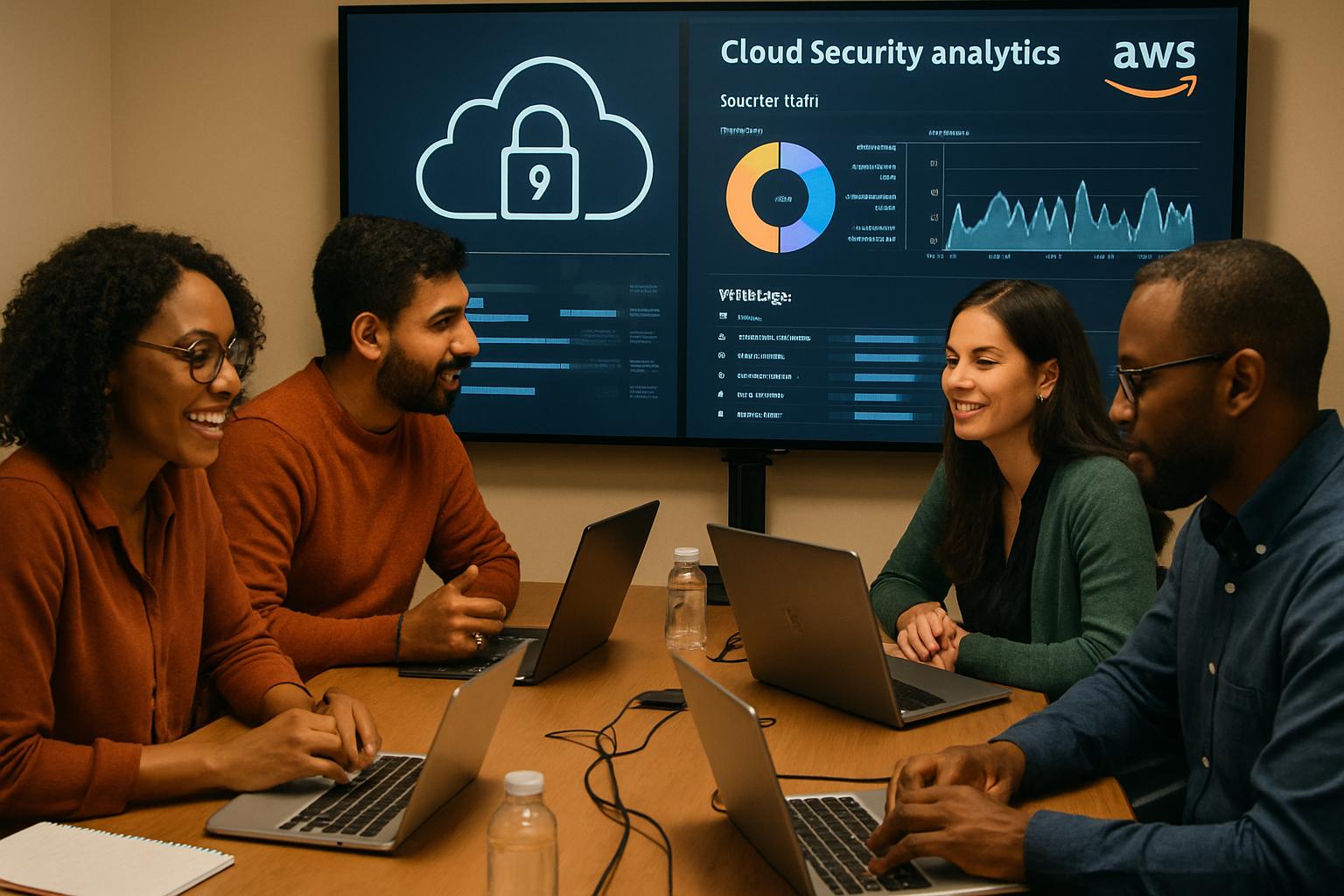
Moreover, the April 2026 update introduced a personal context graph inside the endpoint application, intensifying debate around governance. Industry experts, including AWS VP Jigar Thakkar, argue the change turns Quick into an autonomous teammate. Nevertheless, external analysts warn that unseen automated workflows may create audit blind spots.
Market Forces Driving Adoption
Global spending on agentic AI Cloud Computing platforms is surging. Fortune Business Insights pegs 2026 market revenue in the low billions with 40 percent compound growth. Therefore, buyers seek tools that bridge cloud resilience with local responsiveness.
AI Cloud Computing plays a central role because scalable inference demands elastic infrastructure. In contrast, knowledge work still depends on private documents, emails, and calendars that reside on user machines. Quick attempts to marry both domains, satisfying cost efficiency and personalization simultaneously.
- Launch: October 2025 GA announcement at re:Invent.
- DXC rollout: 115,000 employees across 70 countries by Feb 2026.
- AWS preview: tested with tens of thousands of internal users.
These trends explain Quick’s rapid adoption across large enterprises. Subsequently, a closer look at the suite reveals how AWS stitched the stack together.
Inside Amazon Quick Suite
Quick Suite bundles Research, Flows, Automate, Sight, and Index services under one console. Furthermore, the suite integrates over fifty connectors spanning SaaS, databases, and file repositories. Elastic compute on Bedrock manages large-language inference, while IAM safeguards govern permissions.
At the heart sits Quick Index, which builds organization-wide knowledge bases from synced sources. Default sync runs daily, yet admins can tighten intervals for time-sensitive collections. Limits include 500-megabyte text files, 10-gigabyte videos, and 2-gigabyte audio assets.
For power users, the new Desktop assistant rewires workflow. It maintains a persistent personal profile capturing file edits, meeting notes, and application events. Consequently, agentic routines can trigger without explicit prompts.
Amazon Quick Suite thus spans AI Cloud Computing and edge capabilities with unified governance hooks. However, understanding the science behind local decisions demands deeper analysis.
Local Decision Science Explained
Traditional retrieval-augmented generation fetches facts but waits for human action. Agentic RAG adds planning loops that select tools, call APIs, and evaluate intermediate outputs. Quick leverages that paradigm inside both AI Cloud Computing flows and the Desktop Agent.
Moreover, the personal knowledge graph feeds those loops with continuously updated context. Therefore, Quick can schedule a meeting, draft an email, or summarize a contract before users initiate a request. Local file indexing tightens latency, enabling sub-second decision cycles unseen in purely cloud agents.
However, such autonomy complicates explainability because reasoning chains remain on the endpoint. Regulators may demand audit trails that span both cloud logs and local caches. AWS suggests combining Bedrock runtime traces with endpoint telemetry for compliance.
In sum, local decision science trades central visibility for user relevance and speed. The next section examines early customer experiences validating that balance.
Enterprise Rollout Lessons Learned
DXC Technology deployed Quick across 115,000 employees in February 2026. Executives report faster proposal creation and reduced context switching within six weeks. Meanwhile, internal audits flagged minimal policy violations due to preconfigured IAM roles.
Similarly, 3M and Jabil pilots highlight productivity gains in sourcing and quality assurance workflows. Customers attribute improvements to unified knowledge search and proactive AI Cloud Computing desktop prompts. Nevertheless, each firm instituted human approval gates for outbound automation.
User feedback emphasizes agent responsiveness when offline or on low bandwidth networks. Caching the context graph locally proved critical for that performance. However, support teams had to expand endpoint monitoring budgets.
These rollout stories confirm measurable value yet expose emerging governance demands. Consequently, organizations must weigh benefits against risk mitigation strategies next.
Governance And Risk Mitigation
Local agents create what analysts label AI Cloud Computing shadow orchestration. Unseen workflows may bypass central approval, threatening regulatory posture. Therefore, AWS prescriptive guidance advises IAM Identity Center integration and least-privilege scoping.
Additionally, enterprises should enable detailed logging, encryption at rest, and automatic rollback for destructive actions. In contrast, consumer devices often lack those controls, complicating BYOD scenarios. Upal Saha cautions that explainability gaps could be unacceptable in highly regulated sectors.
Security teams can enhance oversight by correlating Bedrock runtime traces with endpoint log streams. Professionals can deepen expertise via the AI Healthcare specialization certification covering governance patterns. Consequently, a layered defense model emerges around Quick deployments.
Robust governance ensures that AI Cloud Computing investments remain trustworthy and audit-ready. Finally, future roadmap clues point toward stronger enterprise controls.
Productivity Impact Data Points
AWS claims internal pilots saved engineers an average of 12 minutes per task. Moreover, DXC notes 15 percent faster proposal cycle times on AI Cloud Computing workflows after integrating the Desktop agent. Analysts expect compounded savings as context graphs mature and bots learn organizational vernacular.
However, hard ROI still depends on workforce adoption and policy clarity. Surveyed managers reported initial confusion about automation boundaries, underscoring training needs. Therefore, change management budgets should accompany technical licensing fees.
Empirical data affirms productivity upside with guardrails in place. Subsequently, attention shifts toward upcoming feature releases.
Future Roadmap Signals Ahead
Investor materials hint at upcoming mobile clients and extended third-party action plugins. Additionally, AWS plans regional expansion beyond the current limited footprint. Thakkar teased encrypted local state replication for seamless device migration.
If delivered, those features will tighten AI Cloud Computing alignment with edge scenarios. Nevertheless, regulators will scrutinize personal context graph synchronization across borders. Enterprises should prepare data residency assessments now.
Roadmap clues confirm AWS commitment to hybrid intelligence patterns. The discussion now turns to key takeaways and next actions.
Amazon Quick exemplifies how AI Cloud Computing can merge centralized power with local context. Market momentum, desktop presence, and agentic workflows unlock measurable productivity. However, those gains materialize only when governance, privacy, and user training advance in parallel.
Consequently, technology leaders should pilot Quick within controlled domains, monitor agent actions, and calibrate policies aggressively. Readers eager to strengthen oversight skills can pursue the linked certification and stay ahead of compliance demands. Act now to harness intelligent local decisions while protecting enterprise trust.
Disclaimer: Some content may be AI-generated or assisted and is provided ‘as is’ for informational purposes only, without warranties of accuracy or completeness, and does not imply endorsement or affiliation.


