

AI CERTS
3 months ago
AI Hardware Alliance: Advantech & NETINT Boost Transcoding
Market Context For VPUs
General-purpose CPUs struggle to meet modern HD and UHD throughput targets. Meanwhile, GPUs offer speed but draw hefty watts. Hence, vendors created the VPU, an ASIC focused on video codecs. NETINT pioneered the category and claims over 200,000 units shipped. Additionally, Akamai reports its Quadra T1U instances deliver up to twenty-times CPU throughput. AI Hardware therefore shifts economics toward specialized silicon.
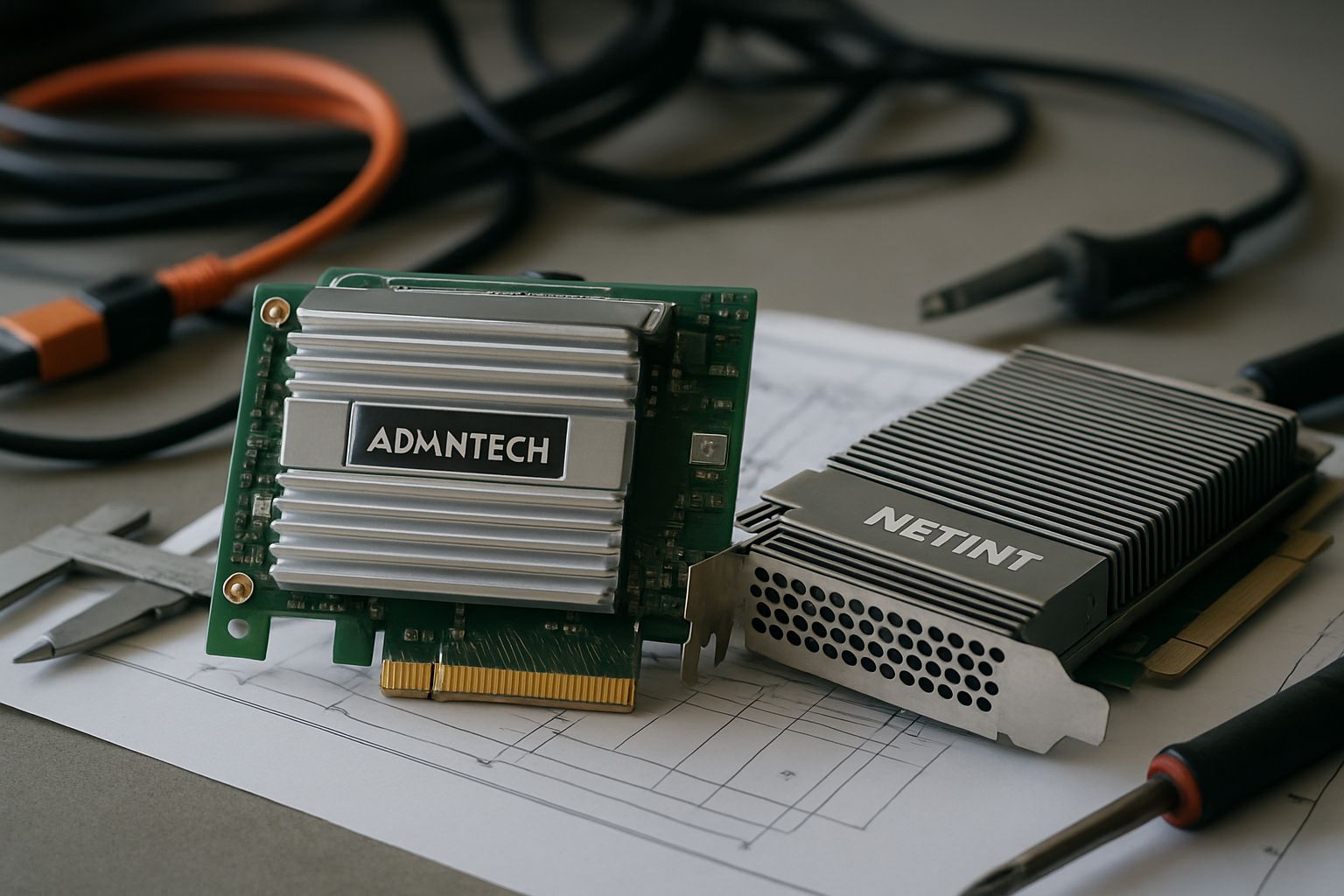
Streaming providers crave density and predictable power draw. In contrast, many legacy racks idle inefficiently between events. Advantech recognized that gap and supplied its half-rack Vega 6321 chassis to host NETINT cards. As a result, customers receive a turnkey appliance, labeled the Quadra Mini Server, that fits venues, OB trucks, or micro-data centers.
These dynamics show why compact accelerators are rising. However, solution maturity still matters.
The VPU concept now enjoys credible proof points. Therefore, market interest keeps expanding.
Inside The Joint Engineering
Dom Mrakuzic from Advantech described the collaboration timeline during a Voices of Video interview. He noted that teams co-engineered the Mini Server in only six months. Furthermore, early silicon samples let Advantech validate thermals before mass build. NETINT supplied driver stacks, while Advantech optimized airflow within the 6321 enclosure. Consequently, the finished unit ships with one Quadra T1M module, dual 10-gig ports, and redundant power.
Randal Horne at NETINT calls VPUs “the ultimate cheat code” for profitability. Moreover, his team integrated monitoring hooks into Bitstreams software, which comes preloaded on the appliance.
These efforts turned loose boards into production AI Hardware for the edge. Subsequently, joint demos at IBC and NAB highlighted plug-and-play deployment.
The streamlined build underscores nimble execution. Nevertheless, field adoption still depends on measurable gains.
Performance And Power Metrics
Vendor data shows striking efficiency. A single Quadra Mini Server draws about 138 watts while encoding twenty 1080p30 streams. Moreover, a 1RU chassis with ten T1U cards handles 320 streams at roughly 500 watts. The comparison below illustrates headline ratios.
Most Critical Efficiency Stats
- 20× higher throughput than CPU-only gear, according to Akamai tests.
- Up to 40× energy savings per stream in dense racks, per NETINT estimates.
- Eight-kilowatt CPU clusters replaced by half-kilowatt VPU servers for similar capacity.
Codec versatility matters too. Quadra silicon supports H.264, HEVC, and AV1 and even basic AI filters for captioning. Therefore, operators can standardize across most consumer devices.
These numbers promise dramatic OPEX cuts. However, independent benchmarking will cement trust.
Validated metrics fuel confidence for broader rollouts. Consequently, ecosystem partners are lining up.
Ecosystem Momentum And Software
Hardware wins little without developer friendliness. Accordingly, NETINT released FFmpeg and GStreamer plugins and seeded SDKs to ISVs. MainConcept soon integrated VPUs into its Easy Video API. Furthermore, Akamai exposed VPU options inside its Cloud Instances catalog.
Rapid Software Support Growth
• MainConcept treats VPUs as first-class targets next to GPUs.
• Ampere CPU servers pair naturally with the low-power cards.
• Operators can call VPU pipelines through familiar REST endpoints.
Professionals can deepen their knowledge with the AI Cloud Architect™ certification. Such credentials help teams evaluate integration paths confidently.
Software traction lowers onboarding friction. Nevertheless, users must weigh trade-offs such as codec road-maps.
Growing ecosystem backing signals durability. Meanwhile, business managers examine financial upside.
Business Impact And Risks
Cost curves drive decision making. Operators face rising content resolutions yet stagnant subscription revenue. AI Hardware that cuts energy bills offers immediate relief. Quadra deployments reportedly trim OPEX by double-digit percentages. Moreover, fewer racks mean lower colocation fees.
Possible Deployment Hurdles Ahead
• ASICs evolve slower than software, risking codec obsolescence.
• Vendor claims need third-party verification for quality metrics.
• Integration with DRM or exotic filters may require CPU fallbacks.
Nevertheless, Advantech supplies industrial-grade lifecycle support to mitigate hardware risk. Consequently, many media companies pilot small clusters before scaling.
Savings potential is clear, yet due diligence remains vital. Therefore, balanced evaluation should precede purchase orders.
Future Outlook For Hardware
Analysts expect video minutes to double again within five years. Accordingly, specialized silicon adoption will likely accelerate. NETINT plans newer VPUs with on-chip AI upscaling. Additionally, Advantech aims to extend the Mini Server line into full rack solutions.
Emerging codecs such as VVC could challenge fixed-function designs. In contrast, vendors argue firmware updates will address incremental changes. Independent labs intend to test those assertions during 2026.
The partnership showcases how nimble companies can shape infrastructure trends. Moreover, cloud providers embracing VPUs validate mainstream readiness.
Momentum seems poised to continue. However, transparent benchmarking will influence ultimate winners.
The collaboration demonstrates tangible efficiency, expanding software support, and credible business upside. Consequently, technology leaders should monitor results from early adopters.
Conclusion
Advantech and NETINT fused complementary strengths to deliver edge-ready AI Hardware that slashes encoding energy use. VPUs supply density, while the Vega chassis ensures deployability. Moreover, growing software hooks and cloud availability widen access. Nevertheless, teams must verify quality and codec flexibility before wide rollout. Forward-looking engineers should pilot a Mini Server, measure real savings, and engage certifications to upskill. Therefore, act now, explore VPU pilots, and leverage the linked AI Cloud credential to stay ahead in efficient streaming.
Disclaimer: Some content may be AI-generated or assisted and is provided ‘as is’ for informational purposes only, without warranties of accuracy or completeness, and does not imply endorsement or affiliation.


