

AI CERTS
3 hours ago
AI Content Moderation Meets YouTube’s Zero-Minute Shorts Limit
This article dissects the rollout, business stakes, and competitive context behind the platform’s most granular feed Removal tool yet. Furthermore, we outline practical tests and certification pathways to help teams stay ahead of policy shifts. Meanwhile, Alphabet reports the feature delivering over 200 billion daily vertical-video views, underscoring why any limit matters. Therefore, disabling the short-video feed entirely could reshape watchtime economics for creators and advertisers alike. In contrast, wellbeing researchers applaud stronger guardrails that push teens toward higher-quality educational clips.
Zero Minute Feature Details
The platform’s zero-minute option sits inside Time management settings within the mobile app.
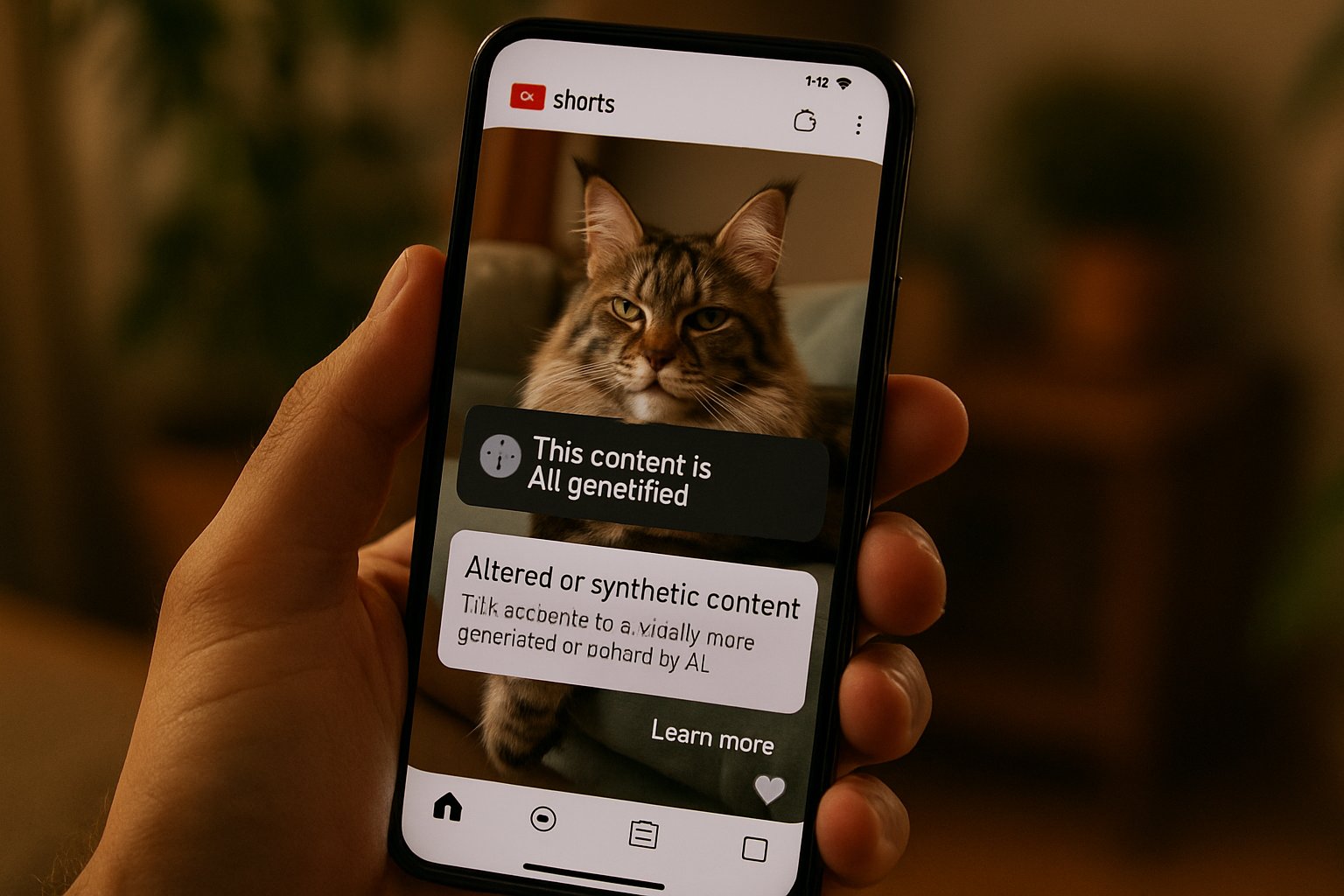
Users open You > Settings > Time management, then select Shorts feed limit and choose 0 minutes.
Consequently, the vertical reel vanishes until midnight, blocking swipes that normally trigger endless playback.
For supervised accounts, guardians activate the same path through Google Family Link, and teens cannot dismiss prompts.
Moreover, the company labels the feature as an industry-first Removal control targeting a single content surface.
The control hides the short-video feed without affecting long-form videos. However, deeper parental implications demand closer inspection.
Locating The New Setting
Journalists should record every step and confirm the zero option appears across different builds before publishing guidance.
Parental Control Implications Explained
Parents routinely struggle to balance engagement and exposure for teens online.
Therefore, the platform paired the zero-minute limit with new teen quality principles informed by UCLA and APA researchers.
Those principles request ranking systems boost educational, socially responsible material across short and long-form inventory.
AI Content Moderation underpins the ranking shift, filtering borderline clips before they reach younger audiences.
Moreover, guardians can now set different time budgets for the feed and overall watchtime, providing granular safeguards.
Nevertheless, friction remains because families must configure supervised accounts before the zero option appears consistently.
These parental features raise adoption barriers yet promise precise protection. Consequently, the business side faces fresh uncertainty.
Business Impact And Concerns
Alphabet attributes over 200 billion daily views to Shorts, with ads fuelling significant revenue.
Consequently, any sustained Removal of the feed could dent impressions at scale.
Creators already question whether suppressed watchtime will lower payouts from the Partner Program.
AI Content Moderation costs also increase when platforms enforce stricter parental settings that demand review transparency.
Meanwhile, advertisers may welcome brand-safe contexts, provided engagement remains healthy after limits.
In contrast, the service positions the setting as user choice, arguing that voluntary caps should not devastate reach.
- Shorts daily views: 200 billion (Alphabet, Q4 2025)
- YouTube 2025 revenue: $60 billion+
- Zero-minute option rollout: January 2026, mobile first
Financial outcomes will hinge on adoption rates and creator behavior. Therefore, rollout consistency becomes the next critical factor.
Rollout Variability In Practice
Early testers on Reddit report mixed availability across Android and iOS builds.
Some users see only 15-minute minimums unless a supervised account is enabled.
Moreover, others circumvent limits by opening a direct short-video URL, indicating partial enforcement.
The help page confirms zero is possible, yet the company has not shared a region list or detailed app timeline.
AI Content Moderation logs may also differ between app versions, complicating measurement for policy teams.
Testing Across Mobile Devices
Journalists can replicate the flow by capturing screen recordings on both platforms and uploading trace logs.
Subsequently, discrepancies should be reported to Google for clarification.
Inconsistent delivery hampers trust and adoption. However, competitive pressure may accelerate a universal rollout.
Competitive Tech Comparison Landscape
TikTok and Instagram Reels offer time limits yet lack a zero-minute switch.
Consequently, the firm claims a leadership role in single-feed Removal.
Meta instead relies on break reminders, which users often ignore.
AI Content Moderation strategies vary among rivals, but none integrate parental timers this strictly.
Growing Regulatory Momentum Builds
Lawmakers in the EU and several US states propose mandatory teen safety toggles for short-form apps.
Therefore, the platform’s move may preempt tougher rules while showcasing cooperation with the Boston Children’s Digital Wellness Lab.
Competitors will likely match the platform if parents adopt the setting widely. In contrast, policy deadlines could force alignment even faster.
Evolving Future Policy Outlook
Industry analysts expect granular feed controls to become a standard feature across major app platforms.
AI Content Moderation will need to coordinate with such timers to avoid accidental demonetization or over-blocking.
Moreover, researchers plan longitudinal studies measuring whether zero-minute usage lowers overall mobile screen time.
Creators might pivot toward educational content that satisfies teen quality guidelines and survives stricter ranking passes.
Professionals can deepen expertise with the AI Everyone Essentials™ certification.
Subsequently, teams will better align product design, advertising, and AI Content Moderation policies.
Ecosystem cohesion depends on accurate enforcement data and transparent feedback loops. Therefore, continued testing remains essential.
Conclusion And Next Steps
YouTube’s zero-minute Shorts timer signals a strategic shift toward healthier engagement. However, real success hinges on reliable rollout and steadfast AI Content Moderation enforcement. Advertisers, creators, and regulators will watch adoption metrics closely. Meanwhile, parents finally receive a straightforward Removal switch that competes with TikTok’s default loops. Moreover, consistent AI Content Moderation will reassure brands that safety survives even when teens scroll freely tomorrow. Professionals should pilot the setting within the app, log anomalies, and share insights with policy teams. Additionally, consider pursuing the certification to refine governance skill sets. Act now to test, learn, and lead your organization through the next Shorts and AI Content Moderation evolution.


