

AI CERTS
2 months ago
Sizing The AI Energy Footprint For Every Prompt
This article unpacks the evolving math, the looming infrastructure stakes, and practical steps for professionals. Moreover, we integrate fresh figures from Google, OpenAI, and the IEA to ground the debate. Finally, we outline upskilling paths for architects who want to design leaner inference stacks.
Why Estimates Often Diverge
Definitions drive numbers. In contrast, analysts who tally only active GPU draw report lower values. Google employs a full-stack boundary that adds host CPUs, cooling losses, and idle headroom. Consequently, its median figure captures real-world Consumption rather than lab-bench perfection.
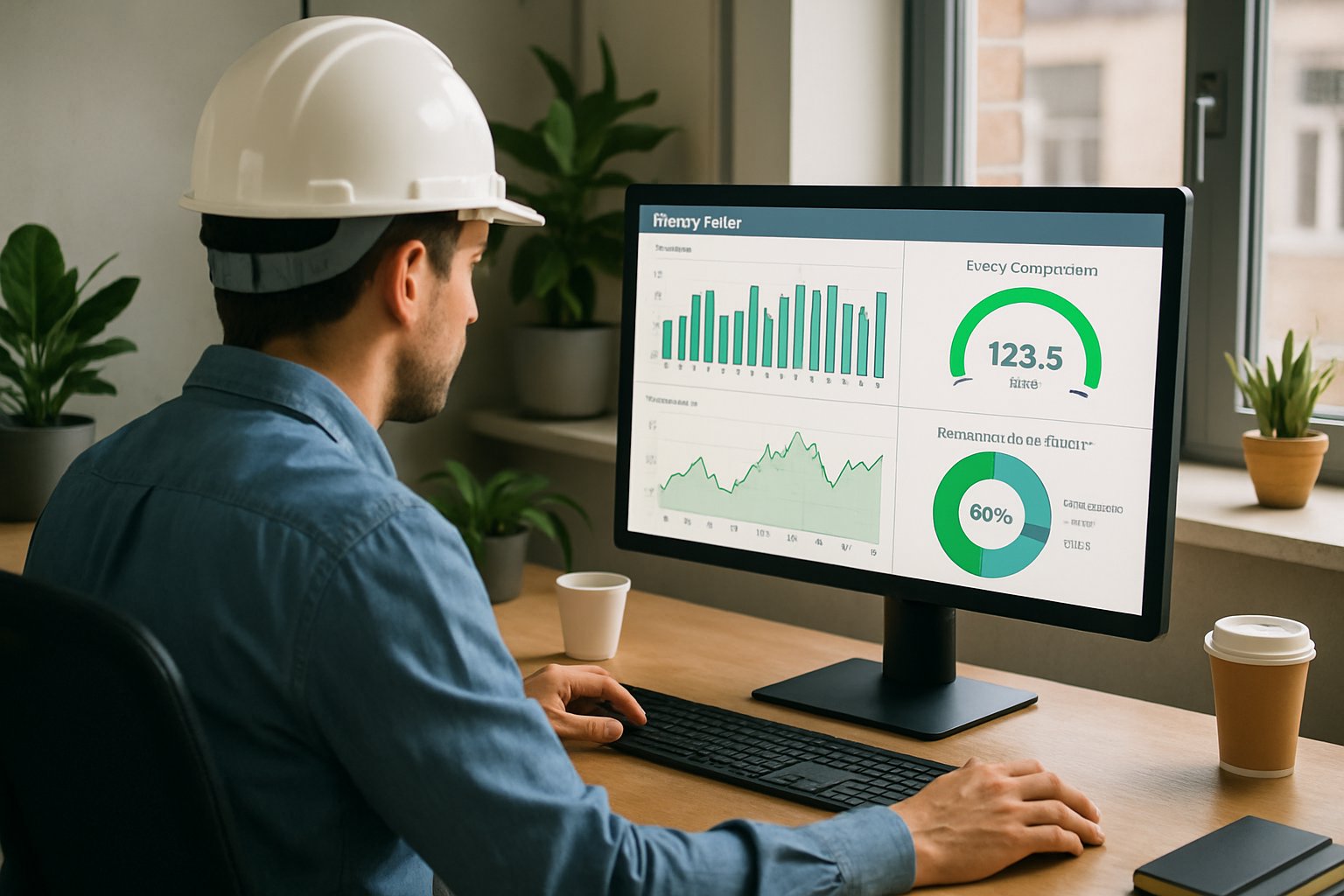
Model size, token length, and architecture also matter. Generative chains of thought or image outputs demand longer runtimes and more Power per interaction. Meanwhile, shorter chatbot replies finish quickly and spare energy. Therefore, one AI Energy Footprint statistic rarely fits every Query style.
Boundaries and workloads explain headline gaps. However, the next section dives into the current baseline numbers.
Current Per Query Numbers
Recent disclosures narrow the debate. Moreover, independent and vendor data now cluster in a tight band around the AI Energy Footprint. The figures below compare leading estimates for a typical text Query.
- Google: 0.24 Wh, May 2025, full stack
- OpenAI: 0.34 Wh, June 2025, full stack
- Epoch AI: 0.3 Wh, Feb 2025, modeled
- EPRI: 2.9 Wh, May 2024, scenario
IEA watchers note that these values equal roughly 0.3 watt-hours, far below early fears. Nevertheless, heavy Generative workflows still spike above the median. Consequently, planners keep the upper range on the table.
Most providers agree on a sub-watt reality for single prompts. Next, we examine how thousands of such prompts strain regional Power grids.
Grid And Power Risks
Thousands of efficient prompts still aggregate quickly. EPRI projects U.S. data centres could draw nine percent of national generation by 2030. Meanwhile, global demand may double to 945 terawatt-hours in the IEA base case. Local networks in Virginia and Texas already feel transformer stress from hyperscale sites.
Utilities worry because AI load grows faster than interconnection queues. Moreover, Generative model launches rarely align with substation planning cycles. Therefore, cooperative forecasting between cloud firms and grid operators becomes essential.
The grid story is not abstract. However, rapid efficiency gains could ease the AI Energy Footprint, as the next section shows.
Efficiency Trends And Drivers
Hardware leaps change the equation yearly. Google reports a thirty-three-fold drop for median Gemini prompts over twelve months. Similarly, NVIDIA’s H200 and Google’s TPU v5p improve tokens-per-joule dramatically. Consequently, the AI Energy Footprint per prompt falls even while total traffic rises.
Software brings additive wins. Quantization, batching, and model pruning shrink Consumption without hurting accuracy. Moreover, algorithmic caching avoids redundant inference for repeated Query patterns. IEA analysts caution that efficiency rebounds often spur extra demand, a classic Jevons effect.
Engineering keeps squeezing watts from every token. Subsequently, policy focus shifts toward matching clean Power supply with flexible AI loads.
Policy Outlook And Response
Regulators have noticed the swing. The IEA urges coordinated data disclosure to guide forecasting and tariff design. European lawmakers consider intensity targets for large Generative deployments. In contrast, U.S. agencies favor voluntary reporting paired with accelerated transmission build-outs.
Utilities request standardized metrics beyond headline watt-hours. Therefore, many support the emerging ‘prompt miles per kilowatt-hour’ framework to clarify the AI Energy Footprint. Industry groups also advocate time-of-use incentives to channel Consumption toward renewable peaks.
Clear rules can reward efficient design. Meanwhile, skills development will equip architects to hit those rules, as the following section details.
Upskilling For Energy Savvy
Architects who understand energy data influence both code and facilities. Consequently, employers prize credentials that bridge model tuning and electrical engineering. Professionals can gain expertise via the AI Architect™ certification covering sustainable inference patterns. Moreover, many cloud providers publish open telemetry so learners can practice real-world optimizations.
Teams should track the AI Energy Footprint during continuous integration. Dashboards that surface watt-hours per Query encourage iterative reduction. Subsequently, creative prompt engineering often halves token counts without hurting response quality.
Human capital amplifies hardware gains. Next, we recap core insights and chart immediate actions to manage the AI Energy Footprint.
Conclusion And Next Steps
The latest evidence rejects simplistic ten-times headlines. Median prompts hover near 0.3 watt-hours, yet aggregate load still expands the AI Energy Footprint rapidly. However, engineers are already shrinking the AI Energy Footprint through hardware and software innovation. Policymakers, utilities, and vendors must coordinate forecasts, incentives, and transparency. Consequently, readers should track new disclosures and pursue energy-aware credentials to stay ahead. Start today by enrolling in the linked AI Architect™ program and lead the next efficient generation.
Disclaimer: Some content may be AI-generated or assisted and is provided ‘as is’ for informational purposes only, without warranties of accuracy or completeness, and does not imply endorsement or affiliation.


