

AI CERTS
3 hours ago
Deloitte’s Perks Debate Amid AI Corporate Overhaul Pressures
This article examines verified filings, federal policy shifts, and market pressures shaping the alleged strategy. It separates documented facts from online anecdotes while mapping potential outcomes for Architecture, Talent, and client delivery. Moreover, readers will see how an AI Corporate Overhaul could redefine consulting economics beyond a single news cycle. All claims draw on Bloomberg, Fortune, Business Insider, and publicly released company policies. Industry professionals should evaluate the evidence before projecting broader workforce disruption.
Contract Turmoil Pressures Deloitte
Federal watchdog DOGE canceled more than 120 service deals during 2025. Consequently, the firm’s government consulting pipeline contracted, according to Fortune’s contract tracker.
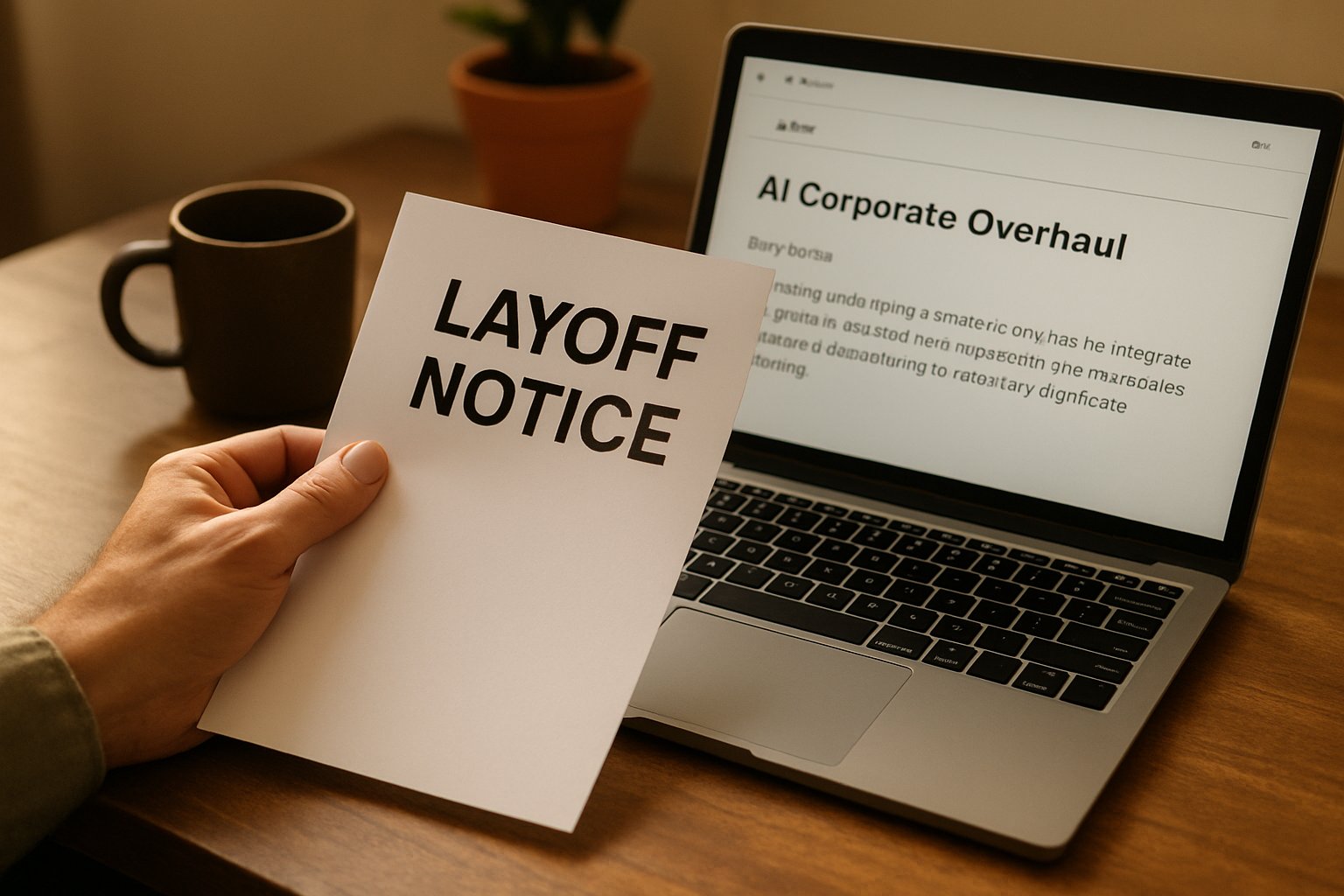
Bloomberg later reported approximately 1,200 layoffs in U.S. public sector teams. However, Deloitte told reporters the cuts were modest reallocations matching client demand.
In contrast, private industry practices remained stable, insulating margins during the shake-up. Therefore, analysts see contract turbulence, not a systemic collapse, as the primary driver behind workforce pruning.
These data points clarify that lost contracts triggered immediate responses. Meanwhile, financial discipline soon expanded into benefits discourse.
Layoffs And Cost Controls
Consultants inside affected units described sudden calendar invites announcing separations. Nevertheless, severance packages reportedly followed standard firm terms, including accrued PTO payouts.
CRN placed the 2025 reduction at roughly two percent of the domestic workforce. Consequently, recruiting teams paused certain openings while redeploying available Talent into priority programs.
Expense policies also tightened around travel upgrades and device cycles. However, no public filing shows cuts to healthcare or retirement Benefits.
Key austerity levers appeared in internal notes:
- Shorter expense submission deadlines
- Mandatory economy flights under five hours
- Deferral of non-billable training
Cost controls spanned perks rather than foundational protections. Consequently, speculation grew around an AI Corporate Overhaul poised to automate support processes. The next section explores whether essential Benefits truly changed.
Rumors Around Core Benefits
Forum posts suggested shrinking dental coverage and fewer device refreshes. Yet no mainstream outlet verified those claims, and official summaries still list unchanged medical Benefits.
Moreover, Deloitte’s public Reward Policy Insider reiterated existing PTO accrual tables without reduction. In contrast, the document expanded reimbursement categories for ergonomic gear.
Experts advise distinguishing discretionary perks from statutory protections like 401(k) matching. Therefore, rumors alone cannot confirm a formal AI Corporate Overhaul targeting core packages.
Evidence indicates talk exceeds proof regarding essential Benefits. However, employees watch perk adjustments closely, leading to our next example of expansion.
Well-Being Perks Recently Expanded
Business Insider obtained a June memo widening the $1,000 well-being stipend. Subsequently, staff could buy Lego sets, puzzles, or exercise apps.
Analysts framed the move as symbolic reassurance during restructuring chatter. Nevertheless, critics labeled it a distraction from looming automation under an AI Corporate Overhaul.
Importantly, the stipend exists outside medical Benefits budgets. Therefore, adding Lego eligibility neither raises premiums nor lowers PTO balances.
Perk enlargement demonstrates selective generosity even amid fiscal tightening. Meanwhile, structural forces within public contracts continue to reshape technical Architecture strategies.
Federal Policies Reshape Architecture
DOGE contract cancellations disrupted multi-year system designs across Medicaid eligibility platforms. Consequently, solution Architecture had to accommodate abrupt funding gaps and compressed delivery timelines.
Engineers pivoted to modular components, hoping future appropriations would restore deferred features. In contrast, private clients demanded completed blueprints before approving new spend.
Therefore, technical leaders align each Architecture decision with cost-containment trackers. Such alignment reinforces narratives that an AI Corporate Overhaul will streamline coding and maintenance.
Government dynamics thus influence both Architecture and workforce planning. Next, we assess how shifting expectations shape future Talent pipelines.
Impact On Workforce Talent
Layoffs created immediate supply of experienced consultants seeking fresh roles. Meanwhile, hiring managers prioritized data engineers who can thrive during an AI Corporate Overhaul.
Consequently, Talent marketplaces saw upticks in niche security and cloud postings. Universities reported higher enrollment in accelerated analytics certificates.
Professionals can enhance their expertise with the AI for Everyone™ certification. Moreover, staying credentialed supports internal mobility once PTO freezes lift.
These signals underscore competitive Talent reshuffling rather than benefit erosion. Finally, we examine strategic scenarios guiding executives through uncertainty.
Strategic Outlook And Certifications
Board discussions reportedly weigh automation investment against morale risks. Nevertheless, leadership insists any AI Corporate Overhaul will protect essential Benefits while freeing funds for innovation.
Analysts outline three plausible paths:
- Incremental automation with limited layoffs
- Platform rewrite replacing legacy Architecture
- Full managed services shift outsourcing non-core work
Consequently, each path carries distinct regulatory, Architecture, and Talent implications. Therefore, decision makers track federal procurement trends and workforce sentiment in parallel.
On the learning front, mid-career consultants pursue micro-credentials that align with automation roadmaps. Additionally, strategic planners recommend at least one certification tied to responsible AI governance. Such preparation hastens adaptation whenever an AI Corporate Overhaul accelerates core transformations.
Industry watchers should resist sweeping claims until audited documents surface. Nevertheless, contract volatility, layoffs, and perk tweaks reveal genuine cost pressure on Deloitte’s U.S. arm. Consequently, leaders must weigh reputational risk against promised savings from any AI Corporate Overhaul. Moreover, proactive certification keeps professionals valuable even if workflows realign overnight. Explore the listed course to future-proof your career and guide clients through coming shifts.


