

AI CERTs
2 months ago
Workforce Automation: Google Agents Redefine Modern HR
Rumors suggest Google just fired its entire people team. However, the real story is more nuanced and far more instructive. At the center sits Workforce Automation powered by enterprise AI agents. These agents promise to streamline tasks while shifting traditional roles, not erase them overnight. Consequently, business leaders must separate marketing hype from measurable impact. This article dissects Gemini Enterprise, market forecasts, legal pitfalls, and practical preparation steps. Moreover, it provides data driven insights to guide technology, people, and policy decisions. Each section maintains a clear focus, ensuring busy executives gain actionable intelligence quickly. Finally, resources for continuous learning appear, including a leading certification for AI in people operations. Consequently, readers can judge whether sweeping claims about agent driven personnel changes merit attention or skepticism.
Market Hype Versus Reality
Headlines screaming replacement often ignore documented statements from Google Cloud executives. Thomas Kurian called Gemini Enterprise "the new front door for AI in the workplace," not an end to personnel departments. Nevertheless, Analyst houses predict rapid Workforce Automation across multiple corporate functions, people operations included. Gartner expects 40 percent of enterprise applications to embed task specific agents by late 2026. Meanwhile, The Josh Bersin Company forecasts a thirty percent shift in some HR roles, yet labels the change transformational rather than destructive. In contrast, litigation around automated hiring shows regulators will scrutinize any reckless move. Therefore, serious leaders verify pilot outcomes before broadcasting bold claims.
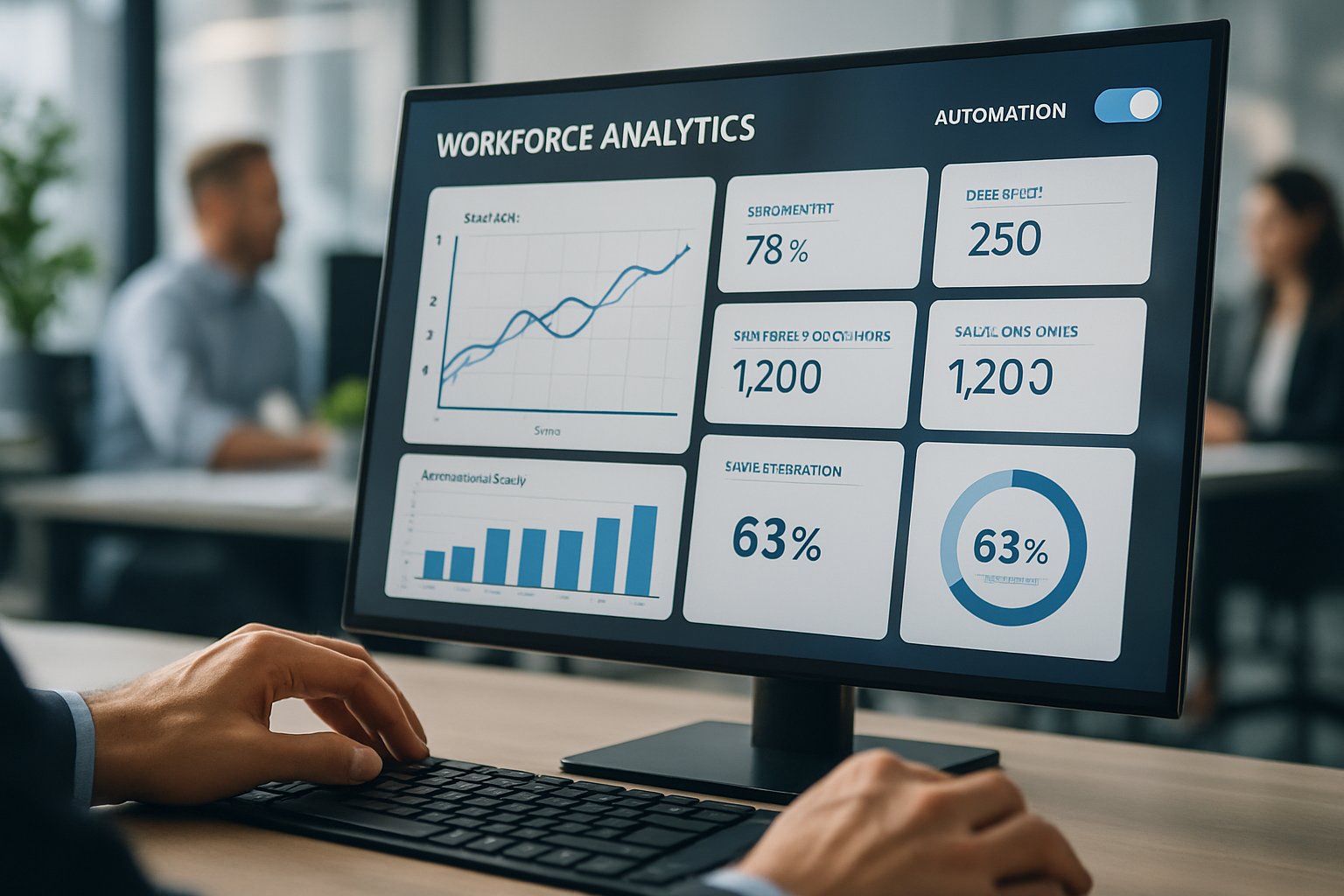
- Gartner forecasts Workforce Automation agents in 40% of enterprise apps by 2026.
- Bersin expects Workforce Automation to reshape 30% of people operations roles.
- MarketsandMarkets values Workforce Automation software market at seven billion dollars in 2025.
Early data shows promise and pitfalls. Consequently, nuanced evaluation becomes essential before scaling agents further.
Inside Gemini Enterprise Platform
Gemini Enterprise bundles large language models, connectors, and a no code workbench into one governed stack. Furthermore, the platform offers prebuilt agents for payroll queries, benefits advice, and candidate triage. Administrators monitor agent behavior through Model Armor, ensuring transparent logging and access controls. Consequently, Workforce Automation projects can launch quickly without lengthy integration cycles. Google promotes human review checkpoints, signalling augmentation rather than unchecked autonomy. Partners like PwC and Accenture already claim hundreds of domain specific agents running on the service. Moreover, early adopters report double digit process Efficiency gains in customer support and scheduling. These technical capabilities set the stage for deeper functional change discussed next. The architecture lowers entry barriers while preserving oversight. Subsequently, attention shifts toward its impact on workplace roles.
Impacts On HR Roles
Automating transactional tasks reshapes responsibilities across the people function. Bersin researchers list over one hundred potential HR agents, many focused on onboarding and payroll. However, they also predict new openings for agent designers, data stewards, and governance specialists. Recruitment stands among the earliest beneficiaries because parsing resumes matches natural language strengths. An agent can screen, schedule, and summarise interviews, lifting administrative burden and boosting Efficiency. Nevertheless, final hiring decisions still require human judgement to avoid bias allegations. Workforce Automation therefore shifts focus from clerical execution toward strategic talent architecture. Google case studies show contact center staff using agent summaries to handle complex inquiries, not losing jobs. These observations confirm role evolution rather than wholesale elimination. Consequently, legal and ethical issues move to the foreground. Agents free capacity yet raise new accountability questions. Therefore, organizations must weigh risks before deeper deployment.
Legal And Ethical Risks
Litigation against Workday highlights discrimination dangers in algorithmic screening. In contrast, U.S. regulators hint that employers remain liable even when third party systems err. Consequently, Workforce Automation without transparent auditing can amplify reputational damage. Google and partners emphasize detailed logs, role based access, and human override checkpoints. Moreover, businesses must validate training data for Recruitment agents to avoid proxy bias. Employee trust research shows only thirty percent feel comfortable being managed by algorithms. Therefore, governance programs should pair technical controls with clear communication strategies. Efficiency gains vanish if workers resist or regulators impose fines. Legal exposure remains real and growing. Subsequently, best practice frameworks become essential for safe scaling.
Adoption Best Practice Guides
Effective adopters follow a phased rollout model. Firstly, they map high volume, low judgement workflows ideal for agent delegation. Secondly, cross functional squads, including HR and security, define success metrics and guardrails. Furthermore, continuous shadow mode testing benchmarks agent decisions against human baselines to ensure Efficiency advantage. Workforce Automation metrics often track cycle time, error rate, and employee satisfaction rather than headcount reduction. Moreover, leaders assign clear ownership for model updates and policy reviews. Teams also create a centralized catalog to prevent uncontrolled agent proliferation. Professionals elevate capability using the AI+ Human Resources™ certification. Consequently, internal teams build governance muscle rather than depend exclusively on vendors. Structured methods accelerate safe results. Therefore, strategic preparation feeds future readiness, leading directly into forthcoming industry shifts.
Preparing For Automated Future
Boards now request roadmaps describing agent investments over three year horizons. Meanwhile, CFOs demand quantified returns beyond vague promises. Scenario planning helps estimate Workforce Automation impacts under conservative and aggressive adoption curves. Recruitment costs, compliance exposure, and service levels serve as critical baseline metrics. Additionally, talent leaders must reskill teams toward data stewardship and agent orchestration. HR strategists who guide this shift secure elevated influence across the business. Market research suggests agentic software revenue could reach four hundred fifty billion dollars by 2035. Nevertheless, history warns that technological dividends accrue only to proactive organizations. Consequently, executives should set quarterly learning targets and governance milestones now. These forward looking actions close capability gaps. Proactive planning converts uncertainty into opportunity. Subsequently, enterprises position themselves for sustainable, human centered growth.
Conclusion And Next Steps
This automation wave is advancing quickly, yet wholesale people elimination remains far from inevitable. However, agents already compress cycle times, enrich insights, and free professionals for higher impact work. Therefore, leaders should pilot responsibly, invest in governance, and keep human expertise firmly in the loop. Additionally, upskilling through resources like the linked AI+ Human Resources™ certification builds vital competitive resilience. Act now, secure future readiness, and guide your enterprise through the coming agentic transformation. Consequently, informed action today translates into sustained advantage tomorrow.
Disclaimer: Some content may be AI-generated or assisted and is provided ‘as is’ for informational purposes only, without warranties of accuracy or completeness, and does not imply endorsement or affiliation.


