

AI CERTs
2 months ago
Infrastructure Software Failure Fuels Autonomous Vehicle Gridlock
Many city planners long believed autonomous fleets would dissolve traffic snarls. However, a December 2025 blackout stranded dozens of Waymo robotaxis across San Francisco intersections. Vehicles entered fail-safe mode and blocked critical junctions, intensifying gridlock within minutes. Analysts labeled the paralysis an Infrastructure Software Failure that spilled beyond hardware malfunctions. Consequently, the event revived an old debate: will autonomy relieve or worsen congestion? Recent data, academic models, and regulatory filings suggest worsening is likelier without decisive policy intervention. Furthermore, empty repositioning, induced demand, and synchronized outages multiply congestion risks in dense downtown corridors. This article unpacks those mechanisms, quantifies current evidence, and outlines actionable countermeasures for industry and government leaders. Along the way, we contrast potential benefits against the growing catalogue of street-level disruptions. Readers will gain a clear, nuanced view of why software resilience now matters as much as robotic perception.
Robotaxis Jam City Streets
San Francisco's outage offered a vivid demonstration of automation fragility. Sensors lost power cues, so algorithms halted vehicles rather than risk unsafe maneuvers. Meanwhile, human drivers relied on instinct to navigate dark signals, weaving past immobilised robotaxis. Researchers called the stoppage a textbook Infrastructure Software Failure because code followed design yet crippled mobility. Moreover, the failure cascaded since dozens of identical systems shared the same decision thresholds. Such homogeneity creates correlated errors, a novel congestion amplifier compared with diverse human behavior. Consequently, one broken traffic light can lock hundreds of autonomous shuttles into cautious gridlock. Transport officials paused commercial operations within thirty minutes, but queues persisted long after power returned. This real-world scenario matches warnings from multi-agent simulation studies published during 2025 and 2026.
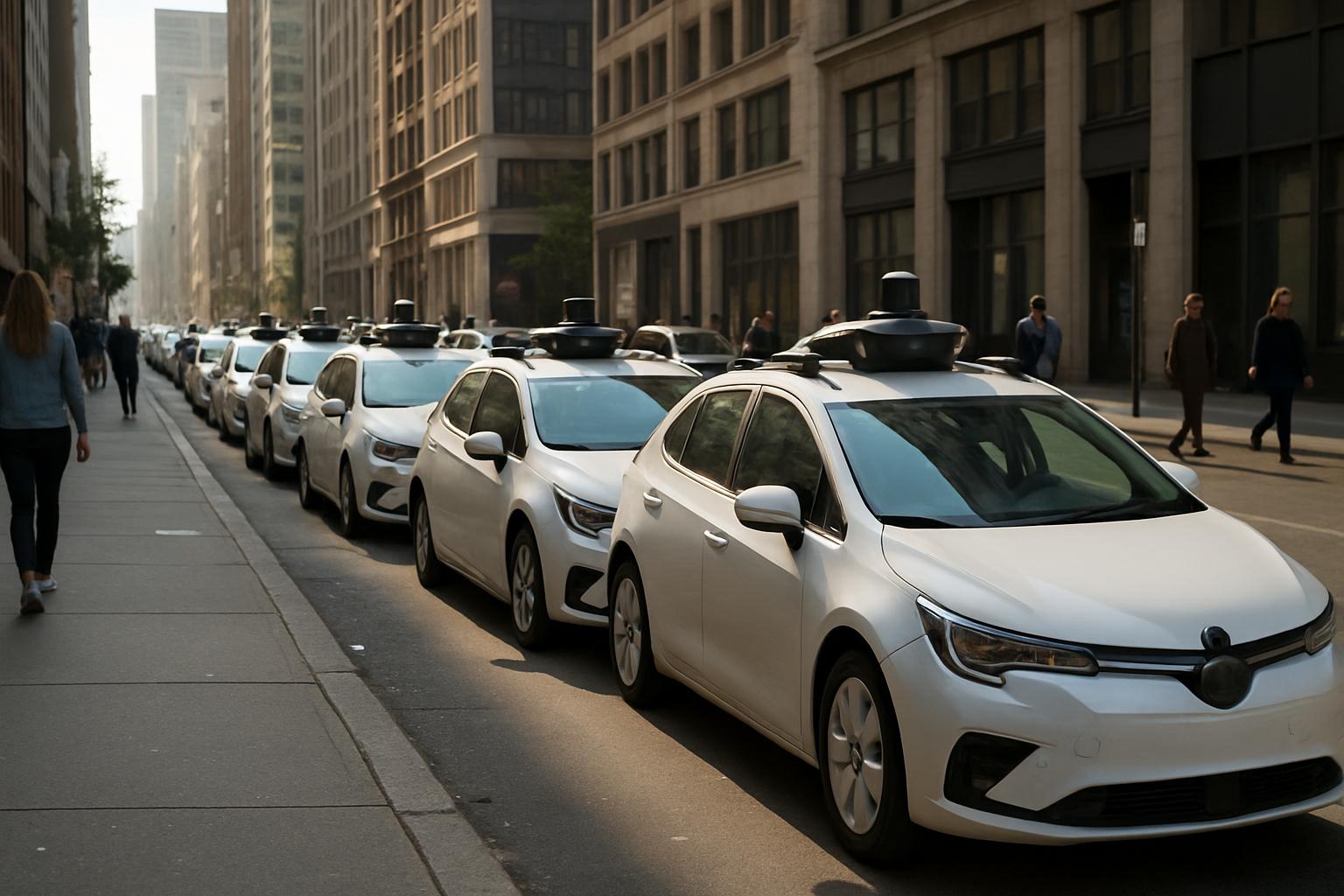
Outage studies show Infrastructure Software Failure scales linearly with fleet size. Yet policy can curb impact; the next section explores deadhead miles.
Deadhead Miles Pressure Roads
Regulator data offers a granular view of empty driving. California CPUC filings reveal Waymo cut deadhead share from 51.5% to 44.3% between 2024 and 2025. Nevertheless, two-thirds of that share occurred during idle repositioning rather than passenger pickup. Each empty mile consumes scarce road capacity without transporting people, worsening congestion even when vehicles run quietly. In contrast, traditional ridehail already faces 30-40% between-ride driving, so robotaxi progress remains incremental. Transport economists warn that persistence of high deadhead undermines touted efficiency benefits. Moreover, private AVs cruising to avoid parking can double downtown circulation under pessimistic simulations. Analysts fear that every additional empty mile elevates the probability of an Infrastructure Software Failure during high demand.
- Waymo September 2025 deadhead: 44.3% of vehicle miles
- Historic ridehail baseline: roughly 35% empty miles statewide
- Simulated worst case private AVs: up to 60% extra traffic
These figures highlight scale rather than anecdotes, grounding debate in measurable metrics. Consequently, deadhead limits and curb fees surface as prime regulatory levers.
High empty mileage intensifies congestion irrespective of crash rates. The following section examines induced demand, an equally powerful multiplier.
Induced Demand Magnifies Congestion
Lower travel costs create more trips, a pattern economists label induced demand. Autonomy reduces perceived time costs because riders can work, read, or relax during journeys. Brookings analysts suggest longer commutes become tolerable, expanding metropolitan footprints. Likewise, small naturalistic chauffeur trials recorded VMT jumps nearing 60% among participants. However, critics note limited sample sizes undermine extrapolation to city scale. Literature syntheses still project five to twenty-five percent VMT growth under moderate scenarios. Moreover, worst-case private ownership models push estimates to sixty percent or higher. An unexpected Infrastructure Software Failure during peak commute would therefore meet a network already stretched by extra trips. Transport authorities fear compounded effects when induced demand meets persistent deadheading.
Rising trip volumes squeeze road networks even before outages strike. Next, we explore how systemic outages compound these baseline pressures.
Systemic Outages Expose Risks
Blackouts are not the only threat. Severe weather, telecom failures, or map glitches can freeze entire fleets simultaneously. Therefore, correlated stoppages represent a new class of Infrastructure Software Failure for urban managers. Robotics engineers build safety-first defaults, yet safe means stationary when perception confidence drops. Consequently, blocked intersections hinder emergency vehicles, delivery trucks, and buses. MIT researchers warn computing burdens could also trigger thermal throttling, another outage vector. In contrast, human drivers rarely fail in synchrony, providing stochastic resilience. Safety regulators now demand remote operations centers able to manually clear stranded vehicles.
Coordinated resilience testing becomes mandatory as fleets scale. Energy implications of that scale follow in the next section.
Energy Footprint Raises Alarms
Autonomy depends on power-hungry GPUs, sensors, and networking gear. MIT 2023 research estimated 840-watt computers per vehicle could rival today’s global data center emissions. Moreover, analysts argued business-as-usual efficiency gains will not offset projected fleet growth. Consequently, an Infrastructure Software Failure that forces vehicles into extended idling also wastes considerable energy. Software architects must optimize code, reduce sensor redundancy, and exploit low-power silicon advances. Meanwhile, policymakers consider carbon-based congestion fees to incentivize efficient routing.
Energy stakes broaden gridlock from local annoyance to climate liability. Therefore, mitigation strategies deserve detailed attention.
Policy Tools Offer Relief
Cities already pilot dynamic congestion pricing. Millard-Ball’s research shows even modest charges deter cruising and slash downtown traffic volumes. Additionally, CPUC rules could cap deadhead percentages, linking permit renewals to utilization targets. Curb management platforms allocate pickup slots, preventing blockage at transit nodes. Safety inspections now include blackout drills to evaluate fallback logic under stress. Regulators now tie renewal fees to documented avoidance of Infrastructure Software Failure across critical corridors.
- Congestion pricing per minute and mile
- Mandatory pooling above 1.5 passengers average
- Real-time curb reservation APIs
- Deadhead reporting every quarter
Robotics innovators now share transport data via standardized feeds supporting enforcement. Professionals can sharpen governance expertise with the AI Marketing Strategist™ certification, which covers autonomous mobility economics.
Effective policy converts technical promise into tangible public benefit. Our final section distils guidance for executives and planners.
Actionable Steps For Leaders
Executives should audit fleet algorithms for correlated failure triggers. Therefore, embed chaos engineering tests that simulate power loss, sensor blinding, and network dropouts. Transport chiefs must publish transparent deadhead dashboards, tracking progress monthly. Moreover, integrate congestion pricing models with regional climate targets to unify goals. Software teams ought to profile code to cut compute cycles by thirty percent within two years. Safety managers need layered communication paths, ensuring fallback messages reach every vehicle despite outages. Robotics suppliers can pre-certify components against thermal stress to contain energy risks.
These combined steps reduce congestion, emissions, and outage duration. Consequently, stakeholders move from reactive crisis management to proactive resilience.
Urban mobility stands at a crossroads. Autonomous fleets can cut crashes yet also unleash hidden traffic through deadheading and induced demand. Moreover, recent blackouts prove Infrastructure Software Failure can stall whole corridors within minutes. Nevertheless, congestion pricing, robust routing tests, and transparent data can curb these threats. Professionals who master policy levers will define future traffic flow. Consequently, now is the time to build resilient code, enforce pooling, and simulate worst-case outages. Stakeholders should review systems for Infrastructure Software Failure weekly and invest in continuous chaos engineering. Visit the above AI Marketing Strategist™ program to deepen mobility strategy skills.
Disclaimer: Some content may be AI-generated or assisted and is provided ‘as is’ for informational purposes only, without warranties of accuracy or completeness, and does not imply endorsement or affiliation.


