

AI CERTs
3 months ago
Educational Monitoring Risk: AI Surveillance Challenges
Cameras once guarded hallways. Today, algorithms watch teachers and students alike. Educational Monitoring Risk now tops district agendas as AI analytics grade classroom focus. However, promised efficiency collides with rising concerns over Privacy, Ethics, and Labor rights. Consequently, administrators face an uneasy trade-off between insight and intrusion.
Global pilots illustrate the tension. Pimpri Chinchwad in India reports sharper “teacher engagement” after installing dual cameras and dashboards. Meanwhile, U.S. districts pilot voice analytics that parse talk ratios for coaching. Nevertheless, teachers describe a chilling shift toward performative teaching. This article unpacks the trend, weighs benefits, and maps emerging guardrails.
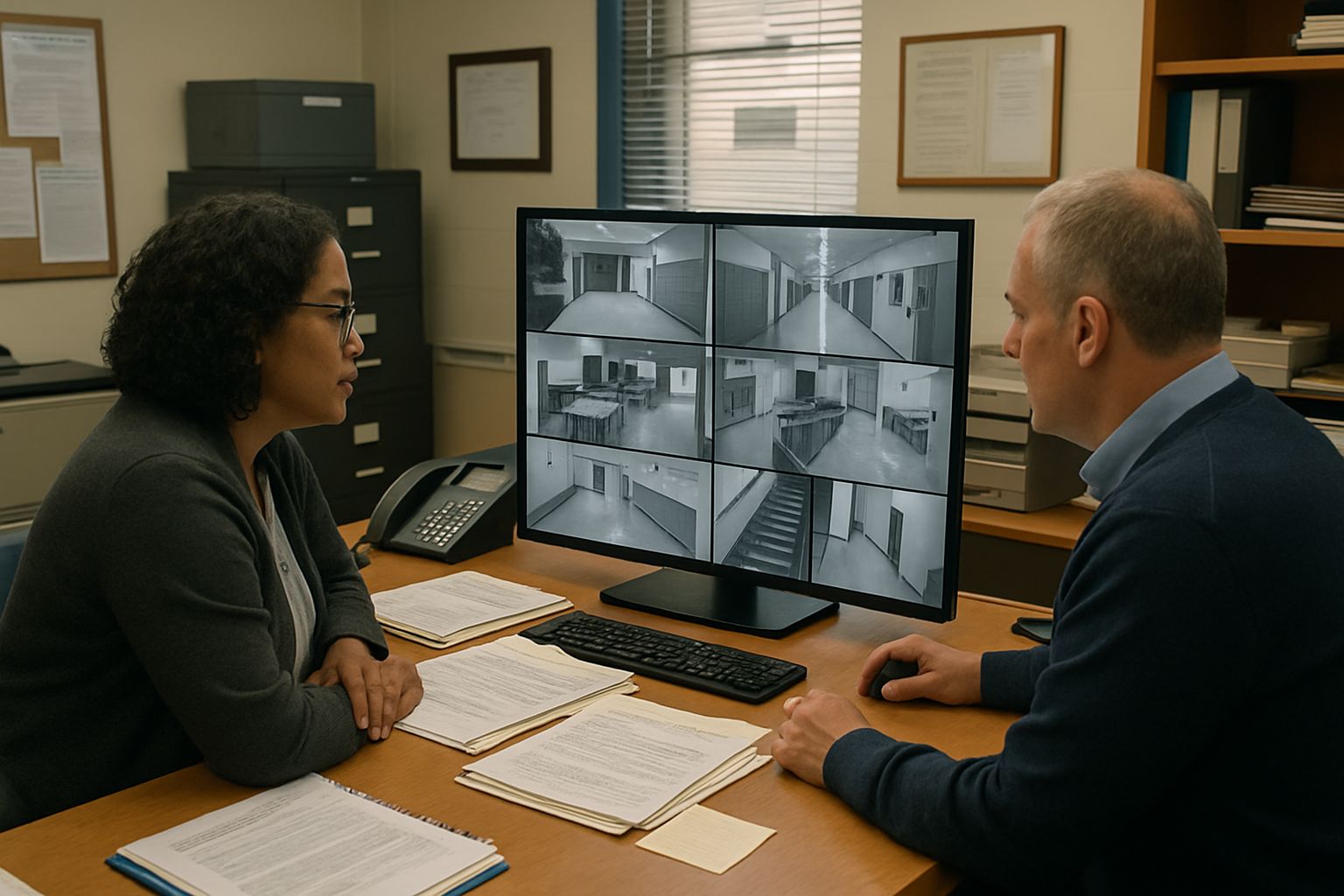
Surveillance Tools Enter Classrooms
Hardware prices have plunged, and software has matured. Therefore, vendors bundle HD cameras, facial recognition, and EEG headbands into “smart classroom” kits. China’s early deployments used gaze tracking and emotion scoring; some installs later paused amid backlash. In contrast, U.S. startups like TeachFX skip video and analyze audio for “teacher talk time.”
Data illustrate rapid uptake. NCES reports over 91 percent of U.S. Schools now run security cameras. Moreover, industry forecasts project K-12 AI analytics surpassing USD 5 billion by 2032. Yet few studies verify accuracy when algorithms grade focus.
These advances place unprecedented eyes on pedagogy. However, questions about consent and data retention linger.
The expanding toolkit highlights potential power imbalances. Consequently, market dynamics deserve closer inspection in the next section.
Market Momentum And Players
Capital keeps flowing into observation analytics. GoGuardian, Securly, and Bark dominate student monitoring. Meanwhile, TeachFX, Avigilon, and BrainCo chase teacher dashboards. Additionally, regional integrators bundle full packages across Asia and Latin America.
- SNS Insider forecasts 18 percent CAGR for AI in education through 2030.
- Voice analytics adoption grew tenfold across U.S. districts between 2022 and 2025.
- EEG headband pilots span at least eight countries, despite scientific debate.
Labor unions note limited bargaining on surveillance clauses despite ballooning contracts. Furthermore, procurement records reveal sparse independent audits.
Market acceleration supplies districts with tempting solutions. Nevertheless, claimed benefits require scrutiny, which the following section provides.
Benefits Claimed By Vendors
Proponents pitch three headline gains. First, automated coaching promises objective, timestamped feedback impossible with occasional human observers. Second, video archives deter misconduct and clarify disputes, supporting safer Schools. Third, dashboards give overburdened administrators clear metrics in large systems.
Academic studies lend partial support. Consequently, researchers found TeachFX feedback increased open-ended questioning frequency by 12 percent. Moreover, Pimpri Chinchwad officials reported higher “active teaching time” after analytics flagged idle minutes.
Despite these positives, metrics remain proxies, not direct measures of quality. Therefore, overreliance can misguide instruction.
The mixed evidence underscores ongoing debates about Privacy and Ethics, explored next.
Mounting Privacy And Ethics
Civil-society groups warn that constant recording normalizes surveillance culture. Additionally, Article 19 details demographic bias in emotion classifiers that mislabel darker-skinned faces. Privacy advocates note that FERPA treats identifiable recordings as protected records, imposing strict handling rules.
Teachers voice psychological strain. In a 2024 study, one said, “My focus has shifted to surveillance.” Moreover, students may self-censor under watchful lenses, chilling debate. Labor experts add that algorithmic evaluation could skirt negotiated appraisal frameworks.
Data security also troubles auditors. Consequently, large biometric datasets attract attackers and potential law-enforcement requests. Ethical frameworks demand purpose limitation, minimal retention, and transparent governance.
These unresolved issues intensify calls for statutory action. Subsequently, lawmakers have started responding.
Emerging Legal Guardrails Rise
State legislatures now move faster than Congress. California guidance restricts classroom recording for performance reviews without consent. Meanwhile, Louisiana Act 479 mandates disclosure when cameras capture special-education settings. Furthermore, several states require opt-in agreements before biometric capture.
District counsels examine FERPA alongside Children’s Internet Protection Act obligations. Consequently, many now draft purpose-limitation clauses and retention schedules. However, enforcement capacity remains thin, and vendor contracts often lack audit rights.
Legal momentum signals shifting risk calculations for boards. Therefore, districts seek practical frameworks, detailed below.
Managing Educational Monitoring Risk
District leaders can act now. First, conduct impact assessments covering Privacy, Ethics, and Labor implications. Second, involve teachers, parents, and students in policy design. Furthermore, require vendors to publish accuracy, bias, and security audits. Professionals can enhance their expertise with the AI+ Human Resources™ certification.
Suggested governance checklist:
- Notify all stakeholders and secure informed consent.
- Limit use to coaching rather than disciplinary action.
- Set strict data retention caps and encryption standards.
- Schedule annual third-party evaluations of algorithmic fairness.
Educational Monitoring Risk demands continuous oversight. Consequently, cross-functional committees should review analytics outcomes quarterly and adjust practices.
Adopting these measures mitigates exposure while preserving instructional innovation. Nevertheless, vigilant review remains essential as technologies evolve.
Proactive governance concludes the analysis. However, next steps require sustained attention, as summarized below.
Conclusion
AI surveillance now peers into classrooms worldwide. Benefits include scalable coaching and safer environments. However, significant Educational Monitoring Risk persists around Privacy, Ethics, and Labor rights. Legal guardrails tighten, yet gaps endure. Therefore, districts must integrate transparency, consent, and rigorous audits before expanding analytics. Ultimately, balanced governance will decide whether monitoring empowers or undermines learning. Explore emerging standards and pursue relevant certifications to lead responsibly.
Disclaimer: Some content may be AI-generated or assisted and is provided ‘as is’ for informational purposes only, without warranties of accuracy or completeness, and does not imply endorsement or affiliation.


